
As pharmaceutical regulations around the world continue to tighten, establishing a transparent, reliable, and fully digital traceability system has become a fundamental requirement for all manufacturers. The regulatory frameworks issued by the U.S. FDA DSCSA, EU FMD, and China NMPA, all share a common goal: to ensure drug authenticity, strengthen supply chain supervision, and ultimately safeguard patient safety.
Across these markets, regulators require manufacturers to implement serialization, aggregation, tamper-evident protection, data reporting, and comprehensive lifecycle tracking. Companies that fail to comply not only lose access to key markets but may also face:
lHeavy financial penalties
lSuspension of product licenses
lExport limitations and supply chain interruptions
lIrreparable brand and reputation damage
In this environment, a full-scale track and trace system for pharmaceuticals is no longer merely a competitive advantage—it is an essential criterion for global market entry.

Copyright photo from: https://www.freepik.com/
Developing a compliant pharmaceutical track and trace system is a complex endeavor. It requires expertise in engineering, data management, regulatory affairs, quality systems, and supply chain operations.
The traceability system requires the integration of multiple processes, including serialization, labeling, visual inspection, weighing, case packing, aggregation, and data transmission. With varying equipment brands and system protocols, the integration workload is substantial.
How Pharmapack Addresses:
lDeliver an Integrated Turnkey Track & Trace Solution to avoid compatibility issues between different devices.
lAn all-in-one vision system simultaneously supports serial code verification, label inspection, and defect rejection.
lThe entire line is coordinated via servo control and high-speed cameras, reducing system coupling and debugging complexity.
Differing requirements across countries, clients, and factories for data formats, upload methods, and management interfaces often lead to integration challenges.
Pharmapack Solutions
By applying unique identification codes, a globally unified and standardized data identification foundation is established for all products and packaging levels. This effectively eliminates the confusion that may arise from different countries, clients, or factories using disparate coding systems.
Serialization, inspection, aggregation, and other steps all extend the production line workflow, potentially impacting production capacity, costs, and delivery capabilities. For example, camera recognition delays can create bottlenecks, and over-complicated aggregation processes may slow down case packing.
How Pharmapack Solves:
Through high-speed cameras, coordinated servo control across the entire line, and a compact structural design, Pharmapack delivers both "high speed and compliance," ensuring traceability does not become a burden that slows down production. For whole line speed, the system achieves:
lBottle packaging line speed: up to 200 bottles/minute
lCarton packaging line speed: up to 250 cartons/minute
Beyond the initial hardware and software costs, building a traceability system also involves ongoing maintenance, upgrades, and system validation costs.
Given this, companies' primary concern is often whether the system is scalable enough to avoid frequent, costly investments every time regulations change.
At Pharmapack, we offer modular, scalable, and customizable solutions that allow gradual implementation. Whether a company needs basic serialization or full-scale factory-wide traceability, the system can grow with the business.
Regulators expect complete, accurate, and real-time product records. Audits often require manufacturers to supply serial number generation logs, aggregation relationships across all packaging levels, inventory movement history, and so on. Missing or inaccurate records may be interpreted as a traceability chain failure.
How Pharmapack Tackles:
Pharmapack’s software automatically captures and stores complete lifecycle data. The system can generate audit-ready reports, enable fast historical search, and replay production events.
Understanding the importance of packaging in the pharmaceutical industry, our traceability systems establish a reliable serialized data chain from the single unit to the supply chain level.
Serialization is the foundation of pharmaceutical traceability. It assigns a unique, readable, and verifiable “digital identity” to every saleable unit.
Our solution combines high-accuracy printing, serialization encoding, and a comprehensive vision inspection engine. Every code is verified for clarity, correctness, and tamper resistance.
The implementation process is as follows:
To enable global interoperability and end‑to‑end traceability, pharmaceutical coding primarily adopts internationally recognized GS1 standards and 2D Data Matrix codes as data carriers. RFID (Radio‑Frequency Identification) tags may also be used, embedding a microchip within the packaging to store serialized data.
High‑precision printing relies on selecting the most suitable industrial printing technology, such as small‑character inkjet, laser marking, or thermal transfer, based on the packaging level and material characteristics. Meanwhile, cameras and scanners deployed along the production line verify code legibility, contrast, and compliance with ISO print‑quality grades in real-time.
This capability is exemplified by our Track and Trace System for Bottle Packaging Lines, which performs 360° inspection of bottles and containers. Once it detects unclear printing, incorrect information, or abnormal packaging appearance, the production‑line control system (PLC) immediately activates a rejection mechanism, removing the non‑conforming unit before it proceeds to downstream packaging or logistics.
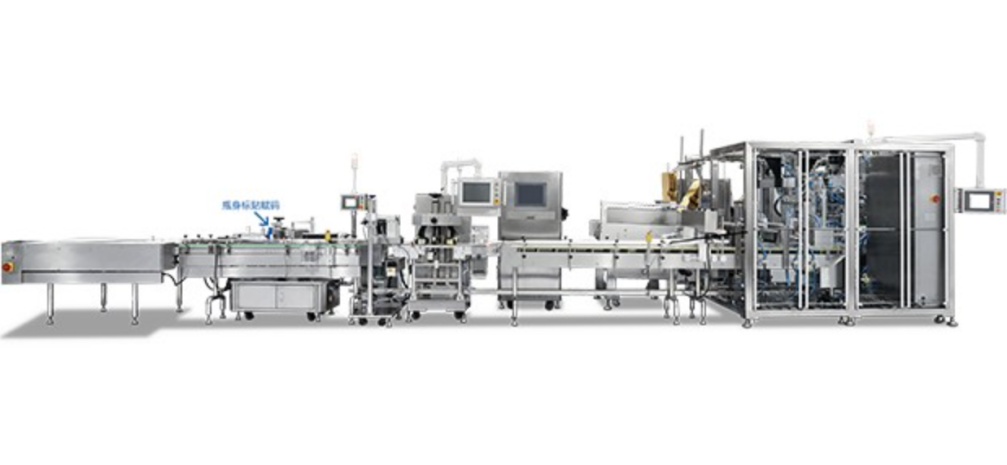
Aggregation establishes digital parent–child relationships across packaging levels—bottle to carton, carton to case, and case to pallet—forming the structural foundation for efficient logistics and rapid recall.
For example, our Track and Trace System for Carton Packaging Lines automatically scans and links individual bottle serial numbers to their specific carton code in real time. This semi-automatic process ensures 100% accurate digital bundling, even in compact layouts, creating a flawless and auditable chain of custody without compromising line speed.
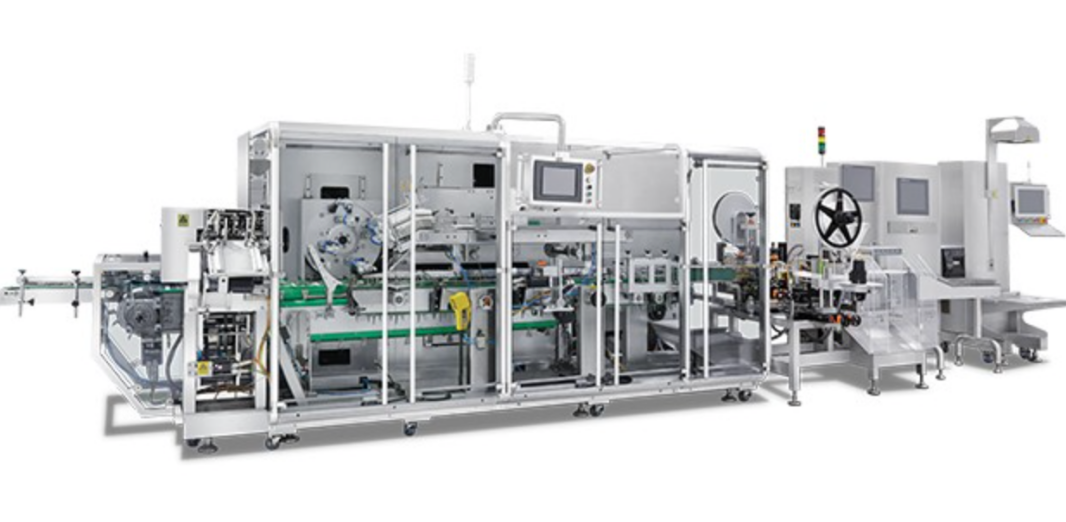
The true value of a traceability system lies in data connectivity. Only when information flows smoothly from production to warehousing, logistics, retail, and regulatory agencies can full lifecycle transparency be achieved.
Both the bottle packaging line and the carton packaging line support:
lReal-time data synchronization
lSecure data storage with audit trails
lSeamless integration with MES/ERP/WMS systems
lDirect connection to national regulatory platforms
l21 CFR Part 11 electronic signature and data integrity compliance
This creates a digital ecosystem in which every stakeholder—from regulators to manufacturers and even end consumers—can verify product authenticity and movement.
In the global pharmaceutical regulatory landscape shaped by the NMPA, DSCSA, and FMD, a manufacturer's ability to ensure serialization, aggregation, and full data integrity is the non-negotiable price of market access.
At Pharmapack, we seamlessly integrate pharmaceutical packaging equipment with robust data management to meet global regulatory standards, delivering an Integrated Turnkey Track & Trace Solution.
Contact us today for a customized consultation on designing a whole-line traceability system.