3 Major Challenges in Liquid Stick Packaging and Solutions
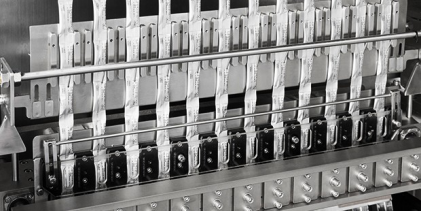
Liquid products such as oral liquids, probiotic concentrates, mouthwash, and nutritional supplements are increasingly shifting from traditional bottles to flexible stick packaging.
The format is lightweight and cost-effective for transportation. However, producing liquid stick packs at scale remains technically demanding.
This article examines the core value of stick packaging, the three production challenges manufacturers most commonly encounter, and how the PHARMAPACK LFVSC-12P automatic packaging machine addresses each one.
Why Stick Packaging Continues to Expand
1. Compact and Portable Single-Use Packaging
One of the main reasons brands are adopting stick packaging is convenience. Consumers increasingly prefer compact formats that suit modern, fast-paced lifestyles. A liquid stick pack is lightweight, portable, and easy to use on the go.
Single-use packs also help minimize product waste. Each pouch contains a pre-measured dose and is disposed of after use, reducing the risk of contamination associated with repeatedly opening a shared bottle.
2. Improved Hygiene and Product Safety
Repeated opening of bottles can introduce contamination risks, especially in pharmaceutical and nutraceutical applications. Stick packaging minimizes external exposure because each pack is sealed individually.
For products with strict hygiene standards, including healthcare and wellness applications, this packaging structure supports better compliance with pharmaceutical manufacturing practices.
3. Strong Barrier Protection
Flexible stick packs are designed to provide high barrier performance against oxygen, moisture, and environmental exposure.
For sensitive formulations such as probiotics or oxidation-prone liquids, barrier performance directly affects shelf life and product stability.
High-barrier packaging films also help maintain flavor stability and reduce moisture transmission during storage and transportation.
4. Reduced Packaging and Logistics Costs
Compared with glass or rigid plastic bottles, stick packaging uses less material and occupies less shipping space. Manufacturers can benefit from:
l Lower packaging material consumption
l Reduced transportation costs
l Improved storage efficiency
l Easier secondary packaging automation
Challenge of Stick Packaging
1. Seal Integrity and Leakage
Liquid products are significantly more difficult to seal reliably than powders or granules. Because liquids flow easily, even small amounts of residue on the sealing surface caused by splashback, condensation, or overfilling can weaken the heat seal.
This can lead to micro-leaks that are not immediately visible during production but may later result in product loss, damaged packaging, and consumer complaints.
Seal reliability is also affected by fluctuations in heat-sealing conditions. Variations in temperature, sealing pressure, or dwell time can create inconsistent seam strength throughout a production run.
In multi-lane stick pack solutions, the challenge becomes even greater. If one lane operates at a slightly different temperature or experiences uneven film tension, seal quality may vary from lane to lane.
For pharmaceutical and healthcare products, leakage rates directly affect product yield, quality control, and batch release decisions.
2. Filling Accuracy Across Multiple Lanes
Liquid formulations differ greatly in viscosity and flow characteristics.
Some products are thin and water-like, while others contain suspended particles, active ingredients, or highly viscous compounds. Maintaining accurate filling volumes becomes more difficult as more lanes operate simultaneously.
Traditional multi-lane systems commonly face issues such as:
l Inconsistent filling between lanes
l Volume drift during extended production runs
l Filling instability caused by viscosity variation
l Reduced metering precision due to mechanical wear
In regulated industries, even small filling deviations can affect dosage consistency and overall product quality.
3. Efficiency Losses and Downtime During Changeovers
Many conventional stick pack solutions use intermittent-motion operation. Frequent stopping and restarting limit production speed while increasing mechanical stress on machine components.
Changeovers also present a major operational challenge.
When manufacturers switch between different stick lengths, filling volumes, or packaging specifications, traditional equipment often requires multiple manual adjustments. These setup procedures may take several hours, decreasing overall equipment utilization.
How PHARMAPACK LFVSC-12P Addresses These Challenges
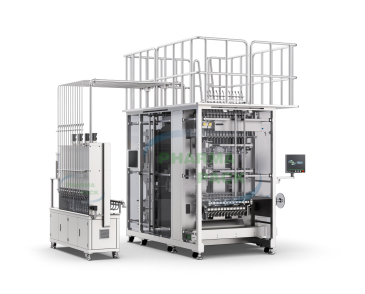
The PHARMAPACK LFVSC-12P is designed to address the key challenges of liquid stick packaging while complying with cGMP and FDA-relevant standards.
1. Enhanced Seal Integrity and Leakage Control
The LFVSC-12P automatic packaging machine adopts a dual cross-seal structure that combines vertical-texture sealing with horizontal-texture sealing to strengthen seal integrity in both directions.
An intelligent film tension control system maintains stable web tension across all 12 lanes. This helps reduce film wrinkling, improves sealing surface contact, and produces a smooth and uniform package appearance.
The servo-driven vertical sealing system delivers stable and adjustable sealing pressure, helping maintain consistent seal strength even during high-speed operation.
2. Improved Filling Accuracy Across Multiple Lanes
The machine achieves individualized loading control for each feeding channel via dedicated servo systems.
Each ceramic pump is controlled by an independent servo motor, allowing filling volumes to be adjusted lane by lane without interrupting production.
Under standard operating conditions, filling accuracy can remain within ±5%, depending on product characteristics.
Independent servo control also allows operators to fine-tune individual lanes during long production runs, which helps compensate for minor volume variation and improves overall filling consistency.
3. Higher Efficiency and Faster Changeovers
The LFVSC-12P operates in continuous-motion mode, reducing the mechanical stress associated with repeated start-stop cycles and supporting more stable high-speed production.
Compared with intermittent stick packaging machines with the same lane count, the continuous design reduces machine footprint by approximately 15% and overall weight by around 20%.
For product changeovers, parameters such as horizontal seal position, cutter spacing, filling volume, and package dimensions can be stored directly in the touchscreen control system as preset recipes.
After a recipe is selected, the servo system automatically completes all required mechanical adjustments, significantly reducing manual setup time and production downtime.
Conclusion
The industry-wide transition toward liquid stick pack formats reflects a growing demand for portability, hygiene, and enhanced packaging efficiency.
However, realizing these benefits at scale requires a sophisticated stick packing machine capable of maintaining hermetic seal integrity, high dosing precision, and flexible automation.
For manufacturers aiming to optimize their production of high-value liquid products, our PHARMAPACK LFVSC-12P automatic packaging machine offers a reliable, compliant, and efficient solution to meet the most rigorous market standards.