Safeguarding Pharmaceutical Safety: How Inspection Machines Ensure Quality for Injections and Oral Solutions
In the pharmaceutical industry, particularly in the field of sterile preparations, product purity and integrity are non-negotiable imperatives.
Even the smallest foreign particulate matter, such as glass shards, metallic filaments, or fibers, poses a direct threat to patient safety when introduced into the human circulatory or digestive systems.
For containers such as oral liquid bottles, ampoules, and vials, the inspection machine is responsible for container appearance, container closure integrity, and defect-free products. Its reliability not only ensures GMP and FDA compliance but also safeguards brand reputation and public trust.
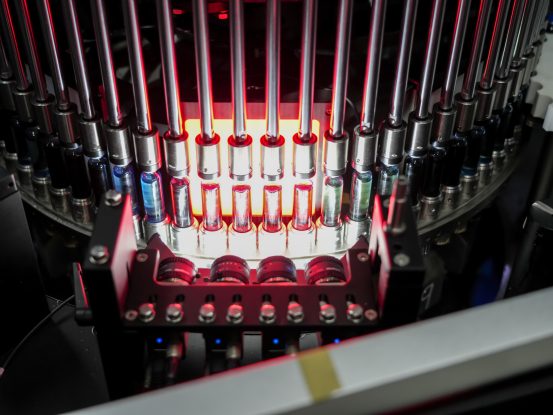
Core Functions of the Inspection Machine
Modern smart inspection machines leverage advanced machine vision technology to perform comprehensive physical scanning of products:
1. Foreign Matter Detection
This is the most fundamental and essential function of inspection machines. High-speed cameras capture the movement of liquids after spinning and abrupt stopping, enabling precise identification of visible foreign particles such as metal fragments, glass shards, fibers, hair, and rubber stopper particles.
2. Turbidity and Clarity Analysis
For liquid preparations such as oral solutions and injections, the inspection machine evaluates the clarity and color uniformity of the liquid, detecting abnormalities such as turbidity, sediment, or color variation to ensure that every container meets quality standards.
3. Seal and Packaging Defect Detection
l Container Defects: Detects structural flaws such as bottom cracks, sidewall cracks, scratches, and air bubbles, preventing breakage during subsequent processing or transportation.
l Closure Issues: For various packaging types, it detects missing aluminum seals, improper crimping, burnt tips (for ampoules), and stopper displacement or incomplete seating (for vials).
l Fill Level Inspection: Using vision or laser measurement, it verifies fill volume accuracy, identifying containers with overfill, underfill, or potential leakage risks.
Dosage Form Differences and Industry Applications
Different dosage forms impose distinct requirements on inspection technology, requiring inspection machines to offer high flexibility and specialized adaptability.
1. Injectable Industry
Injectables are introduced directly into the human circulatory system, making them subject to the most stringent safety requirements. Core standards include absolute sterility, absence of pyrogens, and freedom from visible foreign particles.
l Small Volume Parenterals (SVP / Liquid Injections): Focus on detecting visible foreign particles (such as glass shards and fibers), container closure integrity (burnt tips for ampoules, stopper sealing for vials), and fill level.
l Powder Injections: The priority is to inspect powder uniformity, presence of agglomerates, foreign particle contamination (such as rubber stopper particles and fibers), and powder adhesion to the vial wall.
l Lyophilized Products: Centers on the appearance of the lyophilized powder or cake to ensure complete morphology without collapse, cracking, or discoloration.
Simultaneously, high-precision identification of surface pits, impurities, and foreign particles on butyl rubber stoppers is required to prevent contamination of the pharmaceutical product by stopper defects.
2. Oral Liquid Industry
Oral liquid production is characterized by high-speed, high-volume operations. Traditional manual inspection suffers from limitations such as high miss rates, inconsistent judgment criteria, and operator fatigue.
Furthermore, the commercial appearance of oral liquid products directly influences consumer trust. Therefore, oral liquid inspection machines must address the following aspects in addition to foreign particle and seal defect detection:
l Fill Level Consistency: Ensures that the fill volume meets labeled specifications.
l Tamper-Evident Seal Integrity: Detects whether the tamper-evident cap is properly locked to prevent accidental opening.
l Label Printing and Adhesion Quality: Identifies issues such as misaligned labels, bubbles, wrinkles, and blurred printing to maintain product image at the point of sale.
3. Other Dosage Forms
l Ophthalmic Solutions: Due to the small container sizes, these products demand extremely high inspection precision and speed. Key inspection points include tracing foreign particles, nozzle cleanliness, seal integrity, and fill level consistency.
l High-Value Biologics: These products involve complex manufacturing processes and high production costs, necessitating exceptionally rigorous inspection standards.
In addition to conventional inspection functions, comprehensive data recording and traceability capabilities are required to comply with regulations like 21 CFR Part 11 of the FDA, which governs electronic records and electronic signatures, enabling end-to-end traceability throughout the process.
Why Choose PHARMAPACK Inspection Machines
Among the many inspection equipment suppliers, PHARMAPACK stands out with deep technical expertise and a profound understanding of the pharmaceutical industry, delivering trusted automated inspection solutions to customers worldwide.
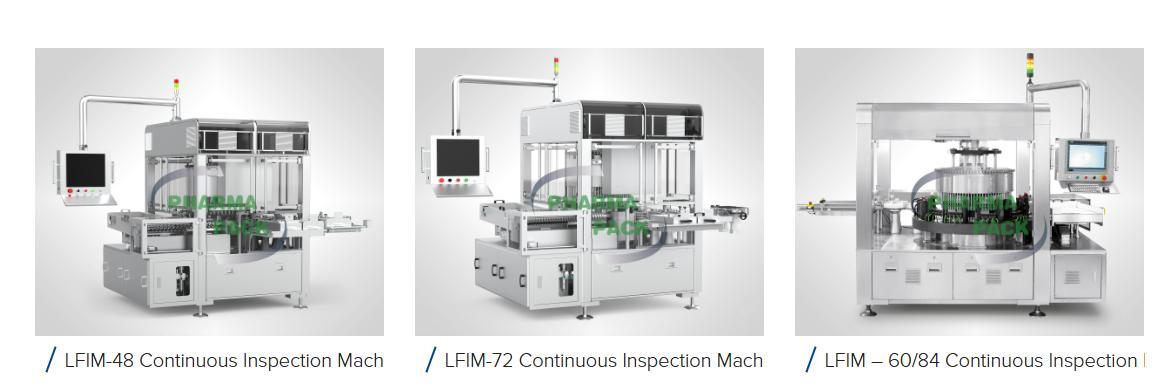
Our automatic inspection machines, including the LFIM-48, LFIM-72, and LFIM-60/84, are equipped with high-precision servo systems that ensure accurate defect detection and precise fill-level control.
1. High-Precision Detection
PHARMAPACK inspection machines integrate high-resolution industrial cameras, customized optical imaging systems, multi-angle lighting, and advanced image processing algorithms.
This enables precise identification of micro-sized foreign particles, fine cracks, and sealing defects. The machines support multispectral inspection, enabling light-source optimization based on specific liquid characteristics (such as color and transparency) and ensuring stable, reliable inspection results.
2. Reduce False Rejection Rates
During the inspection process, common interference signals such as air bubbles, bottle surface scratches, and label reflections can easily be mistaken for defects.
PHARMAPACK inspection machines are equipped with intelligent algorithms that accurately distinguish genuine defects from harmless interference through feature analysis, motion trajectory recognition, and other advanced techniques.
This significantly reduces false rejection rates, minimizes the waste of acceptable products, and safeguards production efficiency.
3. Automatically Generated Traceable Electronic Records
PHARMAPACK inspection machines feature a comprehensive data management system that automatically records inspection results for each batch and each container, including key information such as defect type, inspection time, and pass/fail status.
These machines can seamlessly integrate with Manufacturing Execution Systems (MES) and comply with regulatory requirements for electronic records (eg, FDA 21 CFR Part 11). This provides a robust data foundation for quality traceability, process optimization, and continuous improvement.
Ready to Elevate Your Quality Assurance Standards?
Whether you are seeking to upgrade from manual inspection, enhance your existing automated system, or implement a fully integrated inspection solution for a new production line, PHARMAPACK is here to support you.