How PHARMAPACK Capping Machines Secure Caps Without Damaging Bottles?
On pharmaceutical packaging lines, the core challenge of the capping process is applying sufficient sealing force without causing structural damage to the container.
Insufficient force leads to seal failure, exposing the pharmaceutical product to contamination and degradation risks; excessive force may cause cracking at the bottle neck, thread damage, or even bottle breakage, resulting in costly product waste and the potential generation of micro-particulates,t posing a safety hazard to patients.
The PHARMAPACK intelligent capping machines are specifically engineered to overcome these challenges. With high precision and exceptional adaptability, they set a new benchmark for pharmaceutical capping excellence.
Conflict Between Seal Security and Container Protection
1. Requirements for Robust Sealing
To establish an effective microbial and moisture barrier, the automatic capping machine must exert precise torque or vertical pressure. This force ensures that the cap threads engage fully with the bottle neck or that the locking ring is properly seated.
Simultaneously, the internal liner or gasket must be compressed to a specific percentage of its thickness to compensate for surface irregularities and ensure long-term stability.
2. Physical Constraints of Pharmaceutical Containers
Pharmaceutical bottles, particularly those made of lightweight plastics such as HDPE and PET, have well-defined mechanical stress thresholds.
l Structural Damage: Excessive torque can lead to thread stripping, stress cracking at the neck finish, or permanent deformation of the bottle shoulders.
l Micro-debris Generation: High-friction mechanical engagement can abrade the plastic or coating, generating micro-particulates that risk contaminating the pharmaceutical product.
l Crush Risk: For lightweight or fragile containers, excessive axial (vertical) load can cause the sidewalls to buckle or collapse.
3. Variability in the Production Environment
l Material Tolerances: Variations in manufacturing tolerances of bottles and caps (such as thread dimensions, concentricity, and finish flatness), as well as subtle differences in liner elasticity, all affect the optimal capping force required.
l Environmental Factors: Changes in temperature and humidity within the production environment can significantly influence the coefficient of friction of plastic components, thereby altering the required torque values.
l Equipment Condition: Prolonged operation inevitably leads to mechanical wear, while improper installation may result in misalignment. Both can cause uneven distribution of capping force, increasing the risk of container damage.
PHARMAPACK Capping Machines
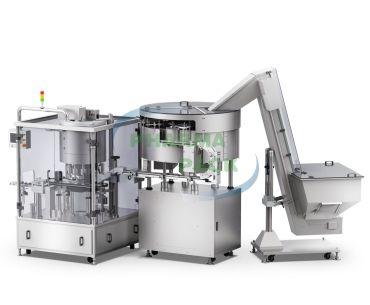
As a specialized pharmaceutical packaging equipment manufacturer, PHARMAPACK possesses deep insights into industry pain points. Our LFCT-1506/2510 series integrates precision control, flexible adaptation, and comprehensive quality assurance.

1. High Precision and Torque Control
The LFCT-1506/2510 capping machines utilize servo and variable frequency drive (VFD) systems from world-renowned brands such as SEW (Germany), enabling stepless speed regulation and high-precision closed-loop torque control.
The system monitors and automatically adjusts the output torque in real-time, ensuring consistent capping quality across all production batches.
2. Superior Adaptability
To address the industry trend toward high-mix, low-volume production, these screw capping machines adopt a modular design philosophy. Operators can rapidly perform changeovers to accommodate various bottle specifications (Height: 45–205 mm; Outer Diameter: 20–60 mm) and diverse closure types, including standard plastic caps, aluminum seals, and Child-Resistant Closures (CRC). This flexibility allows pharmaceutical enterprises to manage frequent format changes with ease.
3. Protective Engineering
The entire process, from infeed and positioning to capping and outfeed, is engineered with a low-impact design. Through the synchronized operation of precision cam mechanisms and servo control, equipment movements are smooth and gentle. This significantly mitigates the risk of stress impact and physical damage to containers, particularly those made of fragile materials such as glass.
4. Comprehensive Quality Control and Compliance
l Intelligent Inspection & Rejection: The automatic capper can be integrated with high-sensitivity torque monitoring and Machine Vision Inspection systems (detecting missing, skewed, or cocked caps, as well as improper pressing depth). This achieves 100% online inspection and automated rejection, ensuring that non-compliant products do not proceed to downstream processes.
l Material Compliance: The main structure is fabricated from AISI 304 stainless steel, while critical contact parts utilize AISI 316 stainless steel. Surfaces are smooth and free of sanitary dead zones, fully complying with GMP and FDA requirements regarding equipment, materials, and cleanability.
l Data Integrity & Traceability: The LFCT-1506/2510 capping machine is equipped with comprehensive data logging and traceability interfaces, guaranteeing the integrity and auditability of production parameters in line with regulatory standards.
Value and Benefits of PHARMAPACK Capping Machine
Choosing our PHARMAPACK automatic screw capping machine brings not only improved equipment performance but also value-added benefits across the entire value chain:
l Decrease Rejection Rate: Through precise control of capping force and high-rate online inspection, rejects caused by improper capping or container damage are minimized to the greatest extent. For products containing expensive pharmaceuticals, this directly translates into substantial cost savings.
l Enhance Patient Medication Safety: Stable and reliable sealing torque ensures that the cap maintains its sealing performance throughout the entire shelf life of the medicine, safeguarding the stability of the pharmaceutical efficacy and providing a fundamental guarantee for patient safety.
l Enable Flexible Production Models: Extremely short changeover times and strong adaptability allow pharmaceutical companies to easily handle multi-variety, small-batch production requirements, respond quickly to market changes, and achieve efficient, agile modern manufacturing. High-speed stability combined with a low failure rate maximizes the OEE of the packaging line.
Take the Next Step in Packaging Precision
Are you looking to reduce reject rates and improve sealing consistency in your production line? PHARMAPACK is ready to help you optimize your packaging process for even the most fragile or complex container specifications.