How to Choose a Non-Standard Pharmaceutical Packaging Supplier?
Not every pharmaceutical product fits neatly on a standard packaging line.
As dosage form innovation accelerates, brand differentiation intensifies, and regulatory expectations become more stringent, demand for non-standard customized automation is becoming increasingly necessary.
Transitioning from generic equipment to bespoke engineering requires a reliable pharmaceutical packaging supplier with extensive industry expertise and proven technical execution capabilities.
How to Evaluate a Non-Standard Pharmaceutical Packaging Supplier
1. Pharmaceutical Domain Expertise
A capable pharmaceutical packaging supplier must understand pharmaceutical requirements beyond the mechanical operation of equipment.
Different dosage forms, including high-potency solid drugs, sensitive liquid biologics, and lyophilized powders, present distinct packaging challenges.
An ideal partner should be able to assess how product properties such as viscosity, light sensitivity, and hygroscopicity influence packaging performance and material selection.
In addition, the supplier must be familiar with major regulatory and pharmacopeia requirements, including those established by the NMPA, FDA, and EMA.
This helps ensure that the customized packaging solution is not only operationally reliable but also compatible with the medical product in terms of stability, safety, and contamination control throughout the packaging process.
2. Technical Depth and R&D Autonomy
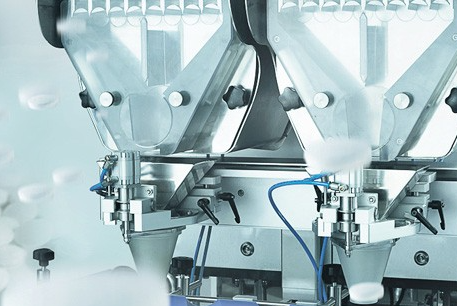
Non-standard projects often require precise filling control, complex material handling, and integrated vision inspection systems.
Therefore, it is important to evaluate whether the pharmaceutical packaging supplier develops and controls its core technologies in-house or depends heavily on third-party contractors.
Suppliers with strong in-house R&D capabilities can customize robotics, PLC programming, and inspection systems according to specific production requirements.
This typically results in better system integration, faster technical support, and more reliable long-term performance.
3. Pharmaceutical Packaging Compliance and Validation Readiness
Good documentation is just as important as a good machine. Custom equipment should be built on Quality by Design (QbD) principles.
The supplier should be able to provide a complete validation package aligned with GAMP 5 requirements, including risk assessments, URS, and FDS documentation.
Additionally, the equipment should comply with 21 CFR Part 11 and Annex 11 requirements for electronic records and electronic signatures.
Finally, a smooth IQ/OQ/PQ process is mandatory to get through health authority or brand-owner audits without delays.
4. Delivery Validation Capability
Experience with similar products is an important basis for assessing risk. When evaluating a pharmaceutical packaging supplier, the following points should be considered:
l Installed Base and Operational Stability: How many custom packaging lines supplied by this supplier are currently in stable, multi-shift operation at pharmaceutical sites globally?
l Failure and Delay Records: Can the supplier provide verifiable references from customers with similar product applications?
l Verifiable Customer References: Is the supplier willing to provide references from existing customers with similar product applications for direct verification?
It is also necessary to confirm whether the supplier has a global service network capable of offering long-term technical support, spare parts supply, and operator training after installation.
Why Choose PHARMAPACK?
1. Over 20 Years of Pharmaceutical Packaging Expertise
For more than 20 years, we have specialized in pharmaceutical packaging automation, serving the high-standard manufacturing needs of pharmaceutical companies worldwide.
We have participated in the development of four Chinese national standards and hold more than 400 patents and software copyrights.
Our experience in pharmaceutical packaging equipment, intelligent control systems, and automation integration enables us to deliver reliable and efficient customized solutions for a wide range of pharmaceutical applications.
2. End-to-End Customization Capability
From mechanical structure design and material selection to control system development, we maintain complete in-house R&D and manufacturing capabilities for customized pharmaceutical packaging solutions.
Based on different product characteristics, including high-potency drugs, biologics, and lyophilized products, we can flexibly integrate filling, labeling, vision inspection, robotic handling, and data traceability systems according to specific production requirements.
Our integrated engineering capability allows us to provide faster project execution, stronger system compatibility, and more responsive long-term technical support.
3. Global Compliance-Oriented Design
All PHARMAPACK equipment is engineered according to international pharmaceutical compliance requirements. Products have obtained CE, UL, and CSA certifications, and complete production lines comply with cGMP and FDA 21 CFR Part 11 standards.
Each customized pharmaceutical packaging machine can be delivered with complete IQ/OQ/PQ validation documentation, including risk assessments, URS/FDS documentation, and electronic data management support.
Our systems also support audit trails, user access management, and data integrity requirements, meeting the digital and compliance requirements of modern pharmaceutical manufacturing facilities.
4. Trusted by Global Pharmaceutical Leaders
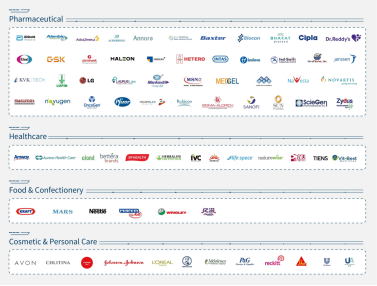
Over the years, we have established long-term partnerships with leading pharmaceutical companies, including Pfizer, Johnson & Johnson, GlaxoSmithKline, Sanofi, and Sun Pharmaceutical.
Today, more than 200 pharmaceutical packaging lines are operating across over 30 countries and regions worldwide, supporting solid dosage, sterile products, biologics, and medical product packaging applications.
Headquartered in Guangzhou, we maintain domestic branches in Beijing, Shanghai, and Chengdu, alongside overseas subsidiaries in the USA, Italy, and India. This global footprint enables seamless, localized technical support and service across multiple time zones.
FAQ
1. Will Custom Equipment Take Too Long and Cost Too Much?
Custom solutions do not necessarily mean building everything from scratch. Our customized systems are developed based on modular platforms.
This approach allows key mechanical sections to remain field-tested and reliable, while customized modules address unique production requirements.
2. Will Spare Parts and Ongoing Maintenance be Complicated?
A common concern with custom machinery is the "orphan part" problem, where unique components become impossible to source.
At PHARMAPACK, we mitigate this risk by prioritizing standardized parts from globally recognized brands for all electronics, pneumatics, and drive systems.
Every custom machine is accompanied by complete technical documentation, drawings, and manuals to ensure transparent maintenance.
Furthermore, we offer 24/7 remote technical support. Our subsidiaries in North America, Europe, and India handle localized service and rapid parts delivery across multiple regions worldwide.
Conclusion
Selecting the right partner for custom pharmaceutical packaging is not simply a matter of equipment procurement. It directly affects production efficiency, validation readiness, long-term operational stability, and regulatory compliance.
As an experienced pharmaceutical packaging supplier, PHARMAPACK combines in-house engineering, global compliance expertise, and extensive project experience to support complex and non-standard packaging applications across the pharmaceutical industry.
Contact us to discuss your pharmaceutical packaging requirements.