Multidimensional Modalities of Labeling in Pharmaceutical Packaging and Their Strategic Value
Multidimensional Modalities of Labeling in Pharmaceutical Packaging and Their Strategic Value
In the highly regulated pharmaceutical industry, labeling is far more than a simple mechanical application. It is the final physical embodiment of a product's identity, compliance, and patient safety commitment. Each label must precisely convey critical information, from drug name and dosage to serialized codes, and maintain integrity throughout the supply chain.
To meet the diverse demands of packaging formats, production line layouts, and global regulatory requirements, the pharmaceutical labeling machines have been engineered to enable multiple specialized labeling modalities.
This blog will explore the multiple forms of pharmaceutical labeling and delve into the strategic value each one brings to modern drug manufacturing and supply chain integrity.
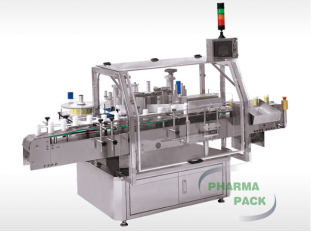
Based on Container Orientation and Line Integration
Pharmaceutical packaging formats are exceptionally diverse, ranging from ampoules containing mere microliters to IV bags holding hundreds of milliliters. These vast differences in physical characteristics demand that labeling modalities possess a high degree of adaptability.
1. Vertical Labeling
(1) Design Logic: Vertical labeling is performed while the container keeps upright, with its base securely supported. The core logic relies on utilizing the container’s gravity and the friction of the conveyor belt to achieve stable, high-speed linear motion.
(2) Typical Applications: This is the most prevalent labeling method in the pharmaceutical industry, widely used for vials, oral liquid bottles, syrup bottles, wide-mouth jars, and various standard cylindrical or rectangular containers.
(3) Strategic Value
l Maximum Spatial Efficiency: A vertical labeling machine typically features a linear layout, allowing for seamless integration into existing high-speed filling lines. This optimizes the equipment footprint caused by unnecessary rotations or orientation changes.
l High Throughput Assurance: In large-scale, standardized production, vertical labeling supports extremely high operating frequencies. For pharmaceutical companies, this translates to higher Overall Equipment Effectiveness (OEE) and lower unit costs, serving as the industrial cornerstone for the mass supply of medications.
2. Horizontal Labeling
(1) Design Logic: For containers that are slender, lack a stable base, or have a high center of gravity, high-speed vertical transport is nearly impossible. The horizontal pharmaceutical labeling machine tackles this fundamental challenge by reorienting the container 90 degrees, positioning it to lie horizontally and rotate on a roller cradle during the precise labeling process.
(2) Typical Applications: Ampoules, pen injectors, insulin cartridges, and blood collection tubes.
(3) Strategic Value
l Compensating for Physical Constraints: Horizontal rolling eliminates the risks of instability and tipping that slender bottles face during high-speed movement.
l Extreme Precision: As the container rotates in a controlled manner during label application, the label wraps more evenly and aligns perpendicularly with the container axis. For high-value products like biologics, this verticality is not just aesthetic; it is a regulatory necessity to guarantee critical data, such as batch numbers and expiration dates, remain legible and free of wrinkles.
l Protection of Fragile Items: For thin-walled, brittle containers like glass ampoules, the uniform force distribution provided by a horizontal labeler significantly reduces breakage rates.
3. Stand-alone Labeling
(1) Design Logic: This modality, also known as flat or surface labeling, operates independently of integrated conveyor systems. It adopts independent workstations or custom fixtures to address specialized and discontinuous labeling needs that fall outside standard production flows.
(2) Typical Applications: IV bags, large medical device cartons, low-volume clinical trial supplies, and irregularly shaped packaging.
(3) Strategic Value
l Flexibility and Agility: As the pharmaceutical market shifts from mass production toward personalized/precision medicine, a flat labeling machine enables rapid changeovers between multi-specification, small-batch orders.
l Overcoming Material Limitations: For example, the surface of an IV bag is uneven after filling. Flexible labeling systems are usually equipped with specialized smoothing mechanisms to ensure firm adhesion on soft, irregular surfaces.
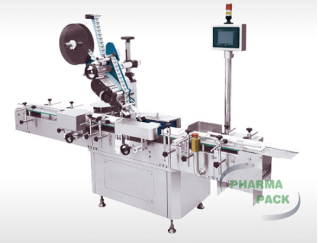
Based on Information Requirements and Regulatory Compliance
1. Single-side Labeling
Applying a single label to the container’s primary display panel to carry core medication data, it represents the most ubiquitous and cost-efficient configuration.
l Operational Efficiency: Prioritizes the rapid presentation of essential information, making it ideal for packaging with ample surface area and standard mandates.
l Economic Competitiveness: For cost-sensitive generics, this streamlined approach serves as a vital strategy for optimizing production throughput and minimizing overhead.
2. Dual-side Labeling
Labels are applied to two opposite sides of the container (e.g., front and back of a flat bottle), either simultaneously or sequentially.
l Navigating Multi-lingual Requirements: For products distributed across international borders, packaging must often accommodate instructions in multiple languages. By deploying a double-side labeling machine, manufacturers can decouple brand identity from dense regulatory warnings, vastly improving legibility and user safety by using both sides of the container.
l Aesthetics and Credibility: Neatly executed two-sided labeling elevates the product’s professional appearance. In the premium prescription drug market, this visual order can reinforce perceptions of quality and reliability.
3. Top/Bottom Labeling
Specifically engineered to affix traceability codes or unique serial numbers onto the cap or base of the packaging, this typically functions as a process independent of the primary labeling phase.
l Functional Segmentation: It achieves a clear division of labor, side labels handle visual engagement, while top/bottom labels are dedicated to regulatory genealogy.
l Global Compliance: Fulfills the mandatory requirements of the US DSCSA and EU FMD for Unique Device Identification (UDI) at the smallest saleable unit.
l Granular Internal Traceability: Supports detailed operational oversight, allowing rapid tracing of individual units back to specific production equipment, shifts, or batches.
l Anti-Counterfeiting: By facilitating a "One Item, One Code" ecosystem, this system enables consumers or distributors to verify authenticity and logistics history in real-time, effectively mitigating the risks of diversion and illicit trade.
Pharmaceutical Labeling Machines from PHARMAPACK
As the pharmaceutical industry advances towards greater personalization, digitalization, and globalization, the requirements for labeling technology have evolved beyond simple physical attachment to intelligent integration, credential assurance, and end-to-end traceability.
Therefore, selecting a technology partner with forward-looking capabilities is crucial. PHARMAPACK deeply understands the complexities of pharmaceutical processes and offers a comprehensive range of pharmaceutical labeling machine solutions, from low-speed (clinical/small-batch) to ultra-high-speed (large-scale production).
l Versatile Modalities: Whether it's high-speed vertical labeling for vials, precision horizontal labeling for ampoules, specialized automatic bottle labeling machine solutions for round containers, or front and back labeling machines for comprehensive product identification, PHARMAPACK possesses mature technological systems that precisely match the physical characteristics and regulatory requirements of different containers.
l Regulatory Leadership: Our equipment design aligns with international standards and demonstrates industry-leading expertise in areas such as serialized traceability, anti-counterfeit labeling, and compliance with stringent regulations like DSCSA and FMD.
l Intelligent Integration: Leveraging advanced machine vision inspection systems and intelligent control platforms, we ensure the accuracy and compliance of every label application, safeguarding pharmaceutical production safety and patient medication safety.
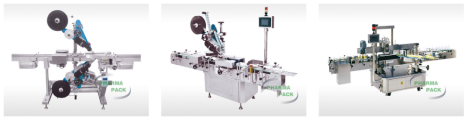
Partnering for Global Excellence
The diversification of labeling modalities reflects the evolution of the pharmaceutical industry and the advancement of regulatory requirements. For pharmaceutical enterprises, a deep understanding of the strategic logic behind these labeling modalities is beneficial for optimizing production processes and ensuring compliance and safety.
Partner with PHARMAPACK to transform your pharmaceutical labeling machine strategy into reliable, compliant, and future-ready operations.