Can Powders, Granules, and Liquids All Use Stick Packs
Many consumers mistakenly believe that stick packaging is only suitable for powdered formulas. In reality, this flexible format has rapidly penetrated multiple industries, from pharmaceuticals to food production.
However, different product forms, ranging from free-flowing powders and fragile granules to dense liquids, present vastly unique challenges on the production line.
Selecting the correct machinery configuration is the ultimate key to achieving high-speed manufacturing efficiency, airtight seal integrity, and unwavering product quality across all formulations.
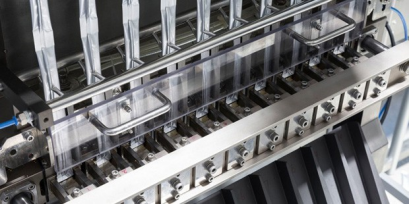
Stick Packaging Overview
Stick packaging has become a common choice for single-dose delivery thanks to its slim profile, portability, and easy tear lines. It suits on-the-go consumers who want direct-to-mouth convenience or quick dilution in liquid.
How well a stick performs depends largely on the film structure chosen to protect the contents.
l Aluminum-plastic composite film combines aluminum foil with plastic layers to provide a barrier against external elements alongside standard thermal sealing capabilities. It offers a balanced, cost-effective option for brands setting up a stick packing machine line.
l Pure aluminum foil provides the strongest barrier. It blocks moisture, oxygen, and UV light effectively, which makes it a standard pick for sensitive ingredients.
l Paper-aluminum composite focuses on sustainability. It lowers the environmental footprint by adding biodegradable material while still maintaining shelf-life stability.
l Transparent composite film utilizes clear plastic layers to allow visibility of the internal product's color and texture, which helps with shelf appeal.
Stick Packaging for Powders
1. Common Format
l On the pharma side, it covers oral rehydration salts, antibiotic granule mixes, and effervescent vitamin C.
l Supplement applications include protein, collagen, probiotic, and electrolyte powders.
l Grocery products include instant coffee, milk tea blends, and infant formula.
2. Key Process Considerations
l Flowability matters most. Free-flowing powder doses differently from a powder that clumps, and each calls for a different dosing approach.
l Fill accuracy requires stable control. Weight variation limits vary by dosage form and labeled fill weight per product registration standards.
l Barrier choice, such as PVDC or foil laminate, drives shelf life through moisture control.
l Dust is easily overlooked, yet any powder left in the seal zone weakens heat-seal integrity and produces rejects.
3. PHARMAPACK Solution
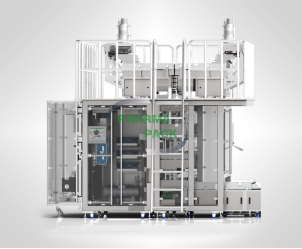
The ALFVS-12S is a multi-lane automatic packing machine specifically designed for high-speed powder production.
(1) Multi-Lane Servo Dosing System
12 lanes, each with independent servo-controlled dosing. Supports measuring cup, auger, electronic counting, etc., accommodating both free-flowing and clumping powders. Fill accuracy ≤±5% (depending on product characteristics).
(2) Servo Film Tension Control
Servo-driven film transport with EtherCAT bus and PID algorithm for automatic tension adjustment, preventing film wandering or tearing at high speeds.
(3) Dust Recovery & Anti-Powder Sealing
Equipped with a vacuum dust recovery system that recycles dusty material during filling, with adjustable extraction angle and timing. This reduces material jams and keeps the seal zone clean, supporting seal integrity.
Stick Packaging for Granules
1. Common Format
Granular substances offer good solubility and lower dust, making them popular for specific therapeutic and culinary uses.
l Pharmaceutical examples encompass effervescent granulates, traditional herbal extracts, and pediatric oral granules.
l The health sector uses them for dietary fiber blends and prebiotic matrices
l Food plants package instant soup mixes and granulated sugars in sticks.
2. Key Process Considerations
Processing granules through a stick packing machine requires specialized mechanical considerations:
l Particle size distribution is the primary variable; large particles exceeding 3mm can easily obstruct narrow filling funnels.
l Material friability is another concern. Fragile granules subject to intense mechanical agitation or high-speed gravitational drops can fracture into fine powders, ruining both the visual texture and dosing accuracy on a high-throughput stick packing machine.
l Effervescent granules present extreme challenges due to their severe hygroscopic nature; they absorb moisture instantly from ambient air, requiring rapid processing speeds and strict low-humidity environmental control.
l The particle size distribution uniformity of granules directly affects fill weight consistency. If the proportion of fine powder and coarse particles in the granules is unbalanced, volumetric dosing may experience fill weight fluctuations.
3. PHARMAPACK Solution
The ALFVS-12S stick packing machine introduced earlier also runs granules, since its servo dosing supports auger and electronic counting modes that suit coarser materials.
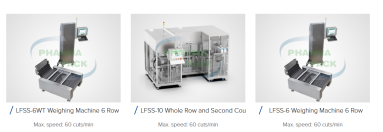
To keep dose consistency in check, PHARMAPACK offers a range of weight checking and stick re-arrange devices, including the LFSS-12WT, LFSS-12, and LFSS-12WT, running at speeds up to 60 cuts per minute.
l As an inline quality control step on a stick pack line, the system verifies fill weight and manages stick arrangement, so packs reaching downstream cartoning or tray-loading meet their target fill weight.
l For granule runs where particle size variation can cause volumetric dosing to drift, this inline weight check catches out-of-spec packs before they continue down the line.
Stick Packaging for Liquids
1. Common Format
The adaptation of liquid formulations into stick packs has unlocked major opportunities for lifestyle brands and medical lines alike.
l The range spans oral liquids, syrups, liquid vitamins, and liquid probiotic preparations in pharma.
l Supplements include liquid collagen and low-viscosity fish oil.
l Food applications cover honey sticks, juice, sauce sachets, and olive oil sticks.
2. Key Process Considerations
Viscosity sets the approach. Thin water-based liquids and thick fluids such as honey or syrup require different filling pumps and seal temperatures.
Seal integrity represents the most demanding challenge in liquid packaging. Liquid trapped in a sealing seam prevents proper thermal fusing, causing immediate leaking.
Hygienic design carries extra weight for liquids. Fluid-facing surfaces are typically specified in stainless steel that is easy to clean and sanitize, and many liquid lines adopt Clean-in-Place (CIP) practices to meet GMP expectations.
Aerated or active-ingredient liquids also call for anti-foam handling during filling; otherwise, dose accuracy drifts.
3. PHARMAPACK Solution
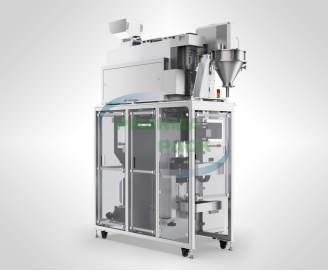
The LFVS-01S 3-in-1 stick packing machine achieves a top speed of 80 cuts per minute and fill accuracy held to ≤±5%, both depending on product characteristics.
The machine runs on a servo modular design. Each functional module can be combined to match the requirements of different orders.
Every part in contact with the product is made of stainless steel and aluminum, with no rust or contamination risk, in line with GMP environmental requirements.
A recipe management function stores parameters for each product specification and recalls the matching recipe during production, which keeps settings consistent across changeovers.
Film width covers 49 to 180mm and stick length 60 to 200mm, accommodating different liquid stick sizes on a single stick packing machine.
Conclusion
Stick packs work across powders, granules, and liquids, but each format makes its own demands on the line. Matching the equipment configuration to the dosage form is what holds quality and output steady. Contact us to review our full range of stick packing machines and packaging solutions.