What Is Secondary Packaging in Pharmaceuticals
In the pharmaceutical industry, packaging is far more than a protective shell; it is a critical component of product safety, regulatory compliance, and brand integrity. Pharmaceutical secondary packaging plays an equally important role in protecting, identifying, and distributing medicines throughout the supply chain.
Secondary Packaging in the Pharmaceutical Industry
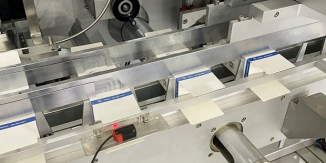
Pharmaceutical secondary packaging refers to the outer packaging layer that encases the primary container — the vessel in direct contact with the medicinal product (such as a blister pack, vial, or ampoule).
While primary packaging preserves the product's stability and sterility, secondary packaging protects, labels, and organizes primary containers for distribution and end use.
A simple example: walk into any pharmacy and pick up a box of tablets. The cardboard box in your hand is secondary packaging; the blister strip sealed inside is primary.
Common Forms of Pharmaceutical Secondary Packaging
Pharmaceutical secondary packaging takes several forms depending on the product type, market regulations, and distribution channel:
l Folding Cartons (Paperboard Boxes): The most prevalent format in the industry. Cartons enclose blister packs, bottles, and vials, and serve as the primary surface for printed regulatory and brand information.
l Shrink Wrap Bundling: Transparent film applied around groups of units — commonly used to bundle multiple cartons or blister strips together for retail or hospital dispensing.
l Gift Sets and Combination Packs: Rigid or semi-rigid outer boxes designed to package combination products, OTC health kits, or specialty pharmaceutical sets.
l Package Inserts and Labels: Printed materials placed inside or affixed to the outer packaging, showcasing product information, dosage and administration instructions, and regulatory compliance content.
Key Functions of Pharmaceutical Secondary Packaging
1. Product Protection
One of the main purposes of secondary packaging is to provide additional physical protection for primary packaging, reducing the impact of mechanical shock, moisture, light exposure, and dust contamination during transportation and long-term storage.
For temperature-sensitive products such as biologics and vaccines, some specialized secondary packaging solutions incorporate insulation materials or structural designs to provide additional protection during cold chain transportation and help maintain suitable temperature conditions during handling and shipment.
2. Information and Regulatory Compliance
Accurate and readable labeling is essential for patient safety and and regulatory compliance. Secondary packaging provides sufficient surface area for legally required information, including:
l Drug name
l Dosage strength
l Manufacturing details
l Batch numbers
l Expiration dates
l Storage conditions
l Safety warnings
l Instructions for use
3. Anti-Counterfeiting and Traceability
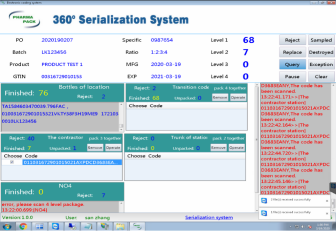
Counterfeit medicines remain a major challenge for the pharmaceutical industry. Secondary packaging supports pharmaceutical serialization and track-and-trace systems by providing a surface for applying traceability information, such as unique serial numbers, 2D barcodes, and tamper-evident features. These elements allow manufacturers and regulators to track individual units through different stages, from production to distribution, helping verify product authenticity.
4. Branding and Marketing
Secondary packaging is also an important branding tool. Well-designed packaging communicates:
l Brand identity
l Product differentiation
l Premium positioning
l Consumer trust
In competitive pharmaceutical and healthcare markets, packaging design can influence product recognition and market perception.
5. Logistics and User Convenience
Beyond protection and information, secondary packaging supports efficient storage, transportation, and dispensing. Cartons that stack uniformly, shrink-wrapped bundles that resist shifting during transit, and cases with clear exterior labeling all contribute to more organized handling, storage, and distribution processes.
What Equipment Is Used in Secondary Packaging?
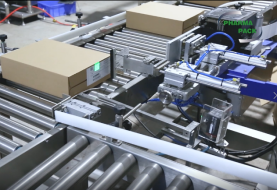
Modern pharmaceutical production lines typically involve several types of equipment to complete secondary packaging operations:
l Cartoning: Automatic cartoners place primary packaging products, such as blister packs and bottles, into folding cartons. Depending on product requirements, the equipment can also insert leaflets or other required components before closing the cartons.
l Coding and Labeling: Coding and labeling systems print or apply product identification information, such as batch numbers, expiration dates, serialization data, barcodes, and labels, to support product identification and traceability.
l Vision Inspection: Vision inspection systems check printed information, barcodes, and labels on packages to identify missing, incorrect, or misaligned content. Defective units can be automatically removed from the production line.
l Case Packing & Palletizing: At the end of the packaging process, automated case packers organize finished cartons and place them into shipping cases. Robotic palletizers then stack the cases onto pallets according to predefined patterns for warehousing and transportation.
Based on our understanding of pharmaceutical end-of-line packaging processes and industry requirements, PHARMAPACK’s PEL Series secondary packaging line features a modular design that can be flexibly configured according to different product specifications, facility layouts, and production capacity requirements. By combining different packaging modules, the series supports pharmaceutical production needs ranging from individual carton packing to end-of-line palletizing.
Conclusion
Pharmaceutical secondary packaging is a regulatory requirement, a patient-safety mechanism, a brand asset, and a supply-chain tool.
As serialization requirements continue to develop and production demands increase, automated and integrated secondary packaging solutions help pharmaceutical manufacturers manage packaging processes while meeting evolving operational and regulatory requirements.