Advantages of Modular Design in Continuous Cartoning Machines
Efficiency and flexibility are essential factors in modern packaging operations. Pharmapack has incorporated modular design into continuous cartoning machines to address these needs, providing tangible benefits for manufacturers across pharmaceutical, food, and cosmetic industries. Modular systems allow each section of the machine to operate independently while maintaining overall coordination, enabling rapid adaptation to production changes. By adopting a modular approach, we ensure solutions that are both reliable and adaptable, meeting diverse customer requirements without compromising output quality.
Streamlined Production with Modular Setup
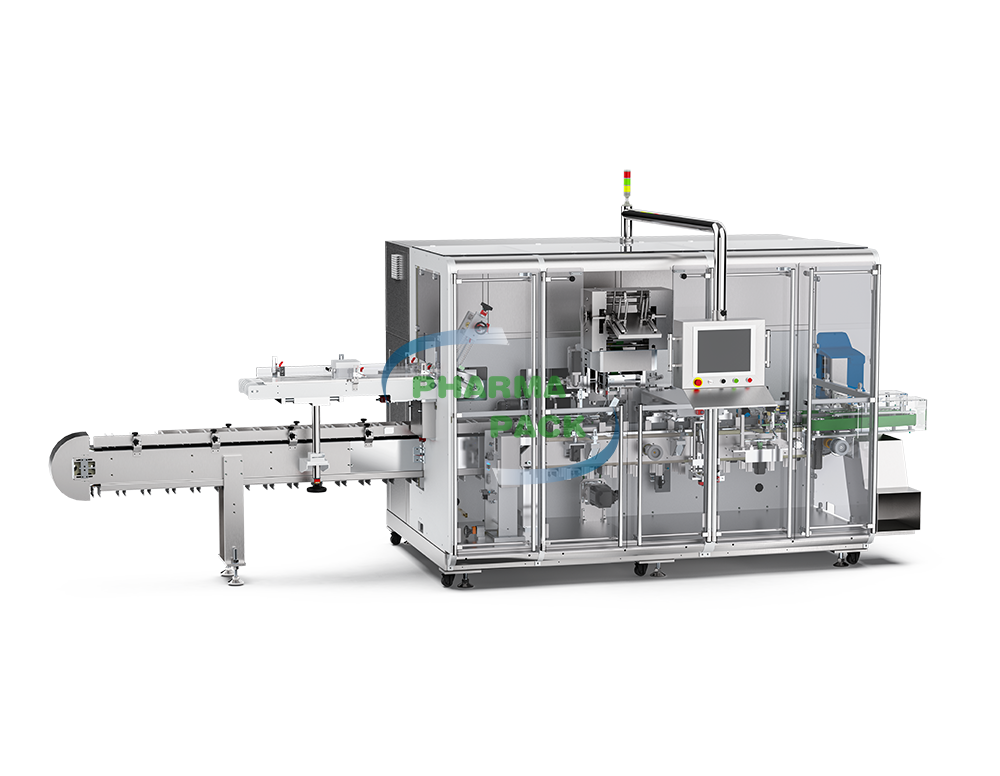
A key advantage of modular design is its ability to enhance production flow. In our LFBI-10 system, products are positioned manually or automatically into the buckets of the infeed conveyor, where a sensor verifies correct placement. This ensures smooth transfer from the carton magazine to the filling station. Each module, from infeed to folding, operates independently, which allows faster adjustments and reduces downtime. By separating operations into distinct modules, we can maintain high-speed performance while simplifying troubleshooting, helping manufacturers achieve more consistent production output over time.
Enhanced Accuracy and Integration
Modular design also improves accuracy and system integration. At the marking station, cartons are squared and embossed with codes, followed by leaflet insertion. The leaflets inserter delivers leaflets to the introduction zone, where a pusher inserts them into the open cartons. Because each station functions independently, upgrades or replacements can occur without halting the entire line. This flexibility is particularly valuable for cartoning machine manufacturers who require precise control over packaging processes. Modular setups reduce error rates, ensure consistent quality, and allow integration with advanced technologies like track & trace or induction seal detection systems.
Cost Efficiency and Maintenance
Operational cost savings are another benefit of modular design. By allowing each module to be serviced independently, we minimize maintenance disruptions and extend the lifespan of continuous cartoning machines. In the LFBI-10, cartons advance on a top/bottom toothed belt transporter, where a series of folders fold the flaps and eject incomplete cartons. This modular configuration ensures that maintenance is straightforward, reduces spare part inventory, and lowers long-term operational costs. Manufacturers benefit from a system that is both durable and adaptable, supporting high-volume production while maintaining reliability.
Conclusion: Practical Benefits of Modular Design
Adopting a modular design in continuous cartoning machines offers clear advantages in flexibility, precision, and cost efficiency. At Pharmapack, we combine advanced technology, extensive R&D, and state-certified expertise to deliver packaging solutions that meet diverse industry needs. From optimized product flow to simplified maintenance, modular setups allow manufacturers to maintain high-quality output consistently. These benefits demonstrate how carefully designed modular systems can transform traditional packaging operations into efficient, reliable, and adaptable production lines, ensuring long-term value for our customers.