How Unscrambler Machines Improve Stability When Handling Lightweight PET Bottles
Lightweight PET bottles offer advantages in material consumption, transportation, and packaging efficiency, but their reduced weight can create new challenges on automated production lines. During bottle feeding and orientation, lightweight containers are more likely to tip, overlap, bounce, or become trapped at transfer points. These problems can interrupt downstream processes and reduce actual line efficiency even when the rated machine speed is high.
For manufacturers handling lightweight PET containers, selecting the right unscrambler machines is therefore not simply about maximum bottles per minute. Bottle stability, controlled movement, reliable detection, and coordination with downstream equipment all have a direct impact on continuous production.
Why Lightweight PET Bottles Are More Difficult to Unscramble
Compared with heavier containers, lightweight PET bottles have less resistance to sudden acceleration, directional changes, and mechanical contact. When bottles enter an unscrambling system too quickly, they may lean against neighboring bottles or lose their intended orientation.
Bottle tipping is one of the most common concerns. Once several bottles fall together, the resulting accumulation can block the feeding path and require manual intervention. Overlapping bottles can create another problem because the unscrambling mechanism may attempt to process multiple containers at once.
These issues can become more noticeable when production speeds increase. Simply increasing conveyor speed without adjusting the bottle handling process may create unstable feeding rather than higher effective output.
An automatic bottle unscrambler factory should therefore evaluate the complete bottle handling process, including container dimensions, material characteristics, production speed, feeding method, and the equipment connected to the unscrambler.
Common Causes of Jams and Unplanned Stops
Bottle jams do not always originate from a mechanical failure. In many cases, the underlying problem is an imbalance between bottle behavior and machine settings.
Incorrect speed synchronization is a common cause. If the unscrambler sends bottles downstream faster than the next machine can accept them, bottles can accumulate at the transfer point. If the feeding speed is too slow, the downstream equipment may experience gaps in supply.
Improper orientation can also contribute to stoppages. Lightweight PET bottles that are not correctly separated or guided may enter the conveyor in an unstable position. A bottle that falls sideways can interfere with subsequent containers and create a chain reaction.
Mechanical wear, dust accumulation, sensor issues, and compressed air problems can also affect equipment performance. Regular inspection and appropriate maintenance remain important even when the core unscrambling mechanism is designed for automated operation. Pharmapack recommends routine cleaning, lubrication, and inspection of electrical and compressed air connections as part of maintaining stable operation.
How Servo Control Supports More Stable Bottle Handling
At Pharmapack, we use servo control technology to improve the precision of bottle handling. Compared with traditional cylinder-driven mechanisms, servo-based systems can provide more controlled movement and support self-detection functions.
This is particularly useful when handling containers with different dimensions or shapes. More precise movement helps reduce abrupt mechanical actions that may cause lightweight bottles to tip or shift during orientation.
Our equipment uses self-sensing servo control in place of traditional cylinder systems in relevant applications. This design is intended to improve stability, reduce the impact of dust on moving mechanisms, and lower maintenance requirements over the equipment's operating life.
For production teams, the practical objective is not simply to achieve a higher theoretical speed. It is to maintain consistent bottle flow while minimizing manual intervention and unnecessary stops.
Matching Unscrambler Speed With the Complete Production Line
An unscrambler should be considered as part of a complete packaging system rather than an isolated machine. After bottles are oriented, they may need to pass through conveyors, counters, filling equipment, cappers, sealers, labelers, or cartoners. Any mismatch between these stages can affect the overall line.
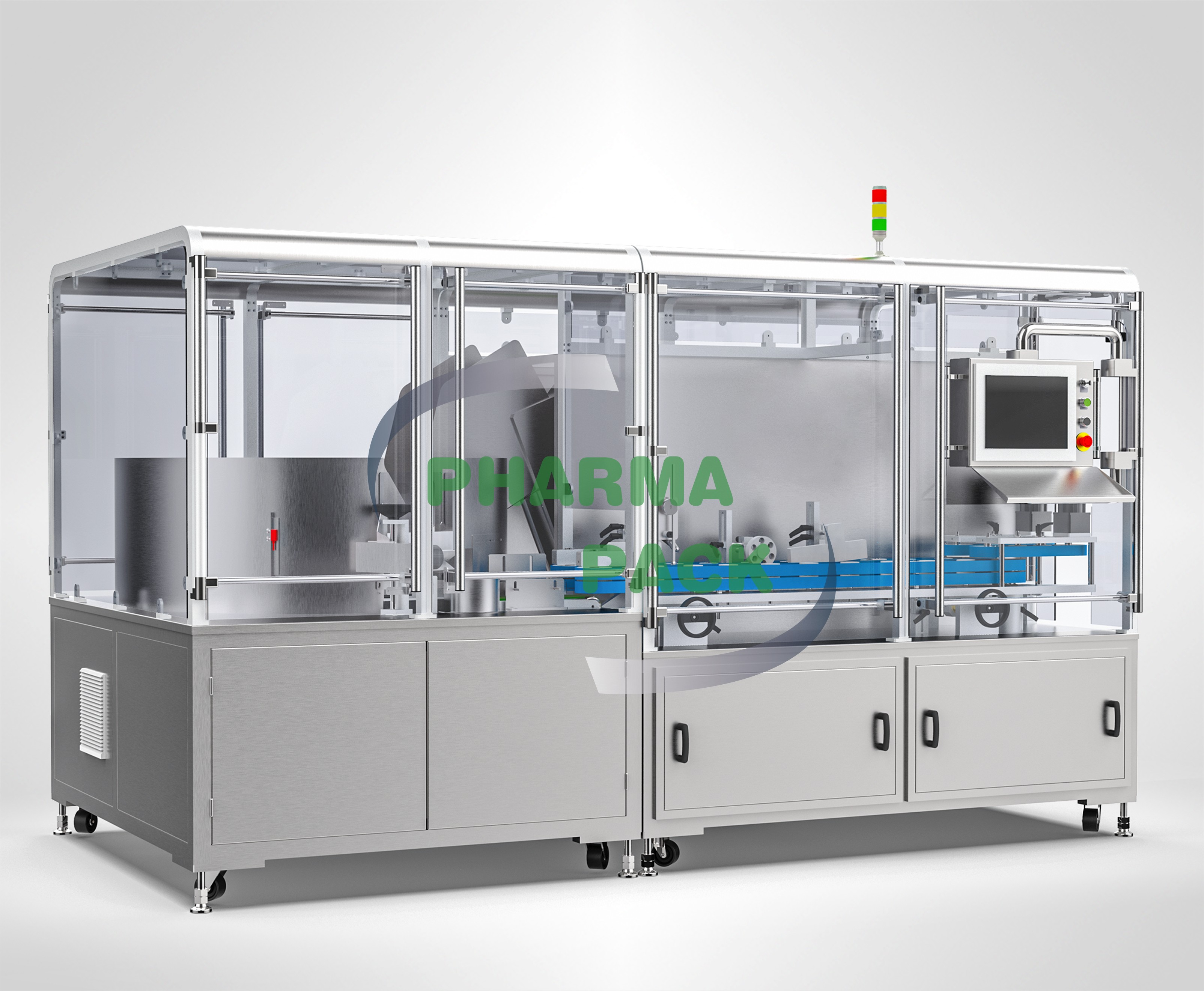
Pharmapack designs its bottle unscrambling equipment to connect with other packaging equipment. Its product range includes turntables, bi-directional conveyors, and high-speed bottle unscramblers. The LFU-40C, for example, is designed for cylindrical, oval, and rectangular plastic bottles within specified size ranges and can reach up to 400 bottles per minute depending on the bottle size and application.
A conveyor can also provide an important buffer between machines. Pharmapack's bi-directional conveyor systems are designed to slow down, store, or reverse bottle flow when necessary, helping reduce accumulation and interruptions during speed changes.
This type of coordination becomes especially important when lightweight PET bottles are used. Instead of forcing every machine to operate at the same speed continuously, controlled buffering can help maintain a more stable material flow.
Improving Efficiency Beyond Rated Speed
When evaluating unscrambler machines, rated speed should be considered alongside actual operating stability. A machine capable of high theoretical output may not provide the expected production capacity if frequent jams require operators to stop the line.
A more practical approach is to evaluate sustained throughput, bottle orientation accuracy, changeover requirements, maintenance frequency, and synchronization with downstream equipment.
Pharmapack provides several bottle unscrambler models for different production requirements, including the LFU-15FC, LFU-25C, and LFU-40C. The LFU-25C, for instance, has a maximum output of 250 bottles per minute and supports round and square bottles within specified dimensional ranges.
This range allows the equipment configuration to be considered according to bottle characteristics and required production speed rather than relying on a single machine specification.
Choosing an Automatic Bottle Unscrambler Factory
When selecting an automatic bottle unscrambler factory, it is useful to look beyond the individual machine. Engineering support, integration capability, commissioning, maintenance, and future line upgrades can all affect long-term production performance.
At Pharmapack, our approach combines bottle unscrambling equipment with broader packaging line solutions. Our systems can be integrated with equipment for counting, filling, capping, sealing, labeling, and cartoning, allowing bottle handling to be considered as part of the complete production process.
For lightweight PET bottles, this integrated approach can help address the real causes of tipping, jams, and inconsistent feeding. Stable bottle handling starts with the unscrambler, but reliable production depends on how effectively the entire line works together.
By combining controlled bottle movement, servo technology, suitable conveying systems, and coordinated line integration, Pharmapack helps manufacturers build packaging lines that maintain stable bottle flow while reducing avoidable interruptions.