Inserter Machine Selection: Matching Materials, Bottles and Production Needs
In pharmaceutical bottle packaging, the inserter machine is a small but important part of the production process. The choice is not simply between a cotton inserter and a desiccant inserter. Different products, bottle formats, material types, and production speeds can create very different insertion requirements.
For manufacturers handling tablets, capsules, pills, and other solid products, the right insertion system needs to deliver stable feeding, accurate placement, and reliable synchronization with the rest of the packaging line. As a pharma equipment manufacturer, Pharmapack develops inserter machine solutions for cotton, pouch desiccants, canister desiccants, and other packaging requirements, allowing the insertion process to be configured according to the actual production application.
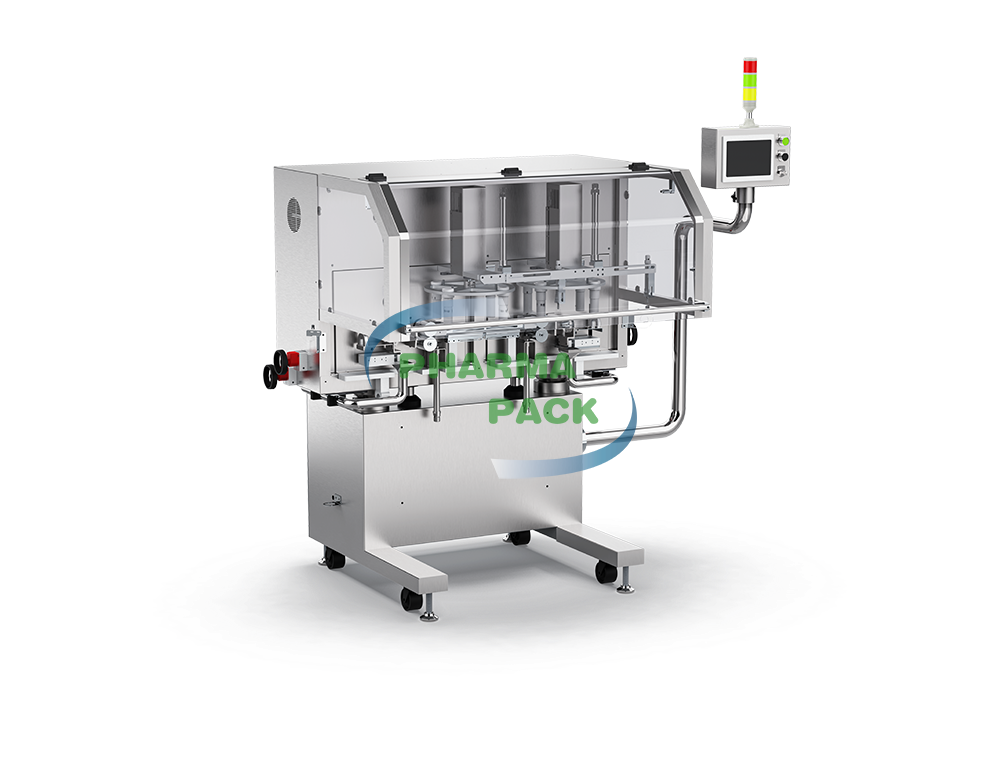
When Is a Cotton Inserter Required?
Cotton is commonly placed inside pharmaceutical bottles to provide cushioning and help reduce movement of tablets or capsules during transportation and handling. When cotton insertion is part of the packaging specification, manual placement can become difficult to control as production volume increases.
A dedicated cotton inserter machine feeds, cuts, and places the required amount of cotton into each bottle. The equipment needs to accommodate the bottle opening while maintaining consistent feeding and insertion.
Pharmapack offers several cotton inserter models for different production requirements. The LFIC-06, for example, supports bottle diameters from 30 to 100 mm and bottle heights from 40 to 200 mm, with a maximum production speed of 60 bottles per minute. For higher output requirements, the LFIC-12 can reach up to 120 bottles per minute, while the LFIC-20 is designed for production speeds of up to 200 bottles per minute.
This range allows the insertion system to be selected according to bottle dimensions and line capacity rather than relying on a single machine configuration.
When Does a Bottle Need Desiccant?
Desiccant serves a different purpose from cotton. While cotton is primarily associated with cushioning, desiccant is used to control moisture inside the package. This can be particularly important for moisture-sensitive tablets, capsules, and other solid pharmaceutical products.
The type of desiccant also affects inserter machine selection. A production line may use pouch desiccants, granular desiccants in canisters, or other formats depending on the packaging specification.
For pouch desiccants, Pharmapack's LFID series uses controlled feeding and cutting before the sachet is transferred into the bottle. The LFID-12, for example, supports round and square bottles with different dimensions and can reach up to 120 sachets per minute. Its design also requires relatively few changeover parts when adapting to different bottle openings.
For granular solid desiccants, the LFIS-20/30 canister desiccant inserter is designed for tablets, pills, and capsules packaged in bottles, boxes, or bags. It supports bottle diameters from 30 to 100 mm and can operate at up to 200 or 300 BPM depending on the application.
What If the Packaging Requires Both Cotton and Desiccant?
Some products may require both cushioning and moisture control. In this situation, the question is not whether one universal inserter machine can perform every function, but how the insertion stations should be arranged and synchronized within the complete packaging process.
Cotton and desiccant have different physical characteristics and feeding requirements. Separating these functions into appropriate modules can provide better control over material feeding, insertion timing, and changeover requirements.
The exact sequence should be determined according to the product, bottle geometry, filling quantity, closure system, and downstream equipment. A modular approach also makes it easier to adapt the line when product specifications change.
Why Bottle Size and Material Specifications Matter
Bottle dimensions directly affect insertion stability. Bottle diameter, height, neck opening, material characteristics, and internal space can all influence how an inserted material enters and settles inside the container.
The same inserter machine may therefore require different configurations for different bottle formats. Production speed is another important consideration. A machine designed for 60 bottles per minute may be appropriate for one application but insufficient for a higher-output line.
At Pharmapack, equipment selection is based on the relationship between material specifications, bottle dimensions, required output, and the overall packaging process. Servo-driven and PLC-controlled systems are used across multiple inserter models to support controlled feeding and accurate operation.
Building a More Stable Complete Packaging Line
An inserter should not be evaluated as an isolated machine. Its performance also depends on how well it communicates and operates with upstream and downstream equipment.
Pharmapack's cotton inserters can be connected with equipment such as automatic tablet or capsule counters, cappers, sealers, labelers, and cartoners to form a complete packaging line.
This integrated approach allows material insertion, counting, closing, sealing, labeling, and secondary packaging to be considered as one production workflow. It can also simplify equipment coordination when expanding or upgrading an existing line.
Selecting an Inserter Machine Based on the Application
The right inserter machine starts with the actual packaging requirements. If the primary requirement is cushioning, a cotton inserter may be appropriate. If moisture control is required, the system should be selected according to the type and dimensions of the desiccant. If both functions are required, separate insertion modules can be considered as part of the complete line configuration.
As a pharma equipment manufacturer, Pharmapack provides cotton inserters, pouch desiccant inserters, canister desiccant inserters, and other insertion solutions for pharmaceutical bottle packaging. With different models, production capacities, and configurations available, the insertion process can be matched more closely to bottle specifications and production requirements.
For projects involving multiple bottle formats or future line expansion, discussing the material, bottle dimensions, target speed, and complete process with the equipment supplier before selecting the machine can help establish a more stable and practical packaging solution.