How Inserter Machine Timing Supports Accurate Counting and Capping
In automated bottle packaging, each stage must operate at the right moment. Counting tablets or capsules, inserting cotton, and applying caps are closely connected processes, so timing errors at one station can affect the entire line. For manufacturers evaluating an inserter machine, the key question is not simply how fast the equipment can run, but how accurately it can coordinate insertion with upstream and downstream equipment.
At Pharmapack, we design inserter systems with this line-level requirement in mind. Our cotton inserters can be integrated with automatic tablet and capsule counters, cappers, sealers, labelers, and cartoners to create a continuous bottle packaging process.
Why Timing Matters in Bottle Packaging
A typical bottle packaging line may involve bottle feeding, counting, cotton insertion, capping, sealing, and labeling. Each process depends on the previous operation being completed correctly.
For example, after tablets or capsules are counted and filled into a bottle, the cotton must be inserted before the bottle reaches the capping station. If the cotton insertion cycle is too slow, the bottle flow may be interrupted. If insertion occurs at the wrong position, cotton may remain above the bottle opening and interfere with capping.
This makes synchronization an important part of equipment selection. Rather than evaluating an inserter machine independently, production teams should consider how its speed, detection system, positioning, and control system interact with the complete packaging line.
How a Cotton Inserter Coordinates with Counting
A modern cotton inserting machine factory should consider more than the cotton feeding mechanism itself. The equipment needs to respond accurately to bottle movement and coordinate insertion with the packaging sequence.
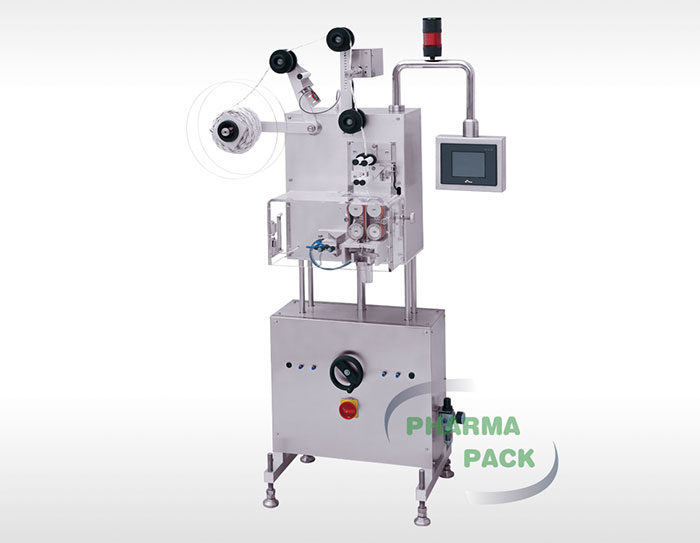
Pharmapack cotton inserters use servo motor and PLC control systems for accurate operation. During the process, cotton is fed forward, cut to the required length, transferred to the insertion position, and then pushed into the bottle through the guide system. Sensors and positioning mechanisms help coordinate these movements with bottle arrival.
This arrangement is particularly important when the upstream counter operates at a high production rate. The insertion cycle must keep pace with the number of bottles being filled without creating unnecessary gaps or accumulation on the conveyor.
Matching Inserter Speed with the Production Line
Maximum machine speed is useful when comparing equipment, but it should not be considered separately from bottle dimensions, product characteristics, and the speed of other machines.
For example, Pharmapack's LFIC-06 cotton inserter has a maximum production speed of 60 bottles per minute, while the LFIC-12 can reach 120 bottles per minute. The LFIC-20 is designed for speeds of up to 200 bottles per minute, depending on the application and bottle conditions.
When selecting an inserter, production teams should therefore look at the actual operating speed required by the complete line rather than choosing the model with the highest nominal speed. Bottle diameter, bottle height, cotton length, filling quantity, and the performance of the counter and capper all influence the practical operating rate.
Preventing Cotton from Affecting Capping
Capping is one of the clearest reasons why insertion timing matters. Cotton that is not inserted deeply enough can extend beyond the bottle neck and create interference when the cap is applied.
The cotton inserting process needs to position the material consistently inside the bottle before the container reaches the capper. Pharmapack's cotton inserter working process includes detection and secondary cotton insertion functions designed to help prevent cotton from remaining above the bottle mouth. The insertion length can also be adjusted according to process requirements.
For a production line, this type of coordination can reduce interruptions caused by improperly positioned cotton and help maintain a stable transition between insertion and capping.
Choosing the Right Cotton Inserting Machine Factory
When sourcing equipment, it is useful to evaluate the manufacturer's ability to integrate the inserter with the rest of the packaging line. A standalone machine may meet a specific speed requirement, but integration becomes more important when the equipment is installed between a counter and capper.
Pharmapack provides cotton inserters as part of broader bottle packaging solutions. Our equipment can be connected with automatic counters, cappers, sealers, labelers, and cartoners, allowing the insertion process to operate as part of a coordinated production line.
The manufacturer's experience with different bottle formats and production requirements is also worth considering. Factors such as bottle dimensions, required cotton length, production speed, control architecture, and available installation space should be reviewed before equipment selection.
Building a More Synchronized Packaging Process
An inserter machine should not be viewed simply as a device that places cotton into a bottle. Its performance directly connects counting, insertion, and capping, making synchronization an important part of overall packaging efficiency.
At Pharmapack, we focus on integrating insertion equipment with the complete bottle packaging process. By matching machine speed, bottle positioning, detection, and control functions with the surrounding equipment, manufacturers can develop a packaging line that operates more consistently from counting through capping. For production teams comparing equipment or working with a cotton inserting machine factory, evaluating this level of integration can provide a clearer basis for selecting the right solution.