How a Desiccant Inserter Machine Helps Reduce Misfeeds in Automated Packaging
In automated pharmaceutical packaging, desiccant insertion is a small but important step that can affect the consistency of the entire production process. When a desiccant pouch is missed, incorrectly cut, or improperly positioned, the result may be rejected products, production interruptions, and additional operator intervention.
For this reason, selecting the right inserter machine is not simply about achieving a higher insertion speed. The equipment must also control pouch feeding, cutting, detection, and insertion with sufficient accuracy for continuous production. At Pharmapack, we develop inserter machines with these practical requirements in mind, providing solutions for pouch, canister, and other desiccant formats.
Why Misfeeds Occur During Desiccant Insertion
Misfeeds can have several causes. The desiccant material may not be fed at a consistent length, the pouch may shift during cutting, or the machine may activate when a bottle is not correctly positioned. Differences in bottle dimensions can also make insertion more difficult, particularly when a production line handles multiple products.
For roll-fed desiccant pouches, maintaining stable material tension is especially important. If the roll is not controlled properly, the material can become stuck, broken, or incorrectly positioned before reaching the cutting station.
An effective desiccant inserter therefore needs to control the material from feeding through insertion rather than treating these operations as separate processes.
How an Inserter Machine Controls Pouch Feeding
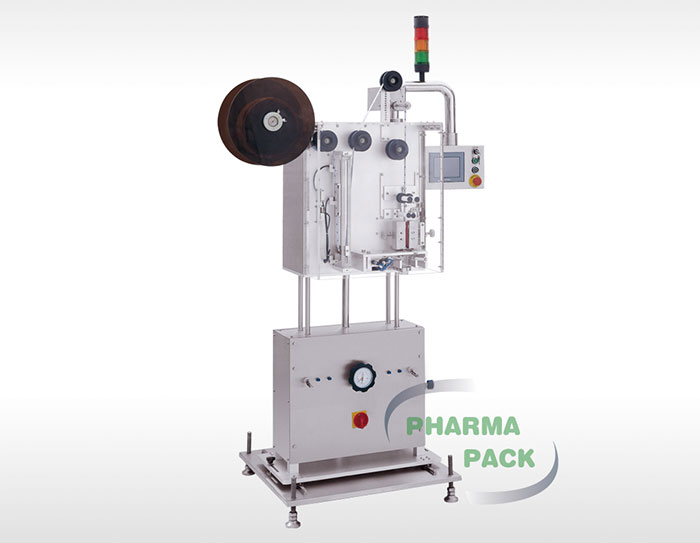
A reliable feeding system starts with stable material movement. Pharmapack's LFID series uses a servo motor to feed a preset length of desiccant material. A length verification device checks the material before cutting, helping the machine maintain the required pouch dimensions during operation.
The LFID-40 sachet desiccant inserter adds automatic roll unwinding and I-mark detection. According to Pharmapack's specifications, the system uses servo-driven feeding and sensors to control positioning and identify the sachet before cutting. This approach helps reduce problems associated with inconsistent feeding and positioning.
For production teams, this means that reducing misfeeds begins before the desiccant reaches the bottle. Stable feeding and accurate positioning provide the foundation for reliable insertion.
Synchronizing the Desiccant Inserter With the Production Line
Another common concern is whether the desiccant inserter can keep pace with the upstream equipment. If the timing between bottle arrival and desiccant release is inconsistent, the machine may insert too early, too late, or into the wrong position.
Pharmapack's desiccant inserter machines use sensors and PLC control to coordinate bottle detection, feeding, cutting, and insertion. For example, the LFID-20 detects bottles on the conveyor before triggering the desiccant cutting and insertion process. Its optional camera detection system can identify a broken sachet and prevent it from being released into the bottle.
This type of interlocking control is important for automated lines because it reduces unnecessary machine actions when the required container or material condition is not present.
Matching the Machine to the Desiccant Format
Not every production line uses the same type of desiccant. Pouch and canister desiccants require different feeding and insertion methods, so machine selection should start with the material and packaging format.
For pouch applications, Pharmapack offers models such as the LFID-06 and LFID-12. The LFID-06 supports up to 60 sachets per minute, while the LFID-12 reaches up to 120 sachets per minute, depending on the product being processed. Both models are designed for pouch sizes and bottle dimensions within specified ranges.
For granular desiccant applications, the LFIS-20/30 canister desiccant inserter is designed for bottles, boxes, and bags containing tablets, pills, capsules, and other solid products. It supports bottle diameters from 30 to 100 mm and production speeds of up to 200 or 300 BPM, depending on the application.
Selecting the appropriate model according to bottle dimensions, desiccant type, target speed, and production layout can help avoid unnecessary adjustments and feeding problems.
Reducing Downtime During Changeovers
Changeover efficiency is another practical consideration when multiple products run on the same packaging line. Frequent manual adjustments can increase setup time and create opportunities for incorrect settings.
A well-designed inserter machine should make key parameters accessible through the control system and minimize the number of components that need to be changed. Pharmapack's LFID-06, for example, requires relatively few changeover parts, with the nozzle being the primary component changed for different bottle openings.
This approach can make routine format changes more manageable while helping operators maintain consistent insertion conditions.
Building More Consistent Desiccant Insertion With Pharmapack
Reducing misfeeds requires more than increasing machine speed. Stable material feeding, accurate cutting, container detection, synchronized operation, and appropriate format matching all contribute to consistent performance.
At Pharmapack, our inserter machine range includes pouch and canister desiccant solutions designed for integration into automated packaging lines. Servo control, PLC systems, sensors, and optional inspection functions can be combined according to the requirements of different applications.
When evaluating a desiccant inserter, production speed should be considered alongside material characteristics, bottle dimensions, changeover requirements, inspection needs, and integration with existing equipment. A machine selected around these factors can provide more stable operation and reduce the interruptions associated with desiccant misfeeds.