How Tablet Counting Machine Sensors Maintain Accuracy at High Speed
In pharmaceutical packaging, counting tablets accurately becomes more challenging as production speed increases. The difficulty is especially noticeable when tablets move through counting channels in closely spaced sequences. If two tablets pass through a detection area at nearly the same time, the counting system must distinguish them correctly without slowing the production line.
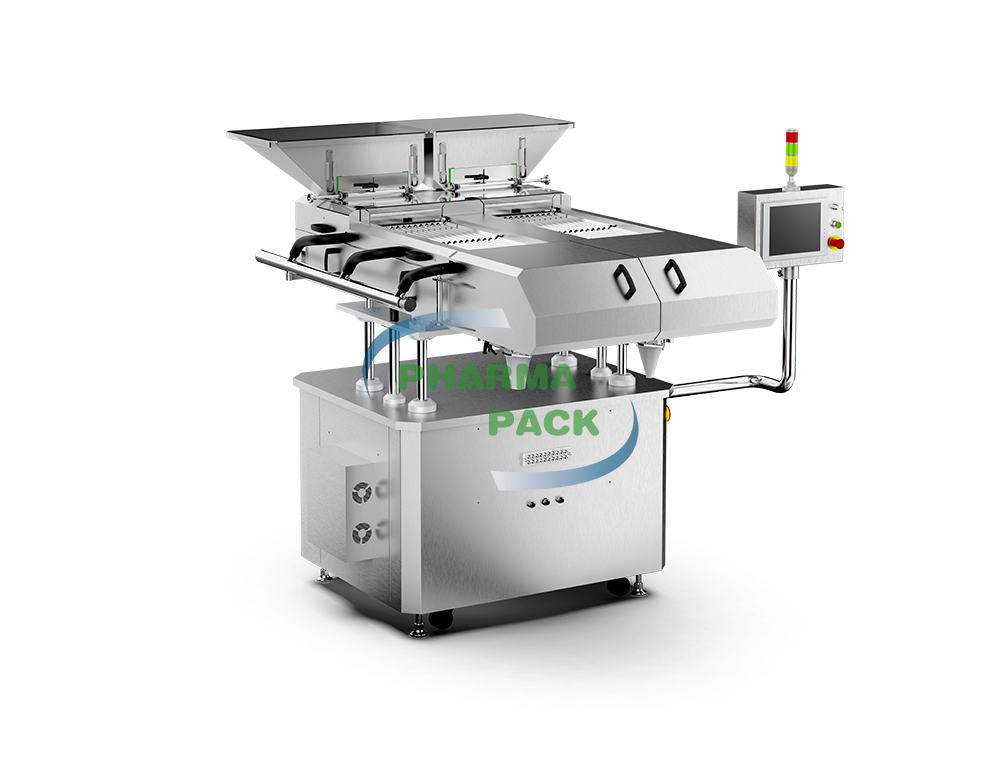
For this reason, sensor performance is a critical consideration when selecting a tablet counting machine. At Pharmapack, our counting systems combine controlled product separation, multi channel feeding, sensor detection, and software processing to support accurate counting while maintaining high throughput.
Why Closely Spaced Tablets Create Counting Challenges
A high speed counting process depends on more than simply detecting whether a tablet has passed a sensor. Tablets may vary in shape, size, surface characteristics, and movement speed. When products travel too closely together, the detection system needs to identify individual objects rather than interpreting several tablets as one event.
The feeding process therefore plays an important role. Pharmapack counting machines use multi grade vibratory plates to guide tablets into individual channels and arrange them into a single file before they reach the detection area. This controlled separation reduces the possibility of overlapping tablets and gives the sensors a clearer detection window.
This approach is particularly important when a pharmaceutical tablet counter operates at high speed. Increasing the number of tablets passing through a machine is useful only when the detection system can maintain reliable separation and counting.
How Sensors Detect Individual Tablets
The sensor system is the core of an electronic counting process. Pharmapack's counter systems use infrared and optical sensing technologies to detect products as they pass through dedicated detection channels. In the LFM 08C modular counter, for example, infrared dynamic scanning sensors generate signals as tablets or capsules pass through the detection tunnels. The signals are processed by a microprocessor to calculate the product count.
Pharmapack's electronic counters also use specially designed sensor configurations to improve detection at high speed. The company's PP counter solution describes custom sensors with adjustable detection thresholds and latency settings, together with fault self diagnosis and real time monitoring. These functions help the control system respond to potential counting abnormalities instead of simply processing every detection signal in isolation.
The result is a coordinated process in which mechanical feeding, sensor detection, and electronic control work together.
Managing Speed Without Sacrificing Counting Accuracy
A common concern when selecting a tablet counting machine is whether higher production speed will compromise counting accuracy. The answer depends largely on how the machine manages product movement and detection.
Pharmapack's equipment uses multiple counting channels so that tablets are distributed across several controlled paths rather than forced through a single detection point. The LFM 08C, for example, uses eight channels and multiple sensor groups within each channel. Its design supports continuous counting and filling while maintaining synchronized movement between different machine components.
For higher throughput applications, Pharmapack's modular systems can use multiple modules and channels. The LFM 32, for example, has a maximum stated speed of 24,000 pieces per minute, depending on the product being inspected. Its system is designed for simultaneous counting and bottling, with eight channels in each module head.
This modular structure allows production capacity to be considered together with product characteristics, bottle requirements, and required output rather than relying on sensor speed alone.
Reducing the Effect of Dust and False Detection
Tablet production can generate dust, which may interfere with optical detection if the counting system is not designed for the operating environment. Sensor protection and dust management therefore deserve attention when evaluating a pharmaceutical tablet counter.
Pharmapack's counter solutions include automatic dust compensation, dust collection options, and sensor configurations designed for continuous operation. Certain models also incorporate dust sensing windows and multiple detection planes to collect more information about passing tablets and capsules.
Good mechanical design is equally important. Product contact components should be accessible for cleaning, while the feeding and detection areas should allow operators to remove accumulated material efficiently. Pharmapack's modular counters are designed with separated modules and accessible product contact parts to support cleaning and maintenance.
Choosing a Pharmaceutical Tablet Counter for Your Process
When comparing tablet counting equipment, maximum pieces per minute should not be the only specification considered. Product dimensions, tablet shape, dosage per bottle, container dimensions, dust conditions, changeover requirements, and integration with the existing packaging line can all influence the appropriate configuration.
A suitable tablet counting machine should provide controlled product separation before detection, sufficient sensor capacity for the required speed, and a control system capable of identifying abnormal counting conditions. It should also allow practical cleaning and maintenance between products.
At Pharmapack, engineering focus centers on eliminating packaging bottlenecks
Pharmapack provides multiple electronic and modular counting solutions for ta
blets, capsules, softgels, and other solid products. Depending on the model, the equipment can support different production speeds, filling quantities, container sizes, and automation requirements.
Building Reliable High Speed Counting with Pharmapack
High speed tablet counting is ultimately a coordinated engineering process. Sensors must detect individual products, feeding systems must maintain separation, and control systems must process signals quickly enough to keep counting synchronized with filling.
At Pharmapack, we design tablet counting systems around these connected requirements. From multi channel vibratory feeding and optical detection to modular configurations and real time monitoring, each part contributes to consistent counting performance. For manufacturers evaluating a new pharmaceutical tablet counter, understanding how sensors handle closely spaced tablets is an important step toward selecting equipment that matches both current production requirements and future capacity needs.