How to Match an Inserter Machine to Bottle Neck Size and Internal Space
In pharmaceutical packaging, selecting an inserter machine involves more than choosing equipment with a suitable production speed. Bottle dimensions, neck openings, internal clearance, and insertion settings all affect how reliably packaging materials enter each container. For manufacturers handling tablets, pills, and capsules, these details are especially important when using cotton or desiccants to protect packaged products.
At Pharmapack, we understand that packaging lines must accommodate specific container designs while maintaining consistent output. Understanding bottle compatibility before purchasing or installing an inserter machine can help manufacturers reduce changeover time, prevent insertion errors, and improve production efficiency.
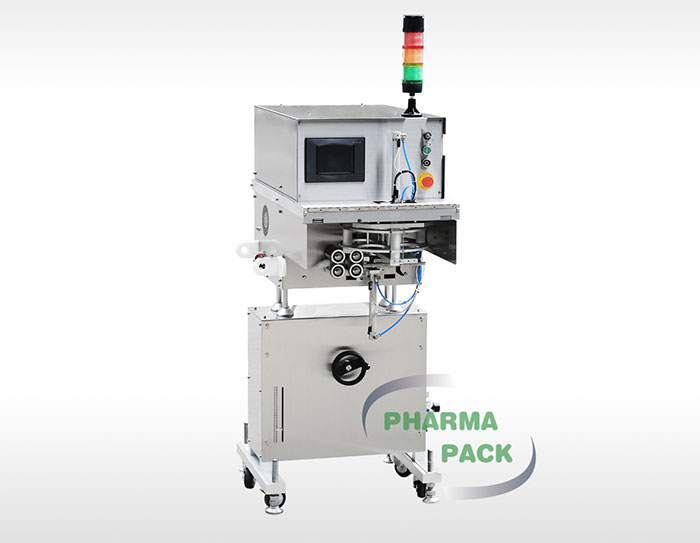
Why Bottle Compatibility Matters for an Inserter Machine
An inserter machine places packaging materials, such as cotton or desiccants, into bottles or other containers during the packaging process. Although the operation may appear straightforward, differences in bottle dimensions can affect insertion accuracy and machine performance.
A narrow opening may restrict the insertion path, while an unsuitable insertion position can cause materials to catch on the bottle neck or remain partially outside the container. Differences in bottle height can also affect positioning and the distance between the insertion mechanism and the container.
Before selecting equipment, manufacturers should evaluate the complete bottle design rather than relying on nominal capacity or external dimensions alone. Compatibility should be confirmed using actual container samples whenever possible.
Bottle Neck Size and Opening Clearance
The bottle neck is one of the first dimensions to consider when selecting an inserter machine. Its opening must provide enough clearance for the insertion mechanism and the material being introduced into the bottle.
For cotton insertion, the opening must accommodate the cotton plug without excessive compression or obstruction. For desiccant insertion, the opening must be compatible with the dimensions and delivery method of the selected desiccant. The requirements may differ between pouch, strip, and canister formats.
Manufacturers should measure the actual opening diameter, check for variations between bottle batches, and confirm whether different neck designs require adjustments or replacement components. The outer diameter of a bottle is also relevant because it affects conveying, positioning, and the way containers are held during insertion.
For example, Pharmapack's LFIC-06 cotton inserter accommodates bottles with outer diameters of 30 to 100 mm and heights of 40 to 200 mm. These specifications provide a useful starting point for evaluating compatibility, but the neck opening and insertion requirements should also be verified for the intended application.
Headspace and Insertion Depth
Headspace refers to the available space inside a bottle above the filled product. This space matters because the inserted material must fit without interfering with the tablets, capsules, or other contents.
If headspace is limited, cotton may be compressed against the product or fail to sit correctly inside the container. If insertion depth is not properly controlled, cotton or desiccants may protrude above the bottle opening and interfere with subsequent capping or sealing.
To avoid these problems, manufacturers should evaluate the fill level, bottle height, material dimensions, and required insertion position together. Testing should confirm that the inserted material stays within the intended area and does not obstruct downstream packaging operations.
For cotton insertion, adjustable cotton length and controlled feeding can help accommodate different packaging requirements. Pharmapack's cotton inserter range uses automated feeding and insertion mechanisms to support consistent placement. The appropriate settings depend on the bottle design, product fill level, and cotton specifications.
Setting Up the Machine for Different Bottle Formats
A successful setup begins with confirming the bottle specifications and matching them to the machine's operating range. Operators should then check bottle positioning, insertion alignment, feeding parameters, and sensor responses before starting full production.
When switching between bottle formats, manufacturers should verify whether adjustments to the conveyor guides, bottle supports, insertion position, or other changeover components are required. Settings should be documented for each bottle type to make repeat production runs more consistent.
A trial run is essential before increasing the line to its normal operating speed. Operators should inspect a representative sample of bottles for missing materials, incorrect insertion depth, damaged containers, and interference with capping or sealing. Any recurring issues should be corrected before full production begins.
Choosing the Right Cotton Inserter Machine
A cotton inserter machine should match both the container specifications and the required production output. Other important considerations include control accuracy, ease of adjustment, maintenance access, and compatibility with upstream and downstream equipment.
Pharmapack offers cotton inserter models for different production requirements. The LFIC-06 has a maximum rated speed of 60 bottles per minute, while the LFIC-12 reaches up to 120 bottles per minute. The LFIC-20 is designed for higher output, with a maximum rated speed of 200 bottles per minute. Actual production speed depends on the product and operating conditions.
These machines can also be integrated with equipment such as automatic tablet and capsule counters, cappers, sealers, labelers, and cartoners. Evaluating the complete packaging line helps manufacturers identify potential bottlenecks and maintain coordinated operation.
Make Bottle Compatibility Part of Equipment Selection
Choosing the right inserter machine requires careful attention to neck size, headspace, bottle dimensions, and setup requirements. Checking these factors before installation helps manufacturers improve insertion consistency and reduce avoidable interruptions during production.
Pharmapack provides cotton inserter and desiccant inserter solutions for pharmaceutical and healthcare packaging applications. By matching equipment specifications to actual bottle samples and production needs, manufacturers can build a more reliable packaging process. Contact Pharmapack to discuss your bottle dimensions, insertion materials, and target output when evaluating a suitable machine.