Round Bottle Labeling Machine Barcode Inspection: Where Vision Checks Belong
Accurate barcode inspection is an important part of pharmaceutical packaging. A label may look correctly positioned on a round bottle, but a barcode that cannot be read can interrupt downstream operations, complicate product tracking, and create quality control concerns. For manufacturers using a round bottle labeling machine, integrating vision checks at the right point in the packaging line helps identify labeling and coding problems before products move further into distribution.
Pharmapack provides automated labeling and packaging solutions designed to support consistent production. Understanding where barcode inspection belongs, what it should verify, and how it works with a high speed labeler can help manufacturers build a more reliable packaging process.
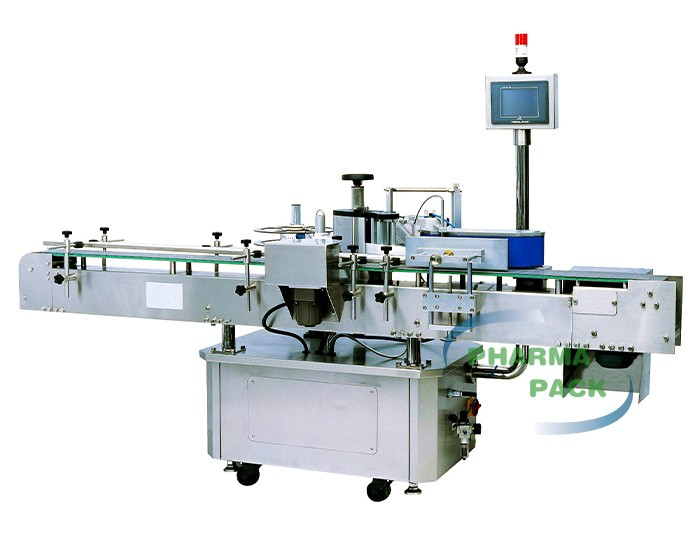
Why Barcode Inspection Matters for Round Bottles
Round bottles present specific labeling challenges. Their curved surfaces can affect label positioning, barcode alignment, and image capture. If a label shifts, wrinkles, or wraps unevenly, the barcode may become difficult for scanners to read.
Pharmaceutical packaging also requires accurate product identification and traceability. Depending on the product and market, labels may carry batch information, expiry dates, serial numbers, or machine readable codes. An incorrectly printed or unreadable code can cause problems during inspection, aggregation, warehousing, and distribution.
Visual appearance alone cannot confirm barcode quality. A dedicated vision system can capture images, locate the code, and assess whether it meets defined inspection criteria. When combined with suitable barcode decoding equipment, it can also verify that the code contains readable and expected information.
Where Should Vision Inspection Be Installed?
The best inspection position depends on the packaging process and the type of defect the manufacturer needs to detect. In many applications, inspection takes place immediately after labeling and coding, when the label has been applied and relevant variable information is available for verification.
At this stage, a camera can check whether the label is present, whether it is positioned within the permitted range, and whether the barcode is visible and correctly oriented. If the line prints batch numbers or expiry dates during labeling, inspection can also verify their presence and legibility.
For pharmaceutical lines that require more extensive traceability, additional inspection may be necessary after serialization or at subsequent packaging stages. The important principle is to inspect each feature after the operation that creates it, while leaving enough space and processing time for detection and rejection.
Pharmapack's bottle packaging track and trace solutions combine round bottle labeling with camera inspection and downstream packaging equipment. This integrated approach helps manufacturers coordinate labeling, verification, and product handling within one production line.
How a High Speed Labeler Works with Vision Systems
A high speed labeler must maintain consistent output while allowing inspection equipment enough time to capture and analyze each product. As production speed increases, camera triggering, lighting, image processing, and bottle spacing become increasingly important.
A typical inspection process begins when a sensor detects a bottle and triggers the camera. The system captures the label or barcode image under controlled lighting, then evaluates the image against configured criteria. Where barcode decoding is required, the reader checks whether the code can be interpreted correctly.
If the inspection result fails, the control system can signal a rejection mechanism to remove the affected bottle from the production flow. The rejection process should be synchronized with conveyor movement so that the correct bottle is removed without disturbing surrounding products.
Manufacturers should evaluate the entire process rather than focusing only on the labeler's maximum speed. Camera processing capacity, code quality, bottle spacing, and rejection response all influence effective line throughput.
What Should Barcode Vision Inspection Check?
An effective inspection setup begins with clearly defined acceptance criteria. For round bottle labeling, these commonly include label presence, label position, wrinkles or damage near the code, and barcode readability.
The inspection system should also distinguish between detecting a code and verifying its contents. A camera may identify that a barcode is present, while a barcode reader determines whether it can be decoded. Where the application requires content verification, the decoded information should be compared with the correct production data.
Code quality grading may also be necessary, depending on the barcode type and applicable standards. A readable code is not automatically a compliant code, so manufacturers should establish suitable verification requirements for their products and markets.
Choosing the Right Inspection Configuration
Before selecting a round bottle labeling machine with vision inspection, manufacturers should consider bottle diameter, label dimensions, barcode type, printing method, production speed, and available installation space. Transparent labels, reflective packaging materials, and codes placed near curved edges may require particular attention during testing.
It is also important to confirm how inspection results are recorded and how rejected products are handled. For regulated pharmaceutical production, electronic records, traceability functions, and validation activities should follow the applicable quality system and regulatory requirements.
Testing with actual bottles, labels, and codes before commissioning can reveal issues that may not appear during equipment demonstrations using ideal samples.
Build a More Reliable Packaging Line with Pharmapack
Barcode inspection is most effective when it is positioned around the actual risks of the labeling and coding process. By coordinating camera checks, barcode decoding, rejection mechanisms, and production controls, manufacturers can reduce avoidable inspection failures while maintaining efficient output.
Pharmapack offers round bottle labeling equipment and integrated track and trace solutions for pharmaceutical packaging applications. With the right combination of a high speed labeler and appropriately configured vision inspection, manufacturers can improve labeling consistency, strengthen product identification, and support dependable downstream operations.
Explore Pharmapack's labeling solutions to identify equipment options suited to your bottle formats and production requirements.