How Bottle Mouth Size Affects Automatic Pill Counter Filling Performance
In pharmaceutical packaging, accurate counting is only one part of a reliable bottling process. The size and shape of the bottle opening also influence how efficiently tablets or capsules enter each container. When the opening is too narrow, products may accumulate near the neck, increasing the risk of jams, slow filling, or inconsistent operation. An opening that is too wide can also create positioning challenges if the filling equipment is not properly adjusted.
For manufacturers handling different bottle formats, selecting an automatic pill counter that accommodates various bottle mouth sizes is essential for maintaining production efficiency. Pharmapack understands that matching the counting and filling system to the container is an important step in creating a stable packaging process.
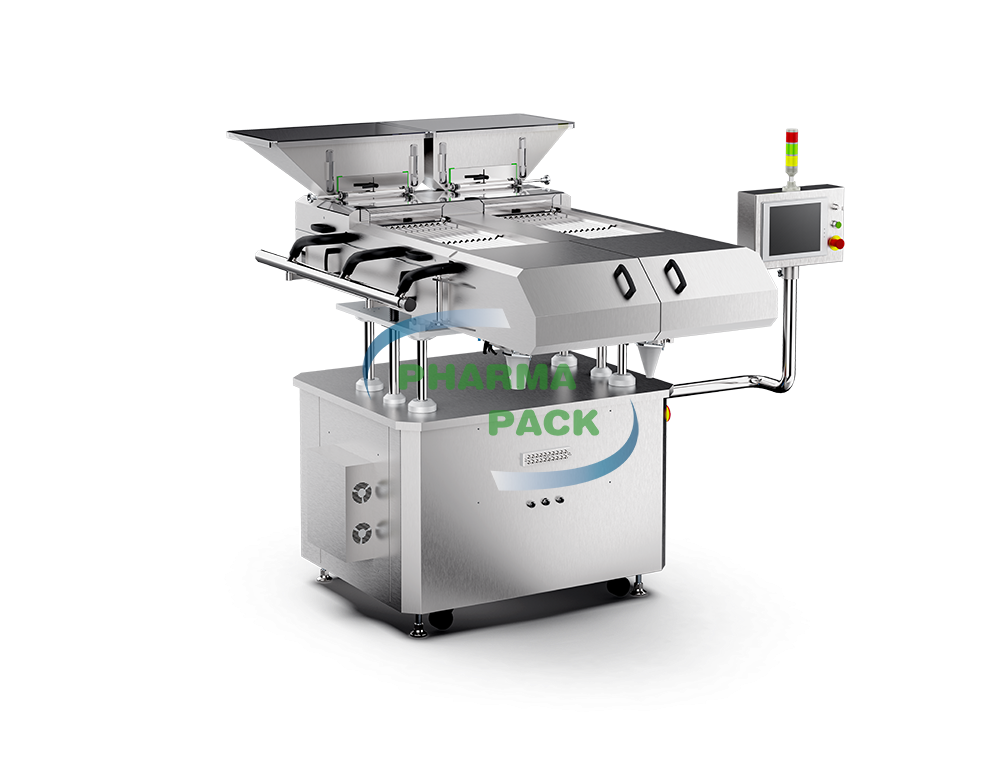
How Bottle Opening Dimensions Affect Filling Accuracy
Bottle mouth diameter directly affects how products move from the counting mechanism into the container. Tablets and capsules must pass through the discharge area without catching on the bottle neck or colliding with surrounding components.
When the bottle opening is relatively small, the alignment between the discharge outlet and the container becomes particularly important. Poor alignment can cause products to hit the rim, bounce out, or collect around the opening. These issues may lead to product waste and additional cleaning.
Larger bottle mouths generally provide more space for product entry, but they still require suitable positioning and controlled discharge. The goal is to ensure that counted products move smoothly into the bottle without unnecessary contact or spillage.
Bottle design also matters. A container with a narrow neck, sloped shoulder, or irregular opening may behave differently from a straight neck bottle with the same nominal diameter. Manufacturers should therefore evaluate the complete bottle geometry rather than relying on mouth diameter alone.
What to Consider When Handling Different Bottle Sizes
An automatic pill counter used across multiple packaging formats should be assessed for its ability to accommodate changes in bottle dimensions. Several factors influence this flexibility.
First, the bottle positioning mechanism must hold containers securely beneath the discharge outlet. If bottles shift during filling, the opening may no longer align with the falling tablets or capsules. Adjustable guides and appropriate bottle handling components can help maintain consistent positioning.
Second, the discharge outlet and any associated funnel or insertion components must suit the bottle opening. The gap between the outlet and the bottle should allow products to enter freely while limiting spillage. Depending on the equipment design, different bottle formats may require adjustments or interchangeable components.
Third, product characteristics affect filling performance. Small tablets, large capsules, irregularly shaped supplements, and fragile coated tablets do not move in exactly the same way. Product dimensions, surface friction, and orientation can influence whether items pass smoothly through the filling path.
Finally, production speed should be evaluated alongside bottle compatibility. Increasing the operating speed without confirming stable product transfer can create bottlenecks, particularly when handling small openings or larger capsules.
How a Capsule Counting and Filling Machine Supports Flexible Production
A capsule counting and filling machine must coordinate product counting, bottle positioning, and discharge to maintain consistent output. When production involves several bottle sizes, the equipment should support repeatable adjustments between packaging formats.
Before changing a bottle type, operators should verify the bottle guide settings, discharge alignment, and any relevant height or spacing adjustments. A controlled changeover process helps reduce setup errors and minimizes the time required to resume production.
Testing is equally important. Operators should run representative bottles and products through the machine before starting a full production batch. During testing, they can check for missed counts, spilled products, bottle instability, and interruptions around the discharge area.
For facilities packaging both tablets and capsules, this evaluation should cover the actual product and container combinations used in production. A machine that performs well with small tablets in wide-mouth bottles may require different settings when filling longer capsules into narrow-neck containers.
Practical Checks Before Selecting an Automatic Pill Counter
Before purchasing an automatic pill counter, manufacturers should prepare a list of the bottle formats and products they expect to process. Record the bottle mouth diameter, neck shape, overall height, and relevant product dimensions. These measurements provide a useful starting point for assessing equipment compatibility.
Ask the supplier whether the machine supports the required bottle range, what adjustments are available, and whether additional change parts are needed. It is also worth confirming how changeovers are performed and how easily operators can clean areas that come into contact with products.
Most importantly, request a practical filling test using representative bottles and products. Observe counting accuracy, discharge stability, product spillage, and the time needed to switch between formats. These results offer a more reliable basis for equipment selection than nominal production speed alone.
Find the Right Filling Setup with Pharmapack
Choosing equipment for different bottle mouth sizes requires attention to more than counting capacity. Bottle geometry, product dimensions, discharge alignment, and changeover requirements all influence filling performance.
Pharmapack provides pharmaceutical packaging equipment solutions for manufacturers evaluating their counting and filling requirements. By reviewing actual bottle specifications and testing representative products, manufacturers can identify a suitable configuration, improve packaging consistency, and reduce avoidable production interruptions. A well-matched system helps ensure that each bottle format can be processed with greater confidence and operational control.