Round Bottle Labeling Machine for Personal Care Packaging: Achieving Consistent Results on Curved Surfaces
Personal care products such as shampoo, lotion, facial cleanser, and body wash often use cylindrical bottles to combine practical storage with attractive shelf presentation. However, applying labels to curved surfaces presents several challenges. Labels may wrinkle, shift, or develop air bubbles if the application process is not properly controlled. These defects can affect both product appearance and packaging consistency.
A round bottle labeling machine helps manufacturers apply labels accurately to cylindrical containers while maintaining a consistent appearance across production batches. For personal care manufacturers seeking greater efficiency and reliable labeling quality, understanding the machine's working principles and key selection factors is an important step toward optimizing packaging operations.
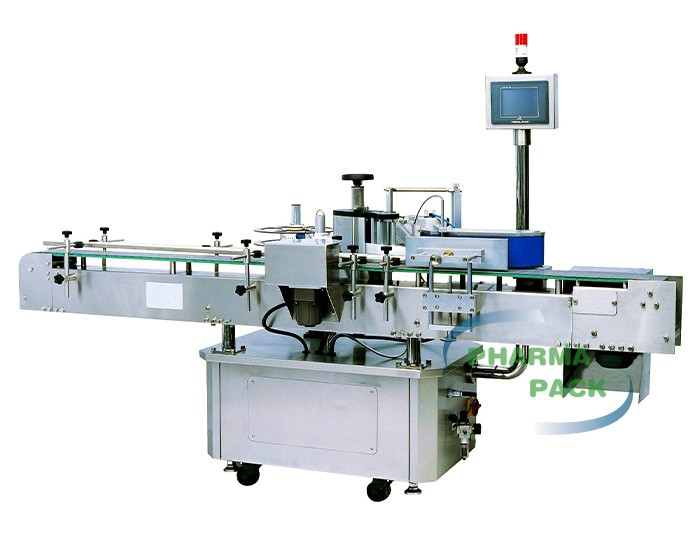
Why Curved Bottles Require Specialized Labeling
Unlike flat packaging, round bottles have continuously curved surfaces that make label positioning more difficult. A label that is not aligned with the bottle's centerline may appear tilted, while uneven pressure during application can create wrinkles or trapped air.
Bottle materials also influence labeling performance. Plastic containers may deform slightly under pressure, while variations in bottle diameter can affect label placement. In addition, the surface finish, label adhesive, and label material all influence how well a label adheres.
Personal care packaging introduces further considerations. Products are often displayed together in coordinated product lines, making consistent label positioning important for brand recognition. Labels must also remain securely attached during storage, transportation, and everyday handling, even when bottles are exposed to moisture or product residue.
Choosing suitable labeling equipment helps address these challenges before they lead to excessive rework or packaging waste.
How an Automatic Bottle Labeling Machine Improves Consistency
An automatic bottle labeling machine can streamline the labeling process by coordinating bottle feeding, positioning, label dispensing, and application. Depending on the machine configuration, containers move through the labeling station using a conveyor system, while sensors and application mechanisms help control label placement.
Depending on the machine design, labels may be applied using rollers or other positioning mechanisms that help maintain consistent contact with the curved bottle surface.
Automation also reduces dependence on manual handling. Operators can establish suitable settings for a particular bottle and label combination, then maintain those settings throughout a production run. This is especially useful for manufacturers handling repeated orders or multiple personal care products.
However, automation alone does not guarantee flawless results. Accurate labeling still depends on compatible bottle dimensions, appropriate label materials, stable container feeding, and correct machine adjustment.
Key Factors When Selecting Round Bottle Labeling Equipment
Bottle Dimensions and Shape
Before selecting a machine, manufacturers should identify the diameter, height, and shape of their containers. Although many personal care bottles are cylindrical, some have tapered bodies, narrow necks, or irregular contours that require additional adjustment.
A machine should accommodate the intended range of bottle sizes without compromising positioning accuracy. If production involves frequent product changes, convenient adjustment and repeatable settings can help reduce changeover time.
Label Material and Adhesive Performance
Label materials behave differently when applied to curved surfaces. Paper labels, synthetic films, and transparent labels may require different application conditions. Adhesive performance also depends on the bottle material, surface cleanliness, and environmental conditions.
Manufacturers should test the complete combination of bottle, label, and adhesive rather than evaluating each component separately. This helps identify potential lifting, wrinkling, or adhesion problems before full production begins.
Production Speed and Labeling Accuracy
Production requirements should guide equipment selection. A higher labeling speed may improve output, but only when bottles can be fed consistently and labels remain accurately positioned.
It is useful to evaluate labeling accuracy, rejection rates, changeover requirements, and the time needed for routine adjustments. These factors provide a more practical picture of production efficiency than nominal speed alone.
Integration and Maintenance
A labeling machine should fit the existing packaging line, including upstream filling and capping equipment. Manufacturers should also consider sensor accessibility, cleaning requirements, operator training, and the availability of technical support.
For personal care production, equipment that is straightforward to adjust and maintain can help reduce unnecessary downtime and support more predictable scheduling.
Practical Ways to Improve Labeling Quality
Even suitable equipment requires proper setup. Bottles should enter the labeling station in a stable orientation, with clean surfaces free from oil, dust, or moisture that could interfere with adhesion.
Operators should verify label alignment and adhesion during initial setup, then conduct periodic checks throughout production. When defects appear, reviewing bottle dimensions, label tension, sensor positioning, and application pressure can help identify the underlying cause.
Testing different production speeds is also valuable. A controlled trial can reveal whether increasing output affects label placement or adhesion, allowing manufacturers to establish settings that balance speed with quality.
Pharmapack Supports Reliable Bottle Labeling
At Pharmapack, labeling equipment selection begins with understanding the container, label, and production requirements. Manufacturers evaluating a round bottle labeling machine should consider how well the equipment accommodates their bottle specifications, labeling accuracy targets, and existing production workflow.
Pharmapack's bottle labeling equipment provides a starting point for exploring solutions for round bottle packaging. Reviewing the equipment's configuration and confirming compatibility with the intended containers can help manufacturers identify an appropriate approach for their personal care products.
Building a More Consistent Personal Care Packaging Process
Curved bottle surfaces require careful coordination between container handling, label application, and adhesive performance. Selecting a suitable round bottle labeling machine can help personal care manufacturers reduce labeling defects, maintain consistent product presentation, and improve packaging efficiency.
By evaluating bottle dimensions, label characteristics, production speed, and maintenance needs together, manufacturers can make a more informed equipment decision. With appropriate machine configuration and routine quality checks, an automatic bottle labeling machine can support dependable labeling results across a wide range of personal care packaging applications.