Inserter Machine Selection: Matching Insert Types to Moisture Risks
Moisture can affect the stability, appearance, and shelf life of many pharmaceutical products. For tablets, capsules, and other moisture sensitive goods, selecting the right desiccant is an important part of packaging design. Equally important is choosing an inserter machine that can handle the required insert type accurately and consistently.
At Pharmapack, we understand that packaging manufacturers need equipment that matches their product protection requirements and production targets. Whether a production line uses pouch desiccants or canister desiccants, the right insertion system can help improve process consistency, reduce manual handling, and support reliable bottle packaging.
Understanding Moisture Risks Before Selecting an Insert
Different products have different moisture sensitivities. Tablets and capsules may absorb moisture from the surrounding environment, potentially affecting their physical properties or chemical stability. The level of protection required depends on the product formulation, container design, closure performance, and intended storage conditions.
Desiccants help control moisture inside packaging by absorbing water vapor. However, selecting a desiccant involves more than choosing an absorbent material. Manufacturers must consider the expected humidity exposure, packaging permeability, product requirements, and available space inside the container.
An effective packaging strategy begins with identifying these factors. The selected desiccant must be suitable for the product, while the inserter machine must accommodate its format and place it correctly during production.
Pouch Desiccants and Canister Desiccants: What Is the Difference?
Pouch and canister desiccants are commonly used in pharmaceutical bottle packaging, but their physical structures create different handling requirements.
Pouch desiccants are flexible packets containing moisture absorbing material. They are suitable for applications where a compact, lightweight insert is preferred. An inserter machine designed for pouch desiccants may need to control roll feeding, cutting, separation, and insertion to ensure that each bottle receives the intended packet without material jams or damage.
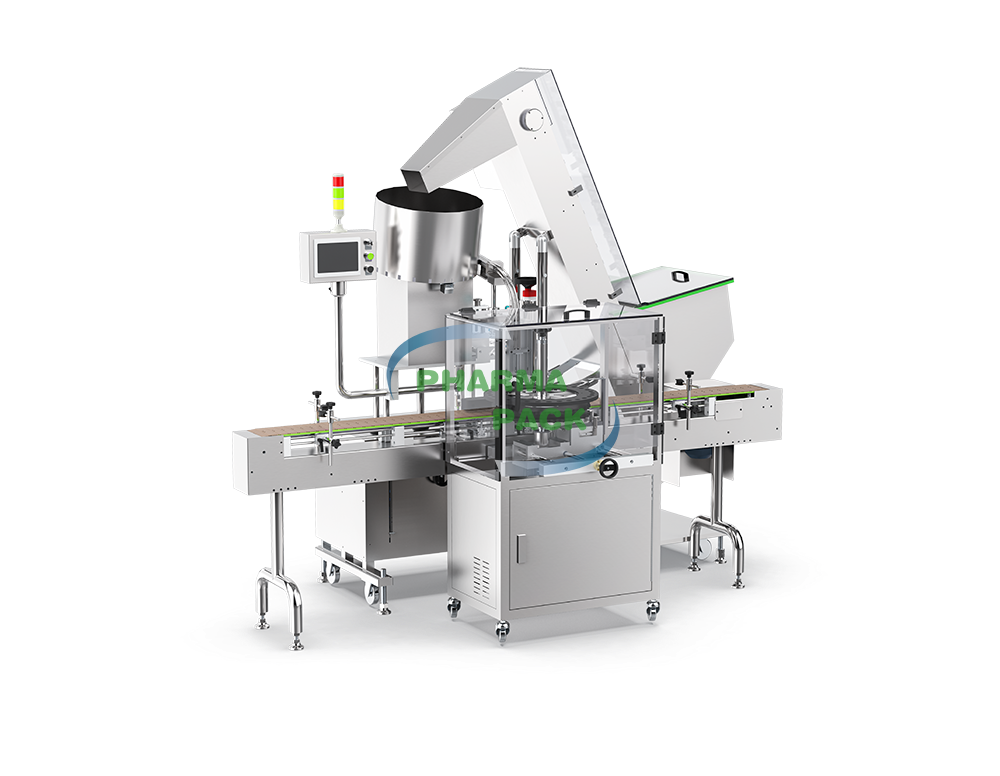
Canister desiccants are rigid containers filled with moisture absorbing material. Their dimensions, shape, and orientation influence how they move through the feeding and insertion mechanism. A dedicated canister inserting machine helps manage these characteristics and supports consistent placement inside bottles.
The choice between these formats should be based on product protection requirements and packaging specifications. Manufacturers should confirm that the selected desiccant and container combination meets the product's moisture control needs before evaluating machine performance.
How an Inserter Machine Supports Product Protection
Accurate insertion is essential for maintaining a repeatable packaging process. Missing inserts, double insertion, damaged pouches, or poorly positioned canisters can create quality concerns and increase inspection or rework requirements.
A suitable inserter machine coordinates material feeding with bottle movement. Depending on the model, control systems and sensors can help regulate insertion timing and monitor operating conditions. Stable feeding and appropriate machine settings also help reduce interruptions caused by irregular material delivery.
For high volume production, manufacturers should assess whether the machine can maintain the required output without compromising insertion consistency. Integration with tablet or capsule counters, bottle conveyors, and capping equipment is another important consideration. Proper synchronization helps minimize bottlenecks and maintain a continuous packaging workflow.
Pharmapack offers different inserter machine configurations, including pouch desiccant inserters and canister desiccant inserters, to address varying packaging requirements.
Choosing a Desiccant Inserting Machine Manufacturer in China
When searching for a desiccant inserting machine manufacturer in China, buyers should look beyond the initial equipment price. The supplier's product range, technical support, integration experience, and ability to understand specific packaging requirements can all influence long term operating costs.
First, confirm compatibility with the intended desiccant format, bottle dimensions, and production speed. Next, ask how insertion accuracy is maintained and what inspection methods are available. Buyers should also evaluate cleaning access, routine maintenance requirements, operator training, and spare parts availability.
Factory acceptance testing is particularly useful because it allows manufacturers to assess equipment performance using representative bottles and inserts. Testing can help identify feeding problems, confirm insertion results, and establish realistic production expectations before installation.
Pharmapack provides inserter machine solutions as part of its pharmaceutical packaging equipment portfolio. Our team can discuss application requirements and help manufacturers evaluate equipment options for their production lines.
Integrating Desiccant Insertion into an Efficient Packaging Line
Machine selection should account for the entire production process rather than the insertion step alone. The inserter must work at a compatible speed with upstream counting equipment and downstream capping systems. Bottle spacing, conveyor stability, available floor space, and control system compatibility can all affect overall performance.
Maintenance planning also matters. Regular checks of feeding mechanisms, sensors, cutting components where applicable, and material pathways help maintain reliable operation. Documented settings and operator training make it easier to identify deviations and respond consistently.
By considering these factors during equipment selection, manufacturers can improve production continuity while maintaining the intended product protection process.
Find the Right Inserter Machine with Pharmapack
Matching insert type to moisture risk requires coordination between product requirements, desiccant selection, container design, and machine performance. Pouch and canister desiccants have different handling needs, so equipment should be selected according to the actual application.
Pharmapack offers inserter machine solutions for pharmaceutical packaging operations seeking consistent desiccant handling and efficient production line integration. By discussing your bottle specifications, insert format, and output targets with our team, you can identify a suitable equipment configuration for your packaging process.