Round Bottle Labeling Machine and Serialization: Keeping Coding in Sync
In pharmaceutical manufacturing, applying a label to a bottle is only one part of the packaging process. Each bottle may also need a unique serial number, batch information, an expiration date, or a machine readable code to support product identification and traceability. When labeling and coding operate independently, mismatched information, unreadable codes, and rejected products can disrupt production.
A round bottle labeling machine integrated with coding and inspection systems helps manufacturers coordinate these operations. For pharmaceutical and healthcare packaging lines, the goal is to ensure that every bottle receives the correct label and identification data while maintaining consistent output.
Why Labeling and Serialization Must Work Together
Serialization assigns a unique identifier to an individual product package. Unlike a batch number, which can appear on multiple products, a serial number distinguishes one bottle from another. When combined with suitable tracking systems, serialization helps manufacturers trace products through distribution and investigate quality issues.
The challenge is keeping this information synchronized with the physical bottle moving along the production line. If a printer applies a serial number but the labeling station skips a bottle, the production record may no longer match the actual packaging sequence. Similarly, a bottle with a damaged or unreadable code may pass through labeling unless a verification mechanism detects the problem.
Integrating labeling, coding, and inspection helps reduce these risks. The system can coordinate product movement, associate identification data with individual bottles, and identify packaging defects before products proceed to subsequent stages.
How a Round Bottle Labeling Machine Supports Serialization
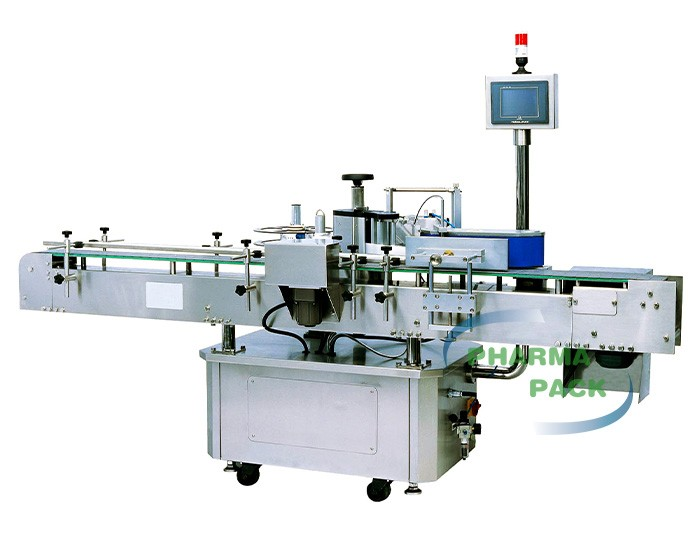
A round bottle labeling machine applies labels to cylindrical containers used for medicines, healthcare products, and other packaged goods. Depending on the configuration, bottles may be positioned individually or transferred through a rotary labeling station for controlled application.
When serialization is required, the labeling process must coordinate with printing or coding equipment and the relevant production control system. Codes may be printed directly onto a bottle or incorporated into a label, depending on the packaging design and traceability requirements.
A typical integrated process involves feeding and positioning bottles, applying or printing identification information, checking the label and code, and rejecting units that fail inspection. Sensors and vision systems can help verify whether a label is present and whether the printed information meets defined acceptance criteria.
The exact sequence depends on the equipment configuration. Manufacturers should confirm how serial numbers are generated, assigned, verified, and recorded before selecting a system.
Common Problems When Coding Falls Out of Sync
Missing or Duplicate Serial Numbers
A communication failure between the serialization software and packaging equipment can interrupt data assignment. If the system does not handle interruptions correctly, bottles may receive missing or repeated codes. Production controls should prevent unauthorized reuse of serial numbers and identify incomplete transactions.
Unreadable Codes
Ink quality, label surface conditions, printing position, and code size can affect readability. A vision inspection system can check printed information against predefined criteria and flag codes that cannot be read reliably. Inspection settings should reflect the code format and applicable quality requirements.
Incorrect Label and Code Association
Even when a label and code are individually correct, they may belong to different products. Synchronization controls should maintain the relationship between each bottle, its assigned identifier, and its production record. This becomes particularly important when multiple products or bottle sizes run on the same line.
Production Interruptions
Equipment stoppages, bottle jams, and changes in line speed can interrupt the expected sequence. A well designed system should manage these events through coordinated controls, alarms, and defined recovery procedures. Operators also need clear instructions for reconciling production records after an interruption.
What to Evaluate When Choosing a Labeling Machine Manufacturer
Selecting a labeling machine manufacturer involves more than comparing labeling speed. Manufacturers should assess whether the equipment can integrate with existing printers, cameras, serialization software, and production management systems.
First, confirm bottle compatibility, label positioning requirements, and expected production capacity. Then evaluate code verification, automatic rejection, data communication, and the handling of production interruptions. For regulated pharmaceutical applications, documentation, audit trails, and electronic record controls may also be necessary, depending on the applicable requirements.
Changeover flexibility is another practical consideration. If a facility processes different bottle diameters, label formats, or products, the equipment should support controlled adjustments and reliable verification after each changeover.
Finally, ask about installation, operator training, maintenance, and technical support. These factors influence the long term reliability of an integrated packaging line.
Pharmapack's Approach to Integrated Bottle Packaging
Pharmapack provides labeling equipment and integrated track and trace solutions for pharmaceutical and other packaging applications. Its bottle packaging system can combine a vertical round bottle labeler, coding and serialization functions, inspection equipment, and downstream case packing to coordinate key packaging operations.
The integrated solution is designed to support unique product identification, code verification, defective product rejection, and production data traceability. Pharmapack also describes real time data synchronization and integration with electronic record controls for applicable systems. Manufacturers should confirm the precise configuration and compliance requirements for their intended application.
Creating a More Reliable Serialization Process
Keeping labeling and coding in sync requires coordinated equipment, reliable data handling, and effective inspection. A suitable round bottle labeling machine can help manufacturers maintain consistent label application while supporting serialization and traceability requirements.
By evaluating integration capabilities, code verification, interruption handling, and technical support, manufacturers can choose a labeling machine manufacturer that understands the needs of their production line. With the right configuration and operating procedures, labeling and serialization can work together to improve packaging consistency and product tracking.