Tablet Counting Machine Reject Logic: Catching Count Deviations Earlier
In pharmaceutical packaging, accurate tablet counting is essential for product quality, packaging consistency, and customer confidence. Even a small counting deviation can result in underfilled or overfilled bottles, product waste, and additional inspection work. For manufacturers and packaging facilities handling large production volumes, identifying these deviations as early as possible is an important part of maintaining reliable operations.
A well designed tablet counting machine helps address this challenge through accurate counting, monitoring, and reject logic. By identifying potential errors during the packaging process, an automated system can prevent defective containers from moving further down the production line. Understanding how reject logic works can help manufacturers choose equipment that supports both counting accuracy and efficient production.
Why Early Count Deviation Detection Matters
Count deviations can occur for several reasons, including overlapping tablets, irregular product movement, inconsistent feeding, or interruptions in the counting process. Changes in tablet shape, size, and surface characteristics may also affect how products pass through a counting system.
If these issues remain undetected until final inspection, manufacturers may need to recheck completed bottles, separate questionable products, or repeat parts of the packaging process. These activities consume time and can disrupt production schedules.
An automatic pill counting machine helps reduce these risks by monitoring the counting process as products move through the equipment. When the system identifies a discrepancy or an abnormal operating condition, it can trigger an appropriate response before the affected container advances to the next packaging stage.
The goal is not simply to count faster. It is to identify potential problems early enough to prevent them from becoming larger production issues.
How Reject Logic Works in a Tablet Counting Machine
Reject logic refers to the rules a machine uses to identify potentially defective containers and remove them from the normal production flow. Depending on the equipment configuration, these rules may respond to incomplete counts, missing products, sensor abnormalities, or other conditions that indicate a container may not meet the required specifications.
During normal operation, tablets enter the counting area and pass through a detection system. The machine records the count and coordinates the result with the corresponding bottle or container. If the count meets the configured target, the container continues through the line.
When the system detects a count deviation, it can mark the associated container for rejection. A synchronized rejection mechanism then diverts that container to a designated collection area for inspection or correction.
Timing is particularly important. The machine must correctly associate the detected deviation with the right container, even when bottles are moving continuously. Poor synchronization can cause an incorrect bottle to be rejected or allow a defective one to pass through.
Effective reject logic therefore depends on more than detecting an error. It also requires reliable communication between counting sensors, control systems, container tracking, and the rejection mechanism.
What Buyers Should Evaluate Before Choosing an Automatic Pill Counting Machine
When comparing equipment, manufacturers should look beyond the advertised counting speed. Several practical factors determine how effectively a machine can identify and handle count deviations.
First, consider counting accuracy across the intended product range. Tablets and capsules can vary in size, shape, and feeding behavior. Testing the machine with actual products can help determine whether it maintains consistent performance under realistic operating conditions.
Second, examine the available rejection functions. Buyers should understand which abnormalities the machine can detect, how rejected containers are handled, and whether operators receive clear alerts when a deviation occurs. Not every system detects every possible error, so capabilities should be verified against production requirements.
Third, assess the traceability of rejected products. A clear indication of when a deviation occurred and which container was affected makes investigation and corrective action easier. Where required, production records should also support the facility's quality management procedures.
Finally, consider cleaning, changeover, and maintenance requirements. Equipment that is easier to inspect and maintain can help reduce interruptions while supporting consistent operation across different products.
Integrating Reject Logic Into Quality Control
Reject logic works best as part of a broader quality control strategy rather than as a replacement for routine verification. Operators should establish appropriate counting checks, confirm rejection performance, and investigate recurring deviations.
Regular testing can help verify that sensors respond correctly, rejected containers are diverted reliably, and the system maintains synchronization at different operating speeds. If a machine repeatedly rejects containers, the underlying cause may be a feeding problem, a product characteristic, or a setup issue rather than a counting fault alone.
Manufacturers should also define clear procedures for handling rejected containers. Depending on their quality requirements, these procedures may include manual recounting, documented inspection, and approval before products return to the packaging process.
With suitable monitoring and maintenance, reject logic can help teams identify recurring problems and improve production consistency over time.
How Pharmapack Supports Earlier Defect Detection
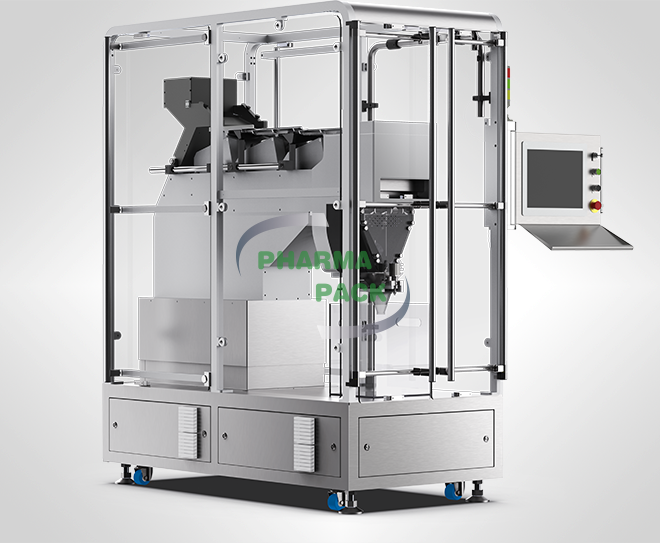
Pharmapack offers counting and sorting solutions that combine camera detection, rejection functions, and static weighing options to support online quality control. Its 360 Counting and Sorting Machine uses front and rear camera detection to inspect products from multiple angles, helping identify defective tablets during processing. The equipment also integrates counting, sorting, and filling functions to support automated packaging workflows.
For manufacturers evaluating an automatic pill counting machine, the appropriate configuration depends on product characteristics, required output, and inspection objectives. Explore the Pharmapack counting machine range to learn more about available equipment and identify a solution that fits your production requirements.
By combining accurate counting with suitable inspection and rejection mechanisms, manufacturers can detect deviations earlier, reduce unnecessary rework, and maintain greater consistency throughout the packaging process.