Integrating an Automatic Pill Counter with Capping and Labeling Equipment
In pharmaceutical packaging, counting accuracy is only one part of an efficient production process. Bottles must also move smoothly between filling, capping, and labeling stations while maintaining product quality and packaging consistency. Integrating an automatic pill counter with capping and labeling equipment helps pharmaceutical manufacturers create a coordinated packaging line that reduces manual handling, improves workflow, and supports reliable production.
For companies evaluating packaging automation, understanding how these machines work together is essential. As a pharmaceutical equipment manufacturer, Pharmapack focuses on helping customers identify equipment configurations that match their products, production requirements, and facility layouts.
Why Integrate an Automatic Pill Counter with Other Packaging Equipment?
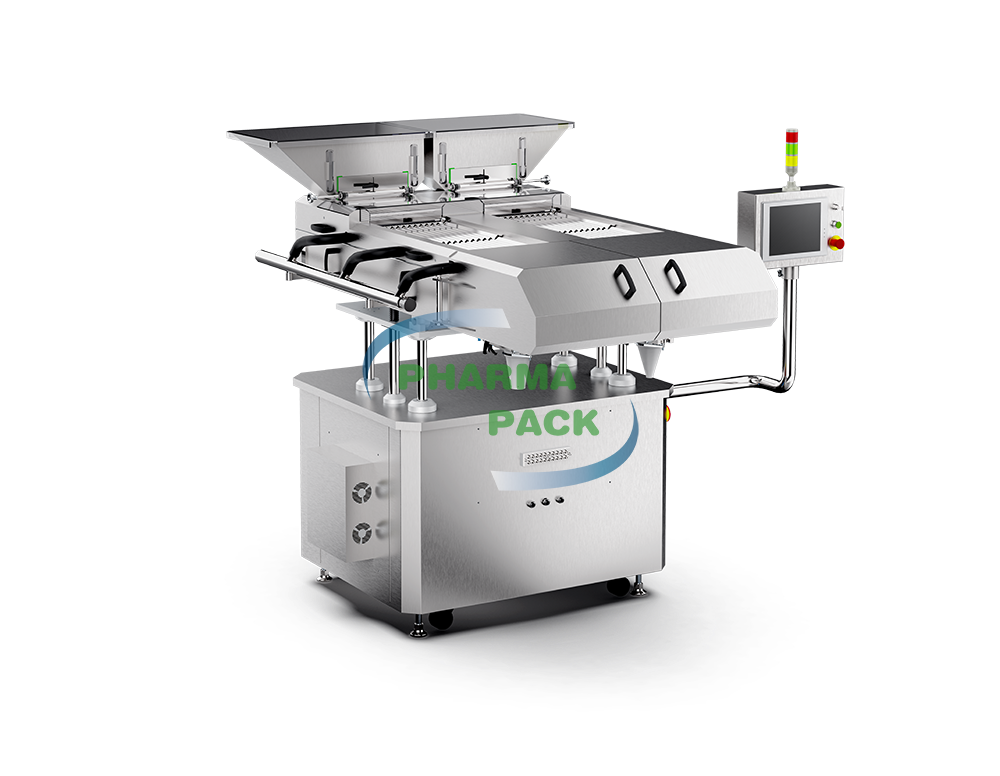
An automatic pill counter measures and dispenses a specified quantity of tablets or capsules into each bottle. However, the packaging process does not end once the correct count has been delivered. Bottles must proceed to capping and labeling before they are ready for inspection, storage, or distribution.
When these operations are performed separately, operators may need to transfer bottles manually between stations. This can increase handling time, create bottlenecks, and introduce inconsistencies in production speed.
Integrating an automatic pill counter with downstream equipment establishes a more continuous workflow. Once a bottle has been filled, it can move to the capping station for closure and then to the labeling station for product identification. Coordinated operation helps reduce unnecessary transfers and makes it easier to manage production across multiple stages.
How the Counting, Capping, and Labeling Process Works
A typical integrated packaging line begins with bottle feeding. Empty bottles are positioned and transported to the counting station, where tablets or capsules are dispensed according to the required quantity.
After filling, the bottles move toward the capping machine. Depending on the selected configuration, the system may include bottle positioning, cap feeding, and automatic cap application. Consistent bottle movement and appropriate cap handling help maintain closure quality throughout production.
The bottles then enter the labeling station, where product information, branding, and other required details are applied to the container. Label placement and bottle positioning should be coordinated to support consistent presentation and readability.
The entire process depends on compatible equipment and effective communication between stations. Conveyor speed, bottle spacing, filling cycles, and machine signals must be considered during integration. If one station operates significantly slower than the others, it may limit the throughput of the complete line.
Key Factors When Selecting Integrated Pharmaceutical Equipment
Choosing an integrated packaging line requires more than comparing the advertised speed of individual machines. Manufacturers should evaluate how the equipment performs as a complete system.
Product and bottle compatibility should be assessed first. Tablet dimensions, capsule shapes, bottle openings, container materials, and bottle sizes can affect counting accuracy and material handling. Equipment should accommodate the products and containers used in actual production.
Production capacity is another important consideration. Buyers should estimate the required output per hour and compare it with the practical operating speed of each machine. The goal is to maintain balanced performance rather than maximize the speed of one station while creating delays elsewhere.
Changeover requirements also deserve attention. Facilities handling multiple products or bottle formats may benefit from equipment that supports straightforward adjustments and repeatable setup procedures. This can help reduce downtime when switching between production runs.
Finally, manufacturers should consider cleaning access, operator safety, maintenance requirements, and available floor space. A well-planned layout can simplify daily operation and make routine maintenance more manageable.
Common Integration Challenges and How to Address Them
Even compatible machines can encounter problems when connected without sufficient planning. Bottle jams, inconsistent spacing, missed counts, loose caps, and misaligned labels can interrupt production and increase rejected packages.
To minimize these risks, manufacturers should evaluate the complete line before installation. Factory acceptance testing can help verify equipment coordination under representative operating conditions. Operators should also receive training on machine settings, routine inspections, cleaning, and troubleshooting.
It is equally important to establish suitable quality checks. Depending on the product and packaging requirements, these may include count verification, cap inspection, label presence detection, and rejection of defective bottles. Monitoring performance across the line helps operators identify recurring issues and maintain consistent output.
Why Work with an Experienced Pharmaceutical Equipment Manufacturer?
Selecting a pharmaceutical equipment manufacturer with line integration experience can simplify equipment selection and project coordination. Instead of sourcing each machine independently, buyers can work with one supplier to evaluate compatibility, define production requirements, and plan installation.
Pharmapack provides modular counting and packaging solutions that can integrate automatic counters, inserters, capping machines, labeling machines, and other packaging equipment. This approach allows manufacturers to configure a line around their product specifications, capacity targets, and available space.
Support throughout the project is also important. Technical consultation, equipment testing, installation, operator training, and after sales service can help customers prepare for production and manage equipment over its service life.
For manufacturers planning a new facility or upgrading an existing line, reviewing the complete packaging process with an experienced supplier can help clarify technical requirements before investment decisions are made.
Build a More Coordinated Packaging Line with Pharmapack
Integrating an automatic pill counter with capping and labeling equipment helps connect individual packaging operations into a consistent production workflow. The right configuration can reduce manual handling, improve process coordination, and support reliable packaging quality.
Pharmapack works with pharmaceutical and healthcare product manufacturers to develop counting and packaging solutions based on their operational needs. By evaluating product characteristics, bottle formats, output targets, and facility constraints, businesses can identify an integration approach suited to their production goals.