Round Bottle Labeling Machine for Small Vials: Achieving Consistent Wrap Around Labeling
Small vials are widely used in pharmaceutical, cosmetic, and healthcare applications, where clear product identification and consistent label placement are essential. However, labeling small round containers can be challenging because of their limited surface area, narrow diameters, and sensitivity to positioning errors. A suitable round bottle labeling machine helps manufacturers apply labels accurately while maintaining a stable production process.
For companies handling small vials, choosing the right labeling equipment involves more than evaluating speed. Container compatibility, label alignment, production consistency, and ease of adjustment all influence the final result. At Pharmapack, we understand these practical requirements and the importance of selecting labeling solutions that support reliable packaging operations.
Why Small Vials Require Specialized Labeling Equipment
Small vials leave little room for positioning errors. Even a slight deviation in label placement can affect readability, product presentation, and the visibility of essential information such as batch numbers, product names, and instructions.
Curved surfaces introduce another challenge. If a label is applied unevenly, it may develop wrinkles, bubbles, or overlapping edges. These problems become more noticeable when labels wrap around narrow containers, particularly when the production line handles multiple vial sizes.
A round bottle labeling machine is designed to address these challenges by coordinating container positioning, label feeding, and application. Depending on the machine configuration, positioning mechanisms and container stabilization features help maintain consistent contact between the label and the vial surface.
For manufacturers processing small containers, the right equipment can reduce manual handling, improve labeling repeatability, and support a more organized packaging workflow.
How Stable Wrap Around Labeling Works
Wrap around labeling requires the label to follow the curved surface of a round container without shifting or forming visible defects. Achieving this result depends on several factors working together.
First, the vial must be positioned consistently before the label is applied. Unstable feeding or inconsistent spacing can cause labels to sit at different heights or angles. A suitable conveying and positioning system helps present each container in the correct orientation.
Second, the label feeding mechanism must release the label at the appropriate time. Accurate coordination between container movement and label dispensing helps maintain alignment and control the overlap between the label edges when a full wrap around application is required.
Third, the label must adhere evenly to the vial surface. Application rollers or other suitable pressing mechanisms can help smooth the label and reduce wrinkles or trapped air. The actual configuration depends on the container dimensions, label material, adhesive properties, and production requirements.
When evaluating a machine, manufacturers should therefore consider the complete application process rather than focusing on labeling speed alone.
Key Factors When Choosing a Round Bottle Labeling Machine
Before purchasing a round bottle labeling machine, manufacturers should confirm that the equipment matches their actual production conditions.
Vial dimensions and stability are important starting points. Small changes in diameter, height, or container shape can influence feeding and label placement. Confirming the supported size range helps determine whether the machine can handle current products and potential future formats.
Label specifications also deserve careful attention. Label length, width, backing material, adhesive performance, and required overlap can all affect application quality. Testing representative labels and containers before finalizing the equipment configuration can help identify compatibility issues early.
Production capacity should reflect both current output and expected demand. A machine must maintain acceptable labeling quality at the required operating speed, rather than achieving a high nominal speed at the expense of consistency.
Changeover and adjustment are particularly relevant for manufacturers handling different vial sizes. Accessible adjustments and a straightforward setup process can reduce downtime when switching between products.
Finally, consider cleaning, routine maintenance, operator training, and the availability of technical support. These factors influence long term operating efficiency as much as the initial equipment specification.
What to Expect from a Labeling Equipment Manufacturer
Working with an experienced labeling equipment manufacturer can help businesses identify suitable machinery and avoid unnecessary adjustments after installation. Equipment selection should be based on actual vial samples, label specifications, production targets, and the requirements of the surrounding packaging line.
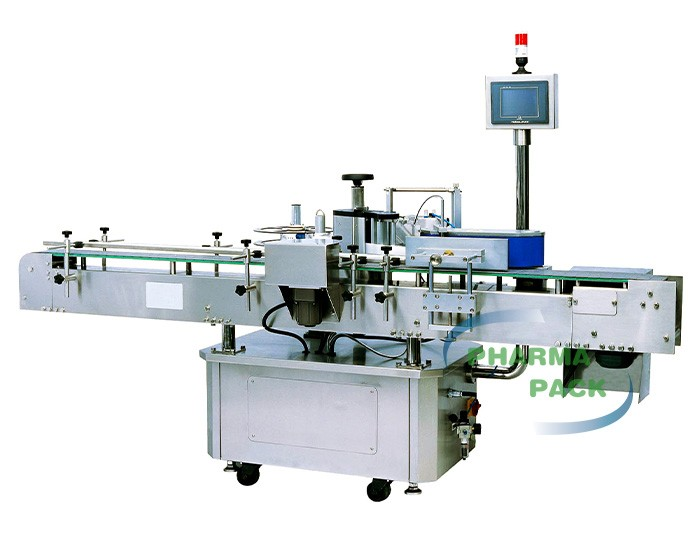
At Pharmapack, our labeling solutions include the LFLB-1120 vertical round bottle labeling machine. According to our product specifications, this model supports container diameters from 16 mm to 120 mm, with a maximum output of 200 to 300 bottles per minute depending on product size. Its servo motor driven labeling head, dual roller design, and stored job settings support repeatable application and convenient changeovers.
These specifications provide a useful starting point, but actual performance depends on the vial dimensions, label format, and production conditions. Manufacturers should discuss their requirements with the equipment supplier and request application testing where necessary.
Integration is another important consideration. A labeling machine may need to work alongside filling, inspection, coding, or cartoning equipment. Confirming conveyor height, communication interfaces, and line speed compatibility before installation can help reduce integration difficulties and support smoother operation.
Maintaining Labeling Quality During Production
Even a well configured machine requires consistent operating conditions. Operators should check label positioning, adhesion, and edge alignment during production, especially after changing vial sizes or label rolls.
Regular inspection of sensors, rollers, and label feeding components can help identify wear or contamination before these issues affect product quality. Label stock should also be stored according to supplier recommendations to maintain adhesive performance.
For pharmaceutical applications, manufacturers should establish appropriate inspection and documentation procedures based on their quality requirements. Where necessary, additional vision inspection or rejection systems can help identify incorrectly labeled containers before they move to the next packaging stage.
Find a Suitable Labeling Solution with Pharmapack
Stable wrap around labeling for small vials depends on the right combination of container handling, label control, application pressure, and equipment configuration. By evaluating these factors before purchasing, manufacturers can make a more informed decision and improve consistency across production batches.
As a labeling equipment manufacturer, Pharmapack provides labeling machinery for pharmaceutical and other packaging applications. Our team can help assess vial dimensions, labeling requirements, and production targets to identify an appropriate solution. Visit the Pharmapack LFLB-1120 product page to review the machine specifications and discuss your application requirements with our team.