Automatic Pill Counter Throughput Planning: How to Build the Right Production Buffer
In pharmaceutical packaging, counting accuracy is only one part of an efficient production process. An automatic pill counter must also maintain a suitable operating speed, work smoothly with upstream and downstream equipment, and accommodate changes in production demand. Without proper throughput planning, even a high speed counting line can experience bottlenecks, unnecessary downtime, or inconsistent output.
For pharmaceutical manufacturers, the key is to determine how much production buffer a line needs without creating excessive work in progress or wasting valuable floor space. Pharmapack helps manufacturers evaluate counting equipment requirements with a focus on production efficiency, accurate counting, and practical line integration.
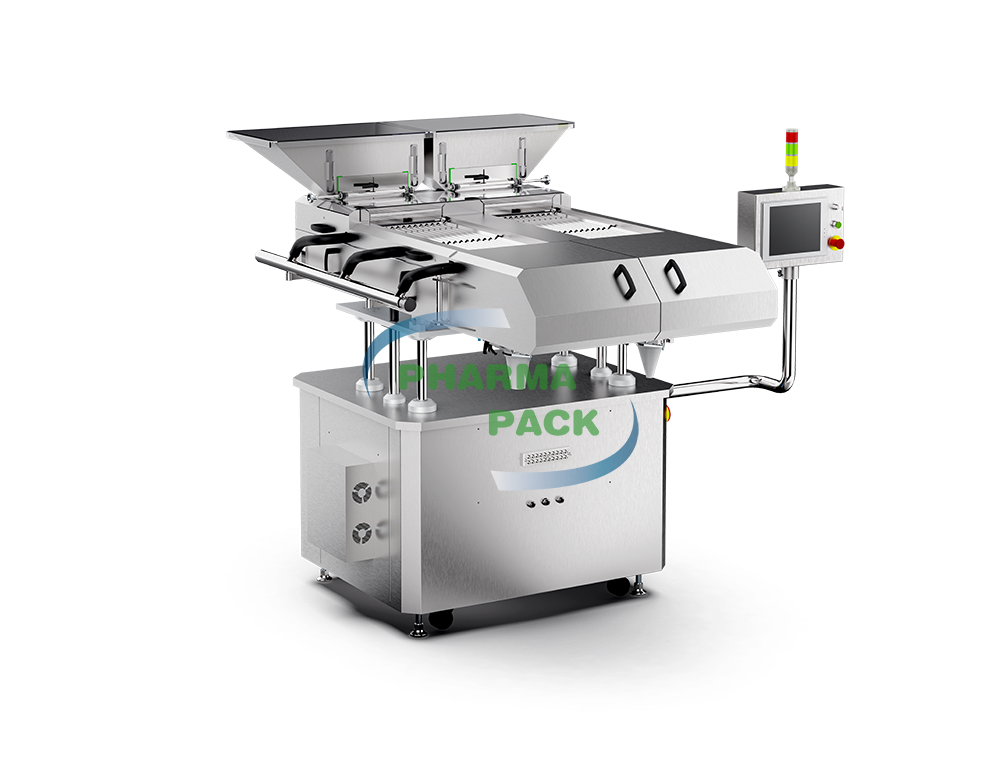
Start with Actual Production Demand
Before selecting an automatic pill counter, manufacturers should calculate the required output based on daily production targets, scheduled operating hours, and expected downtime. The machine's advertised maximum speed is useful for comparison, but it does not necessarily represent the output a packaging line can sustain during routine production.
For example, a facility may need to package 60,000 bottles during an eight hour shift. The required average output is 125 bottles per minute if the full eight hours are available for production. If setup, cleaning, changeovers, and maintenance reduce productive time to six and a half hours, the required operating rate rises to approximately 154 bottles per minute.
This calculation helps manufacturers identify the capacity needed under real operating conditions. It also highlights whether the proposed automatic pill counter has sufficient headroom to meet demand when minor interruptions occur.
Understand Where Production Bottlenecks Develop
A counting line typically includes several connected processes, such as bottle feeding, counting, filling, capping, labeling, and inspection. The overall throughput depends on how well these stages work together rather than on the speed of any single machine.
If the counter fills bottles faster than the capping machine can process them, filled bottles may accumulate between stations. If the bottle feeding system cannot maintain a consistent supply, the counter may sit idle despite having sufficient rated capacity.
Manufacturers should therefore compare the sustained operating speeds of all major stations and identify the process most likely to limit output. Equipment specifications, production records, and trial runs can help reveal these constraints before they affect routine manufacturing.
How Much Buffer Does a Counting Line Need?
A production buffer provides temporary capacity or space to absorb short interruptions and differences in equipment speed. For an automatic pill counter, this may involve a controlled accumulation of empty bottles before counting or filled bottles before capping.
The appropriate buffer depends on the duration and frequency of interruptions, the speed difference between connected machines, available floor space, and the consequences of stopping the line. A short interruption may require only a small accumulation area, while a process with frequent changeovers may need a different arrangement.
One practical approach is to size the buffer according to the expected interruption time and the production rate. If a downstream machine processes 120 bottles per minute, a buffer intended to cover a 30 second interruption would need space for approximately 60 bottles. This is a starting estimate rather than a universal specification. Actual capacity should account for container dimensions, conveyor layout, accumulation controls, and recovery time.
An oversized buffer is not always beneficial. Excessive accumulation can increase work in progress, complicate material handling, and conceal a persistent bottleneck. The objective is to provide enough flexibility to maintain a stable line without allowing temporary storage to replace proper capacity planning.
Evaluate Automatic Pill Counter Performance Beyond Speed
When comparing counting equipment, manufacturers should consider more than the stated number of bottles per minute. Counting accuracy, product handling, changeover time, ease of cleaning, and compatibility with different tablet and capsule sizes can all influence effective throughput.
Different products may behave differently during feeding and counting. Tablet shape, capsule dimensions, surface characteristics, and the quantity required per bottle can affect operating conditions. Frequent product changes may also reduce the time available for production.
Manufacturers should evaluate equipment using representative products and packaging formats whenever possible. A realistic trial can help establish achievable output, identify handling issues, and determine whether the counter can maintain the required performance over a complete production run.
Choosing Reliable Capsule Counter Suppliers
Selecting suitable capsule counter suppliers is an important part of throughput planning. Equipment specifications matter, but technical support, integration experience, operating flexibility, and access to maintenance assistance also influence long term performance.
Manufacturers should ask suppliers how rated throughput is measured, which product conditions affect speed, and what information is needed to configure a counting line. It is also useful to discuss bottle sizes, counting quantities, upstream feeding, downstream capping capacity, and expected changeover frequency before finalizing equipment selection.
Pharmapack encourages manufacturers to assess counting equipment in the context of the complete packaging process. A solution that fits actual production requirements can help reduce avoidable interruptions and support more consistent line performance.
Build Capacity Around Real Operating Conditions
Effective throughput planning combines realistic demand calculations, bottleneck analysis, and a carefully sized production buffer. An automatic pill counter should be selected according to the output the complete line can sustain, not simply its maximum advertised speed.
By evaluating product characteristics, equipment compatibility, downtime, and future production needs, manufacturers can make more informed investment decisions. Working with experienced capsule counter suppliers such as Pharmapack can help businesses assess their packaging requirements and develop a counting line that balances capacity, accuracy, and operational efficiency.