Tablet Counting Machine Data Monitoring: Key Metrics for Better Production Control
In pharmaceutical packaging, production speed alone does not determine operational efficiency. Manufacturers also need to understand counting accuracy, equipment availability, rejection rates, and downtime to maintain consistent output and product quality. Without reliable production data, recurring problems can remain hidden until they affect delivery schedules or increase operating costs.
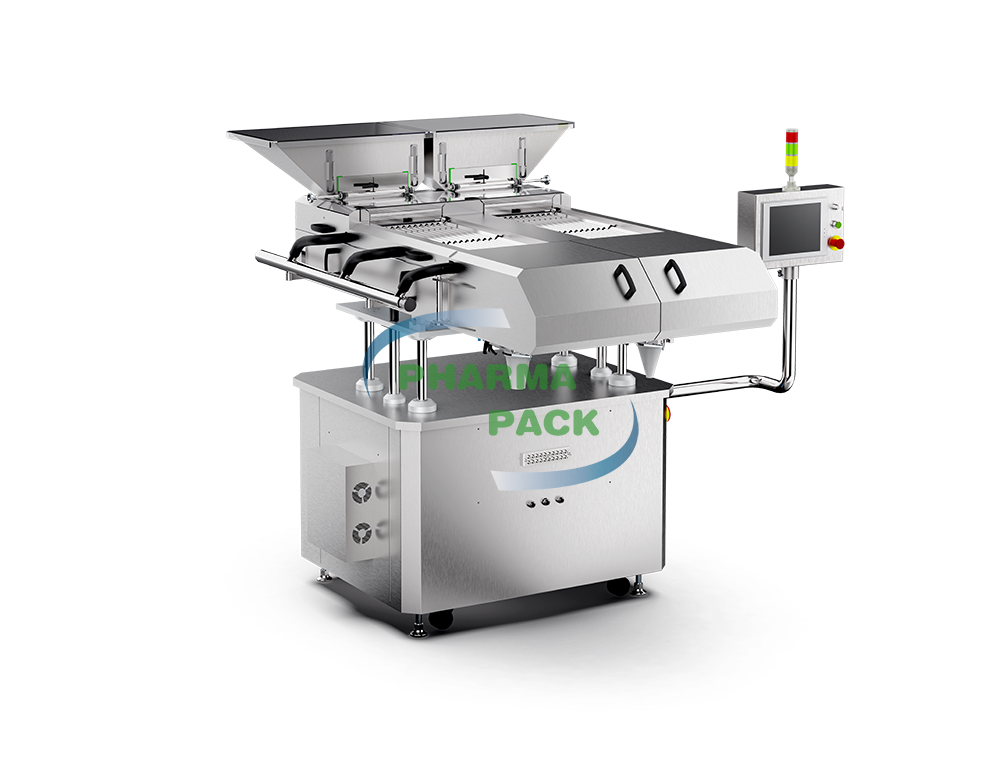
At Pharmapack, we recognize that effective data monitoring helps manufacturers make informed decisions about their packaging operations. By tracking the right metrics, businesses can evaluate tablet counting machine performance, identify production bottlenecks, and improve process consistency.
Why Production Data Matters for Tablet Counting
A tablet counting machine performs several connected tasks, including product feeding, individual tablet detection, quantity verification, and bottle filling. Problems at any stage can affect the entire packaging line. Monitoring production data helps operators distinguish between isolated interruptions and recurring performance issues.
For example, a decline in output may result from inconsistent tablet feeding rather than insufficient counting capacity. Similarly, an increase in rejected bottles may indicate a counting issue, a container handling problem, or a need to adjust machine settings.
A pharmaceutical tablet counter with monitoring and alarm functions can help operators identify abnormal conditions more quickly. Instead of relying entirely on manual observation, production teams can use recorded information to investigate faults, compare operating periods, and determine where corrective action is needed.
Counting Accuracy and Rejection Rate
Counting accuracy is one of the most important metrics for pharmaceutical packaging. Each bottle must contain the specified number of tablets or capsules, making reliable detection essential to consistent product quantity.
Manufacturers should monitor counting errors, rejected containers, and recurring detection alarms. These indicators can help reveal problems involving overlapping tablets, unstable product flow, or unsuitable operating parameters.
The rejection rate provides additional insight. If the number of rejected bottles rises over time, operators should investigate the reason rather than simply removing the affected containers. Reviewing rejection records alongside machine alarms and production conditions can help identify the underlying cause.
An effective pharmaceutical tablet counter may also support automatic bottle rejection when a filling problem is detected. This function helps prevent incorrectly filled containers from continuing through the packaging process, although rejection settings and verification procedures should be validated for the specific application.
Production Throughput and Equipment Availability
Throughput measures how many tablets are counted or how many bottles are filled within a defined period. Both measurements are useful, but they describe different aspects of production. Tablet output reflects counting capacity, while bottle output also depends on the required quantity per container and the speed of bottle handling.
Manufacturers should compare actual production with planned output rather than relying solely on maximum rated machine speed. A machine may have substantial theoretical capacity but achieve lower output because of product changes, material replenishment, bottle positioning, or downstream limitations.
Equipment availability is another essential metric. It measures the proportion of scheduled production time during which equipment is ready for operation. Frequent stoppages can reduce availability even when the machine performs well while running.
Tracking throughput and availability together helps teams determine whether additional capacity is necessary or whether improving operating stability would deliver greater benefits.
Downtime, Alarm Frequency, and Maintenance
Unplanned downtime directly affects production schedules. Recording when a tablet counting machine stops, how long the interruption lasts, and what caused it helps maintenance teams prioritize recurring problems.
Alarm frequency can provide an early indication of unstable operation. Repeated alarms related to product feeding, sensor detection, or bottle positioning deserve investigation, even if each interruption is brief.
Maintenance teams can also track mean time between failures and mean time to repair. These metrics help evaluate equipment reliability and the effectiveness of maintenance procedures. Over time, the information can support better spare parts planning and more practical preventive maintenance schedules.
Pharmapack's modular counting solutions include fault diagnosis and real time monitoring features on applicable models. These functions can help operators identify abnormal operating conditions and respond before minor issues develop into extended interruptions.
Product Changeovers and Cleaning Time
For manufacturers handling multiple tablet types, changeover performance can significantly affect daily output. Monitoring the time required to remove product contact parts, clean the equipment, adjust settings, and resume production helps reveal opportunities to improve workflow.
Cleaning duration should be evaluated alongside the required cleaning procedure and product changeover frequency. Reducing unnecessary delays is useful, but cleaning and inspection requirements must remain appropriate for the product and manufacturing environment.
Recording changeover times across different products can also help production planners create more realistic schedules. If one product consistently requires longer preparation, that information can guide production sequencing and resource allocation.
Turning Machine Data Into Practical Improvements
Collecting data is only the first step. Production teams should establish clear reporting intervals, define acceptable operating ranges, and assign responsibility for reviewing performance indicators. Daily monitoring can identify immediate issues, while weekly and monthly reviews help reveal longer term patterns.
It is also important to connect machine data with broader production records. Comparing counting performance with batch information, material usage, and downstream packaging output provides a more complete view of operational efficiency.
When selecting a tablet counting machine, manufacturers should ask which metrics the system records, whether historical data can be retrieved, and how alarms and reports can be accessed. Data storage, user permissions, and electronic record requirements should also be evaluated according to the facility's quality system.
Improve Production Visibility With Pharmapack
Effective data monitoring gives pharmaceutical manufacturers a clearer understanding of equipment performance, product quality, and production efficiency. By tracking counting accuracy, rejection rates, throughput, availability, downtime, and changeover time, teams can identify problems earlier and make better informed operational decisions.
Pharmapack provides tablet counting and filling solutions designed for pharmaceutical and nutraceutical packaging applications, with monitoring capabilities available on applicable equipment models. By evaluating production targets, product characteristics, and data requirements together, manufacturers can select a pharmaceutical tablet counter that supports reliable counting and more effective production control.