
Pharmaceutical safety is the cornerstone of healthcare, directly impacting patient lives and treatment efficacy.
A critical vulnerability lies in packaging: traditional bottle caps, limited by their physical structure, cannot achieve a 100% airtight seal. This allows moisture, oxygen, and other contaminants to infiltrate, compromising medicine efficacy and potentially leading to the formation of harmful substances. This fundamental flaw underscores why advanced sealing equipment is essential.
To understand the severity of the issue, let's examine how key environmental factors threaten pharmaceutical safety.
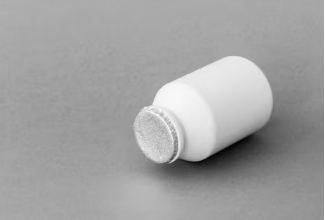
Copyright photo from: https://www.freepik.com
Key Threats of Environmental Factors
For hygroscopic drugs, moisture disrupts their physical structure:
lPowders can clump and harden, affecting dosing accuracy.
lCapsule shells can soften and stick together, making them unusable.
lTablets may disintegrate too slowly or too quickly, impacting absorption.
Meanwhile, water is a catalyst for various hydrolysis reactions. For instance:
lAspirin hydrolyzes in humid environments, producing salicylic acid and acetic acid, which irritate the stomach lining.
lPenicillin drugs rapidly lose potency upon hydrolysis and may cause allergic reactions. This chemical degradation is often irreversible.
Many active pharmaceutical ingredients (APIs) are highly sensitive to oxygen and undergo auto-oxidation.
lVitamin C oxidizes, turns yellow, and loses its nutritional and pharmacological value.
lOxidized nitroglycerin not only loses its lifesaving efficacy but can form toxic substances.
lOily drugs and Vitamins A and D become rancid and develop foul odors upon oxidation, becoming harmful if consumed.
Excipients like starch, sugars, and proteins, commonly found in medicines, serve as excellent growth media for microorganisms (bacteria, mold) under suitable temperature and humidity. Non-sterile products, if inadequately sealed, allow introduced microbes to proliferate.
Microbial contamination not only causes spoilage and renders drugs ineffective but also the toxins they produce (e.g., aflatoxins) pose direct health risks, especially to infants, the elderly, and immunocompromised individuals.
Given these risks, effective sealing is crucial. Yet traditional sealing methods have inherent limitations that fall short of providing complete protection.
Regardless of thread precision, microscopic physical gaps exist between the plastic or metal cap and the glass/plastic bottle finish—gaps large enough for water vapor and oxygen molecules to pass through. This is not a manufacturing defect but an inherent limitation of the mechanical compression principle.
lIncomplete Seal: Inner seals (e.g., cotton, paper pulp, foam) are often porous materials, ineffective at blocking moisture vapor and gas. They can loosen, shift, or even fall out during handling, compromising the seal.
lSecondary Contamination: These materials can shed fibers or particles, contaminating the product. Worse, a dry cotton plug in a humid environment can act as a "moisture wick," drawing external moisture into the bottle and accelerating drug degradation.
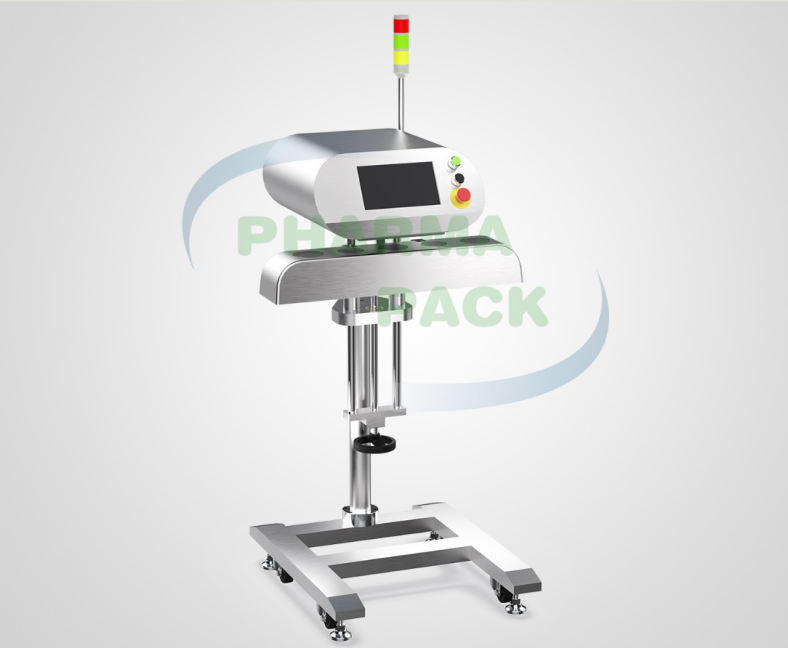
PHARMAPACK induction cap sealing equipment addresses these core flaws by creating a hermetic, fused seal directly on the bottle finish. Its splittable induction head design allows one main unit to be paired with various induction heads, adapting to different production lines and container heights. This flexibility significantly reduces the need for complete new machines during upgrades, lowering long-term costs.
How It Works
The process creates a reliable aluminum foil seal for bottles by using an electromagnetic field to induce instant, localized heating in a pre-applied foil liner inside the cap. The generated heat melts the polymer coating, fusing it to the container's lip to create a continuous, molecular bond upon cooling.
This process achieves following key breakthroughs:
lNon-Contact Heating: Energy acts directly on the sealing material without damaging the container or its contents.
lBroad Material Compatibility: As long as the container finish material is heat-seal compatible with the foil coating, a perfect seal is achieved, independent of the container's body shape or material (PE, PP, PET, Glass, Ceramic, etc.).
lAbsolute Moisture Proof: The continuous aluminum foil layer acts as a perfect vapor barrier, preventing water molecule penetration and fundamentally eliminating moisture-related issues like clumping, deliquescence, and hydrolysis.
lHigh-Efficiency Oxygen Barrier: The dense metal layer completely blocks oxygen permeation, providing a reliable inert environment for oxidation-prone drugs and ensuring chemical stability throughout the shelf life.
lMicrobial Barrier: The smooth, non-porous foil surface prevents microbial attachment and growth, while also providing a clear tamper-evident feature—any breach is immediately visible.
Applications of the PHARMAPACK Sealing Equipment
lPharmaceuticals & Health Products: This induction sealer can preserve the potency and integrity of active pharmaceutical ingredients (APIs) and sensitive health supplements.
lFood Industry: The sealing equipment is widely adopted for containers of seasonings, nutritional powder supplements, coffee, and other dry goods. It effectively prevents caking, preserves flavor, and extends the product's shelf life.
lPetrochemical & Chemical Industries: In these sectors, the induction cap sealing equipment can be used to seal containers of volatile organic solvents, laboratory reagents, and various chemical products, preventing evaporation of volatile contents, ensuring product integrity during storage and transport.
lCosmetics & Personal Care: By creating an impermeable barrier, the cap sealing shields active ingredients of premium products like serums, lotions, creams, and emulsions from oxidation and microbial contamination, guaranteeing that the product delivered to the consumer maintains its intended texture, potency, and benefits.
Environmental factors pose a real and persistent threat to pharmaceutical stability, and PHARMAPACK induction cap sealing equipment fundamentally changes this situation. It surpasses traditional mechanical compression sealing by creating a seamless, dense barrier at the bottle finish through molecular-level fusion. Contact us now to receive personalized product consultation and solutions.