How to Choose an Automatic Counting Machine? 5 Criteria for Ensuring Production Efficiency and Compliance
During the packaging of pharmaceuticals (capsules, tablets) and food products (soft gels, nuts), counting accuracy is a core requirement for product compliance. Inaccurate counts not only affect product compliance but also directly impact the enterprise's profits and brand reputation.
Faced with a wide array of automatic counting machines on the market, how can you strike a balance between initial capital expenditure (CAPEX) and long-term operational efficiency (OEE)? Below are five core criteria you must follow when selecting a tablet/capsule counter machine.
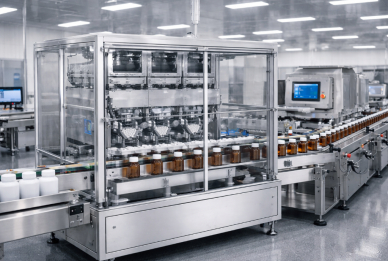
Speed and Throughput
As the core component of the packaging line, an automatic counting machine’s speed and throughput must seamlessly coordinate with upstream and downstream equipment to maximize overall line efficiency.
1. Line Synchronization Speed
Faster is not always better when it comes to automatic counting machines; the key lies in matching the takt time of the upstream unscrambler and downstream capper and cartoner.
During equipment selection, ensure the rated throughput is slightly higher than the overall line's design speed.
At the same time, the unit should have speed-adjustment capabilities that automatically adapt based on feedback from upstream and downstream units, preventing container backlogs or insufficient supply caused by speed mismatches.
2. Differences in Multi-Lane Technology
Multi-lane design is the primary means of increasing counting throughput. Common configurations on the market range from 8 to 32 lanes, with key differences as follows:
l 8/12 Lanes: Suitable for small to medium batch production or larger bottle diameters.
l 6/24 Lanes: The mainstream configuration, balancing speed and stability, making them ideal for medium to high-speed production lines.
l 32 Lanes and Above: Designed for high-volume, high-speed production requirements, delivering the highest output per unit of time. However, they impose stricter demands on material flow characteristics and vibration control.
3. Dynamic Stability
Vibration control under high-speed operation is a critical indicator of an automatic counting machine. High-quality counters, such as those from PHARMAPACK, employ a multi-stage vibratory feeding system. This advanced design stabilizes even extremely lightweight materials like empty capsules, keeping them securely in their tracks.
Precision and Missed-Detection Rate
1. Selection of Detection Technology
l Photoelectric/Mechanical Counting: Uses infrared light grids or mechanical shutters to count regular, opaque tablets or capsules. This technology is mature and cost-effective, making it suitable for high-volume packaging of conventional solid materials.
l High-Precision Vision (CCD) Counting: Utilizes high-speed industrial cameras to capture images. It not only performs counting but also identifies irregular, transparent, and extremely small materials, while simultaneously detecting defects such as fragments, chipped edges, and color variations. For high-value pharmaceuticals, CCD vision is the preferred choice.
2. Dynamic Error Correction and Rejection Mechanism
Additionally, when the system detects a quantity discrepancy or damaged product, the rejection mechanism must accurately capture the abnormal bottle during high-speed operation without interfering with the normal flow of subsequent bottles.
Flexibility and Versatility
Packaging lines often handle various materials and container types; therefore, equipment flexibility directly dictates changeover efficiency.
1. Material and Bottle Coverage
A high-quality automatic counter should be compatible with everything from micro-tablets to large softgels, as well as various containers ranging from round and square to flat bottles.
2. Ease of Bottle Changeover
For facilities with frequent product switches, the convenience of the changeover design is critical. Ideally, a bottle changeover should:
l Be completed without tools or with minimal simple tools.
l Allow for rapid positioning to minimize downtime.
l Offer high repeatability to ensure accurate tablet counting immediately after the switch.
3. Recipe Management
An automatic counting machine equipped with recipe storage and recall allows operators to switch operational parameters, including speed, vibration intensity, and target counts, with a single touch. This significantly reduces downtime and mitigates the quality risks associated with manual setup errors.
Hygienic Design
In pharmaceutical environments, preventing cross-contamination is the top priority.
A well-designed unit, like PHARMAPACK modular counting, follows quick-change principles. All components that come into direct contact with materials, such as vibratory feeders, hoppers, and tracks, should be removable without tools, minimizing cleaning downtime between batches.
In addition, all materials must be non-toxic, odorless, and non-adsorbent to ensure product safety. The equipment structure should eliminate dead zones where material can accumulate, preventing residue that could lead to mold growth, cross-contamination, or batch mix-ups.
Intelligent Control and Data Compliance
With the advancement of Industry 4.0 and evolving regulatory requirements, data integrity has become a necessity.
l 21 CFR Part 11 Compliance: For export-oriented or high-end pharmaceutical manufacturers, the counting machine's control system must support electronic records, electronic signatures, and audit trails. Every parameter change and every login action should be traceable.
l Integration Capability: Modern counting machines should feature standard communication interfaces that enable connectivity with plant SCADA systems or ERP platforms, allowing real-time monitoring of production output, fault alarms, and operational efficiency.
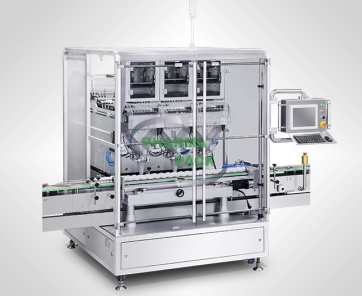
PHARMAPACK LFM-24 Modular Counter
Based on the five core criteria outlined above, we recommend our PHARMAPACK LFM-24 Modular Counter. This model strictly complies with cGMP requirements, seamlessly integrating flexibility, precision, and regulatory compliance.
1. High Speed and Efficiency
The LFM-24 features a 24-lane parallel counting structure, achieving a maximum production speed of up to 18,000 units per hour (depending on product specifications).
Its innovative vibration unit delivers a 50% speed increase compared to conventional machines, effectively preventing the counter from becoming a line bottleneck.
2. Flexibility and Adaptability
The automatic counting machine supports a fill range of 1 to 200 units per bottle. It utilizes servo encoder control for synchronized, precise dispensing, ensuring seamless coordination with upstream and downstream equipment such as unscramblers and cappers.
Notably, the LFM-24 expands the maximum treatable particle size from the traditional 13 mm to 20 mm, making it well-suited for emerging product formats such as softgels and large-diameter tablets.
Bottle changeover is straightforward, and the servo-driven adjustment system enables rapid adaptation to a variety of container shapes, including round, square, and flat bottles.
3. Precision and Detection
The LFM-24 boasts 24 independent optical detection lanes, each featuring high-sensitivity sensors for real-time counting and accurate identification.
For error handling, the machine includes station photoelectric inspection functionality. When a missing bottle is detected, the system automatically calculates and adjusts the dispensing nozzle position, preventing material spillage and reducing waste and contamination.
Conclusion
As we have explored, selecting the ideal automatic counting machine must go beyond raw speed.
The PHARMAPACK LFM-24 Modular Counter is specifically engineered to meet the rigorous demands of modern pharmaceutical and food packaging environments. By balancing high-speed throughput with precision detection and modular flexibility, the LFM-24 helps manufacturers optimize their OEE while maintaining total compliance.