Protecting Every Bottle: Smart Quality Control for Solid Oral Dosage Packaging Lines
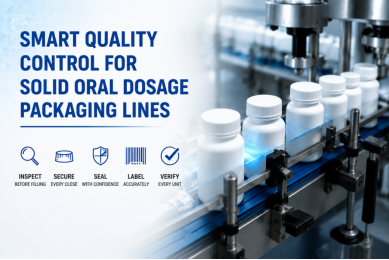
In modern solid dosage packaging for oral solid dosage (OSD) products, maintaining product quality requires more than accurate filling. Tablet integrity inspection, container closure performance, labeling accuracy, and automated verification are essential to ensure compliant finished bottle units.
A single chipped tablet, failed seal, incorrect code, or missing packaging component may compromise product integrity and create compliance risks.
This article explores how PHARMAPACK’s intelligent packaging systems support oral solid dosage packaging solutions by enabling quality control throughout the pharmaceutical bottle packaging line, from tablet inspection before filling to final verification.
Pre-Filling Stage
Before tablets or capsules enter the bottle, they pass through the hopper, vibratory feeding system, and counting channels of an electronic tablet counter. During high-speed feeding and transfer, continuous mechanical vibration and contact between tablets and equipment may cause potential damage or surface defects.
1. Process Bottlenecks & Defect Modes
l Mechanical Damage: Tablets with lower mechanical strength, scored surfaces, or complex geometries may experience edge chipping, breakage, abrasion, or coating damage during high-speed transfer.
l Visual Defects: Tablets may present defects such as cracks, color variations, coating abnormalities, or irregular shapes, affecting final product quality.
l Downstream Waste and Contamination Risk: If defective tablets enter the bottle and are discovered only after packaging, the entire finished bottle may need to be rejected or reworked, resulting in additional product and packaging material waste.
2. PHARMAPACK Tablet Inspection System (TIS)
The tablet inspection system (TIS) is an advanced automated in-line inspection system that integrates high-resolution industrial cameras, LED illumination, and intelligent image processing algorithms.
l Visual Recognition: Installed within the inspection channel of an electronic tablet counter, TIS continuously captures images of products moving at high speed and applies AI-based image processing and software algorithms to automatically identify defects in tablets and capsules.
l Real-Time Rejection: When defective tablets or capsules are detected, the system accurately removes them through air-blow or vacuum-based rejection methods without stopping equipment operation. By intercepting defective products before filling, TIS helps minimize the risk of entire bottle rejection while maintaining uninterrupted production flow.
Sealing Stage
After filling and capping, induction sealing is an important step in pharmaceutical primary packaging to establish a reliable sealing barrier. A reliable sealing process helps protect the product from moisture and oxygen exposure during storage and distribution.
1. Process Bottlenecks & Defect Modes
l Missing Foil Liners: Incorrect liner placement or missing liners may prevent the bottle from forming an effective sealing barrier, affecting overall package integrity.
l Over-Sealing: Excessive induction energy or unstable operating conditions may cause overheating of the foil liner, compromising sealing performance.
l Under-Sealing: Insufficient energy output or uneven sealing conditions may prevent proper bonding between the liner and bottle rim, reducing container closure reliability.
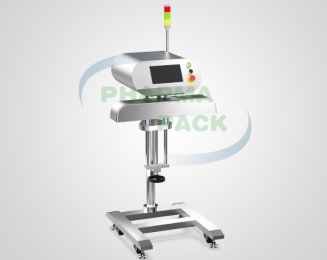
2. PHARMAPACK Induction Sealer LFS-20
The LFS-20 uses electromagnetic induction sealing technology to bond an aluminum foil liner to the bottle lip, creating a reliable sealing barrier for pharmaceutical bottle packaging.
l Stable Power Control: The LFS-20 is equipped with a transistor-based generator and a dedicated CPU control module to precisely regulate induction power output. Combined with induction coils and an air-cooled design, the system supports stable and continuous sealing operations.
l Consistent Sealing Performance: By maintaining stable sealing parameters, the LFS-20 helps address common sealing issues caused by insufficient or excessive heating, supporting reliable sealing performance throughout the pharmaceutical bottle packaging line.
Capping Stage
Once counting and filling are complete, containers move to the capping station. Capping is a critical step in pharmaceutical primary packaging, providing a stable mechanical closure before downstream sealing processes.
1. Process Bottlenecks & Defect Modes
l Mechanical Misalignment: During high-speed cap placement and tightening, issues such as high caps, tilted caps, or improper thread engagement may occur, affecting packaging consistency.
l Insufficient or Excessive Tightening: Loose caps may compromise container stability during transportation, while excessive tightening can damage threads or deform the bottle neck, affecting closure performance.
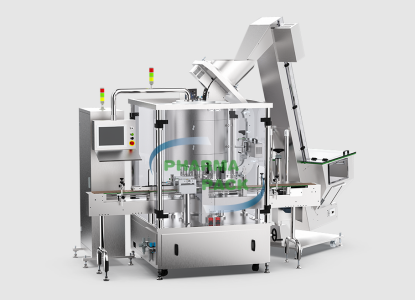
2. PHARMAPACK LFCR-1506/2510/4016 Rotary Capper
The LFCR-1506/2510/4016 Rotary Capper is designed to achieve consistent and reliable cap tightening for pharmaceutical bottle packaging.
l Adjustable Capping Torque: The LFCR rotary capper allows adjustment of screw cap torque through the capping mechanism, helping achieve stable tightening performance for different bottle and cap requirements.
l Capping Defect Detection and Rejection: The system is equipped with a detection mechanism to identify improper capping conditions, allowing non-conforming bottles to be rejected before moving to the next stage of the pharmaceutical bottle packaging line.
Labeling & Coding Stage
The product label serves as a critical identifier for pharmaceutical products, carrying essential information such as batch numbers, expiration dates, and tracking codes. Accurate labeling and coding are essential for product traceability and regulatory compliance.
1. Process Bottlenecks & Defect Modes
l Label Application Defects: High-speed labeling processes may result in missing labels, skewed placement, wrinkles, bubbles, or edge lifting, affecting product appearance and identification.
l Coding Errors: Printing processes may encounter issues such as blurred characters, incomplete codes, incorrect information, or unreadable 2D barcodes, which may affect traceability management.
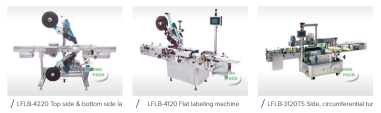
2. PHARMAPACK Labeling Solutions with Vision Inspection
l Label Position Verification: Our labeling machines support consistent label application, while vision inspection systems can verify label presence and positioning during production.
l OCR/OCV Verification: Vision inspection technology captures printed text and barcode information in real time. OCR/OCV algorithms verify batch numbers, expiration dates, and tracking codes against predefined information, enabling automatic rejection of incorrect or unreadable products.
End-of-Line Verification
After tablet counting, insertion of packaging accessories, capping, induction sealing, and labeling, each finished bottle requires a final verification step before secondary packaging. This stage ensures that each sales unit contains the expected product quantity and required internal components.
1. Process Bottlenecks & Defect Modes
l Missing Internal Components: During high-speed bottle packaging, errors may occur during the insertion of desiccants, cotton, or package inserts, resulting in incomplete finished units.
l Filling and Assembly Deviations: Even with high-precision counting systems, occasional deviations may occur due to abnormal operating conditions, making final product verification essential.
2. PHARMAPACK Automated Insertion and Weight Checking
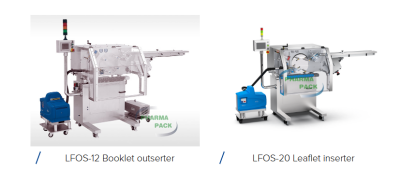
l Automated Insert Handling: Our automated insertion solutions include cotton inserters, desiccant inserters, and leaflet inserters for the pharmaceutical bottle packaging line. These systems enable accurate placement of internal packaging components, helping ensure packaging completeness and improve packaging consistency.
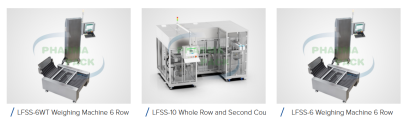
l Final Weight Verification: We offer weight checking solutions for packaging applications. By comparing measured weight against predefined specifications, the system helps identify products with weight deviations and separate non-conforming items during production.
Conclusion
As pharmaceutical packaging lines continue to operate at higher speeds, manufacturers must move beyond traditional offline sampling toward continuous in-line inspection and defect prevention to ensure that every finished bottle unit consistently meets quality standards.
PHARMAPACK delivers intelligent bottle packaging and inspection solutions that enhance production reliability and enable comprehensive quality control throughout the solid dosage packaging process, from tablets to finished bottles.