How a Bottle Unscrambler Machine Handles Soft PET Containers in Pharmaceutical Packaging
Soft PET containers are increasingly used for products that require lightweight and practical packaging. However, their flexibility also creates challenges during automated bottle feeding. Excessive pressure, friction, or improper handling can cause squeezing, deformation, scuffing, or unstable positioning. For manufacturers evaluating a bottle unscrambler machine, the equipment must therefore do more than simply orient containers. It needs to provide controlled handling and stable feeding throughout the production process.
As a pharma machine supplier, Pharmapack develops bottle unscrambling solutions with attention to container characteristics, production speed, changeover requirements, and downstream equipment integration. Our experience with pharmaceutical packaging lines helps us address the practical requirements involved in handling plastic containers.
Why Soft PET Containers Require Careful Unscrambling
Unlike rigid glass or heavy-duty plastic bottles, soft PET containers can deform when exposed to excessive mechanical pressure. When randomly placed bottles enter an unscrambler, uncontrolled contact between containers and machine components may result in squeezed bodies, surface marks, or unstable movement.
These problems can affect more than appearance. A deformed bottle may not enter the filling, capping, or labeling station in the correct position. If the container cannot maintain a stable orientation, downstream equipment may experience feeding interruptions or increased rejection rates.
For this reason, bottle unscrambling for soft PET containers should focus on controlled movement rather than simply maximizing speed. The machine should separate, orient, space, and transfer bottles while minimizing unnecessary impact and friction.
How a Bottle Unscrambler Machine Controls Bottle Movement
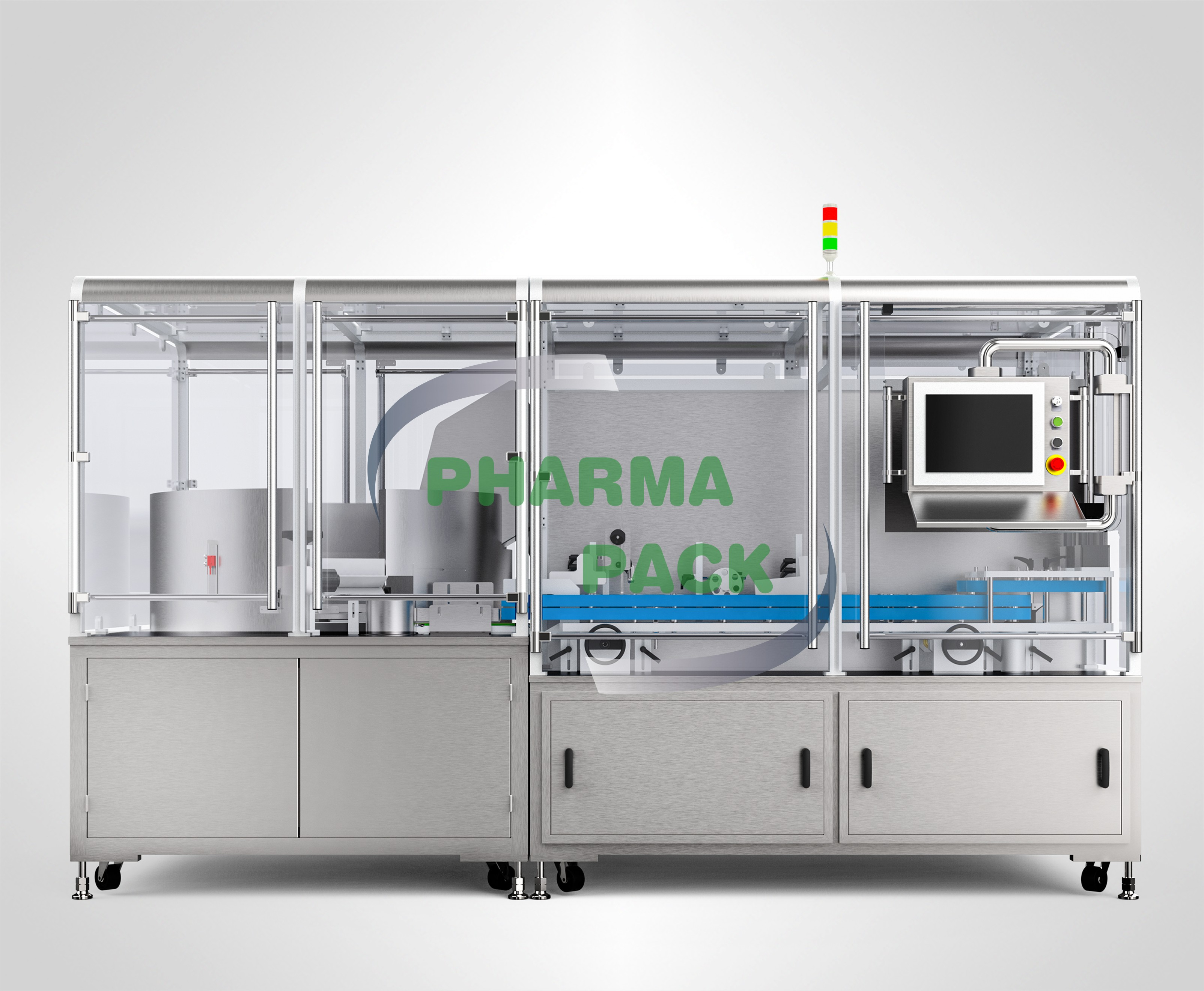
The working principle of an automatic unscrambler involves several coordinated stages. In the Pharmapack LFU-25C, bulk bottles are loaded into a hopper and transferred by an elevator toward the positioning station. A pre-sorting disc and flexible paddle wheel help orient the bottles before they reach the clamping conveyor. The bottles are then spaced and transferred through the subsequent conveying and inversion stages before entering the downstream conveyor.
This sequence is important when processing lightweight or flexible containers. Instead of relying on manual sorting, the machine creates a continuous and controlled bottle flow. Proper spacing also helps reduce unnecessary bottle-to-bottle contact, which can be particularly relevant when surface scuffing is a concern.
The exact handling configuration should still be evaluated according to the PET bottle's dimensions, wall thickness, shape, weight, and resistance to deformation.
Managing Scuffing and Surface Damage
Scuffing can occur when bottles repeatedly rub against one another or contact conveying components at inappropriate speeds. It may become more noticeable with transparent or lightly colored PET containers, where even minor surface marks can affect visual quality.
A suitable bottle unscrambler machine should therefore balance throughput with smooth transfer. Conveyor speeds, bottle spacing, guiding components, and contact surfaces all influence how containers move through the system.
At Pharmapack, we consider the interaction between the container and the unscrambling mechanism when selecting a configuration. Our LFU-25C, for example, uses clamping belts to hold and transport bottles through the orientation process. Its design also limits the number of changeover parts required, with the pre-sorting disc serving as the main change part for different bottle sizes.
Selecting the Right Speed for PET Bottle Handling
High production speed is important, but the maximum rated speed should not automatically become the operating target for every bottle.
The LFU-25C has a maximum output of 250 bottles per minute, depending on the product being handled. It accommodates round bottles from 25 to 98 mm in diameter and square bottles from 25 to 98 mm, with bottle heights from 45 to 200 mm.
For soft PET containers, actual operating conditions should be determined through testing. Container stability, deformation resistance, bottle geometry, and the requirements of the filling or labeling machine downstream all need to be considered. A stable flow at the appropriate speed is generally more useful than simply pursuing the highest possible output.
What Should You Ask a Pharma Machine Supplier?
When selecting a bottle unscrambler machine, it is useful to provide the supplier with detailed bottle information rather than evaluating the machine only from its published speed.
Bottle material, diameter, height, shape, wall thickness, weight, and production capacity can all affect machine selection. It is also important to discuss the required changeover frequency and how the unscrambler will connect with the filling, counting, capping, labeling, or other downstream equipment.
Pharmapack provides different unscrambling configurations, including turntable and high-speed models, allowing the equipment to be matched with different bottle types and production requirements. Our bottle packaging solutions can also be integrated with equipment such as counters, inserters, cappers, sealers, labelers, cartoners, and other packaging systems.
Pharmapack Approach to Bottle Unscrambling
As a pharma machine supplier, Pharmapack focuses on the complete packaging process rather than treating the bottle unscrambler as an isolated machine. The equipment needs to provide consistent bottle orientation while fitting the available production space and working effectively with the rest of the line.
The LFU-25C features a compact structure and requires relatively few changeover parts. Pharmapack states that the change parts are designed for easy disassembly and assembly, helping reduce changeover downtime when bottle specifications are changed.
For soft PET applications, we recommend evaluating the actual container together with the intended production speed before final equipment selection. This approach helps identify potential squeezing, scuffing, and feeding issues before they become production problems.
Reliable Bottle Feeding Starts with the Right Handling Strategy
A bottle unscrambler machine is a key part of an automated packaging line, but its performance depends heavily on how well the equipment matches the container. Soft PET bottles require particular attention to pressure, friction, spacing, orientation, and transfer stability.
Pharmapack works with manufacturers to evaluate these factors and select suitable unscrambling configurations for their packaging lines. By considering the bottle characteristics and downstream process together, the equipment can support a more stable and practical bottle feeding process.
If you are evaluating an unscrambler for soft PET containers, Pharmapack can assess your bottle specifications and production requirements to determine an appropriate solution.