How Cotton Inserters Help Protect Fragile Tablets in Pharmaceutical Packaging
Fragile tablets can be vulnerable to chipping, abrasion, and breakage during handling and transportation. While the formulation and tablet compression process determine much of a product’s physical strength, packaging also plays an important role in protecting tablets after production. For bottle packaging, cotton insertion provides a practical way to reduce unnecessary movement and contact inside the container.
At Pharmapack, we develop automated packaging equipment designed to support consistent and efficient pharmaceutical production. Our cotton inserter solutions are designed for bottles containing tablets, pills, capsules, and other dry products, helping integrate product protection into an automated packaging process.
Why Fragile Tablets Need Controlled Bottle Packaging
Tablets can move inside bottles when containers are transported, sorted, or handled. Repeated movement may cause tablets to collide with one another or with the bottle wall. For products with delicate coatings, irregular shapes, or lower mechanical strength, this movement can contribute to surface damage or breakage.
Cotton placed inside the bottle can act as a cushioning material between the tablets and the container. Rather than leaving excess space for tablets to move freely, the cotton helps limit unnecessary movement. This can be particularly useful for solid pharmaceutical products that need additional physical protection during distribution.
The effectiveness of this approach depends on factors such as tablet characteristics, bottle dimensions, cotton quantity, and insertion consistency. Automation is therefore important when manufacturers need repeatable packaging conditions across a large number of bottles.
What a Cotton Inserter Does
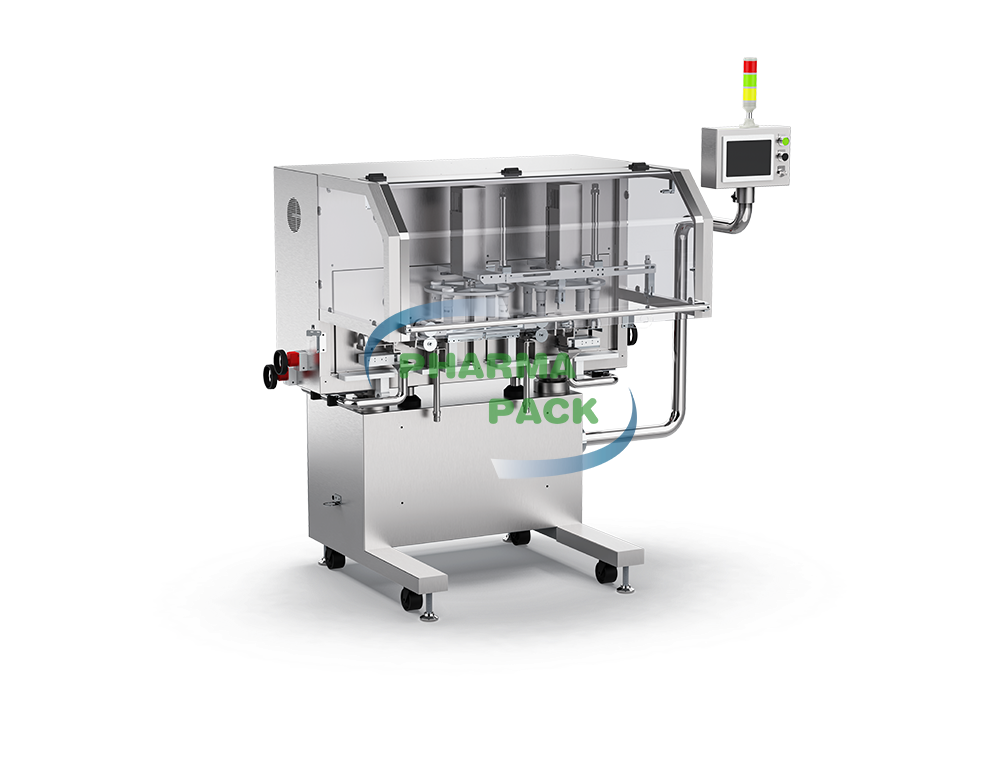
A cotton inserter automates the process of feeding, cutting, positioning, and inserting cotton into product bottles. This replaces a manual operation with a controlled mechanical process, helping maintain consistent insertion while keeping the packaging line moving.
For example, Pharmapack’s LFIC series uses servo motor technology and an LFIC control system for controlled operation. The LFIC-20 High Speed Cotton Inserter can reach a maximum production speed of 200 bottles per minute, depending on product and inspection conditions. It is designed for bottles with an opening greater than 20 mm and a bottle height greater than 30 mm.
The machine feeds cotton through a controlled mechanism before directing it into the bottle. Sensors and mechanical components coordinate the insertion sequence so that the cotton reaches the correct position before the bottle continues through the packaging process.
Consistency Matters as Much as Speed
A high production rate is only useful when the packaging process remains consistent. For fragile tablets, excessive or insufficient cotton can both create packaging concerns. Too little material may provide limited cushioning, while inconsistent insertion can affect the presentation and handling of finished bottles.
A properly controlled cotton inserter helps standardize this operation. Pharmapack’s LFIC-20 combines servo motor control with a compact configuration and automated insertion process. This allows manufacturers to incorporate cotton insertion into a repeatable production workflow rather than depending on manual placement.
This consistency can also simplify production management. When the same insertion process is applied across batches, operators can reduce variation associated with manual handling and maintain a more predictable packaging cycle.
Integrating Cotton Insertion Into a Complete Line
Cotton insertion is rarely an isolated packaging operation. A modern bottle packaging process may include bottle unscrambling, tablet or capsule counting, cotton insertion, capping, sealing, labeling, and cartoning.
Pharmapack designs our cotton inserters to work with other packaging equipment. The LFIC-20 can be connected with automatic tablet or capsule counters, cappers, sealers, labelers, and cartoners to form a more integrated packaging line.
This integration can reduce unnecessary manual transfers between individual operations. It also provides a more coordinated production flow, which is useful when manufacturers need to manage consistent output while maintaining control over packaging quality.
Choosing Among Pharma Machinery Suppliers
When evaluating pharma machinery suppliers, production speed is only one consideration. Equipment compatibility, bottle specifications, control systems, integration capability, maintenance requirements, and available technical support should also be considered.
The right cotton inserter should match the actual packaging requirements of the product and container. Bottle opening size, bottle height, cotton material, desired production rate, and the configuration of the existing line can all influence equipment selection.
Pharmapack provides a range of inserter machines, including different cotton inserter models as well as desiccant and pouch inserters. This allows packaging requirements to be considered within a broader bottle packaging system rather than treating each machine as a separate solution.
Pharmapack Cotton Inserters for Reliable Packaging
At Pharmapack, we combine packaging equipment design with line integration to support pharmaceutical, healthcare, and related manufacturing applications. Our LFIC cotton inserters are designed for automated cotton insertion into bottles containing tablets, pills, capsules, and other dry products.
With models available for different production requirements, Pharmapack can help manufacturers evaluate cotton insertion as part of their existing or planned packaging line. From controlled cotton feeding to integration with counting, capping, sealing, labeling, and cartoning equipment, our solutions are designed around practical production needs.
For fragile tablet products, protection does not end when the tablet leaves the production process. The way products are handled inside their final containers can also affect their condition during transportation and distribution. A well-designed cotton insertion process provides an additional layer of physical protection while supporting automated, consistent packaging.
Pharmapack continues to develop packaging machinery that combines controlled operation, line integration, and practical production performance, helping manufacturers create more consistent bottle packaging processes.