Cotton Inserter and Bottle Headspace: How Much Room Should Engineers Allow?
In pharmaceutical packaging, small design decisions can have a significant impact on production efficiency and product quality. One important consideration is the space left inside a bottle after tablets, capsules, or other solid products have been filled. This headspace affects how cotton fits into the container, how the bottle closes, and how consistently the packaging process runs. For engineers selecting a cotton inserter machine, understanding this relationship is essential to building a reliable packaging process.
At Pharmapack, we recognize that successful cotton insertion depends on more than machine speed. Bottle dimensions, product volume, cotton characteristics, and capping requirements all influence the final result.
What Is Bottle Headspace and Why Does It Matter?
Bottle headspace refers to the available space above the filled product and below the bottle opening or closure. In pharmaceutical packaging, this space must accommodate the intended cotton material when cotton is used to help limit product movement during transportation and handling.
Too little headspace can make cotton insertion difficult. Cotton may become excessively compressed, interfere with the bottle opening, or affect the placement of the cap. Too much headspace, on the other hand, can allow cotton to sit loosely or fail to occupy the intended space around the products.
The appropriate amount of headspace depends on the bottle design, the number and size of tablets or capsules, and the properties of the cotton being used. Engineers should evaluate these variables together rather than selecting a clearance based on bottle height alone.
How Should Engineers Calculate the Required Space?
There is no single headspace measurement suitable for every pharmaceutical bottle. A practical approach begins with the actual dimensions of the filled container and the cotton insertion requirements.
First, engineers should measure the internal bottle height and determine the space occupied by the products at the intended fill quantity. Product arrangements can vary, so the highest point of the filled product bed is often more useful than an estimated average fill height.
Next, they should consider the cotton's length, diameter, density, and compressibility. Cotton can change shape during feeding and insertion, meaning its dimensions before insertion may not represent the space it occupies inside the bottle.
Finally, engineers should account for the insertion mechanism and closure requirements. The cotton must enter the bottle consistently without obstructing the opening or interfering with downstream capping operations. Trial runs using actual bottles, products, and cotton materials can help establish suitable operating parameters.
How Cotton Inserter Machine Design Affects Headspace
A cotton inserter machine must handle cotton consistently while positioning it correctly inside each bottle. Variations in cotton feeding, cutting, and insertion can affect how much space the material occupies and how reliably it reaches the intended position.
For example, inconsistent cotton cutting may produce pieces that are too long or too short for the selected bottle format. Uneven feeding can also lead to irregular insertion results. These problems may become more noticeable at higher production speeds or when changing between bottle sizes.
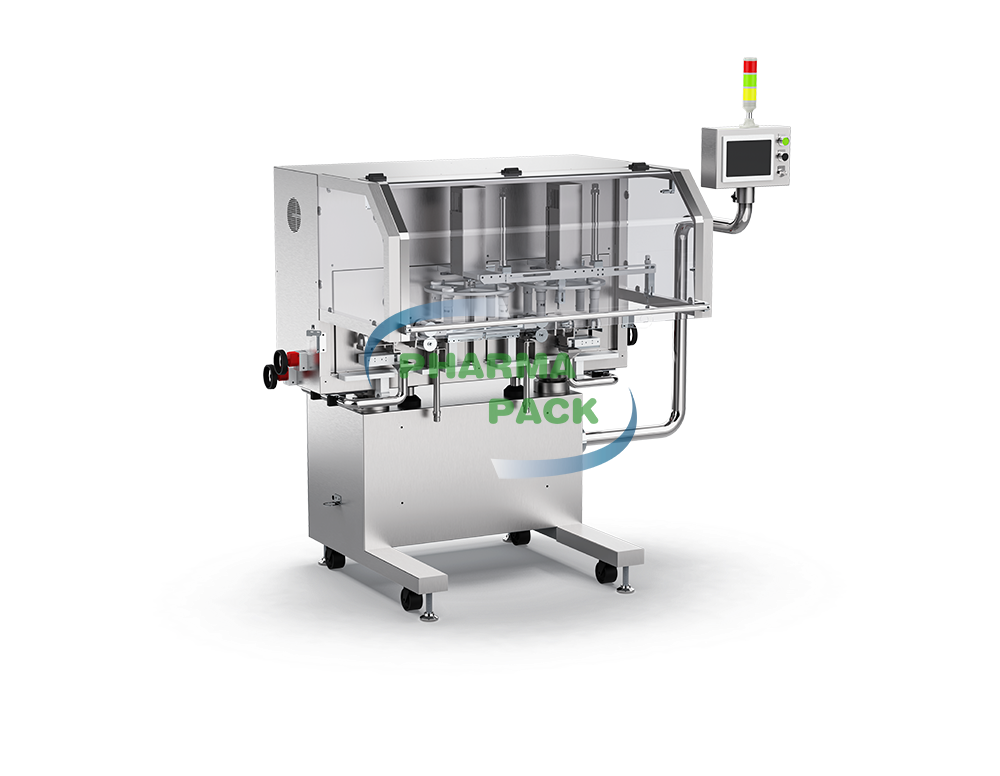
The Pharmapack LFIC-20 High Speed Cotton Inserter is designed for inserting cotton into bottles containing tablets, pills, capsules, and other dry products. Its servo motor and LFIC control system support precise control of the insertion process. The equipment has a stated maximum production speed of 200 bottles per minute, depending on the product being handled.
For this model, the specified bottle opening diameter is greater than 20 mm, and the suitable bottle height is greater than 30 mm. These specifications provide useful initial selection criteria, but engineers should still verify actual bottle geometry, cotton dimensions, and insertion performance before finalizing a packaging configuration.
What Problems Can Incorrect Headspace Cause?
Insufficient headspace can contribute to cotton compression, insertion resistance, and interference with closure placement. If the cotton is pushed too deeply or occupies an unsuitable position, it may also affect product presentation when the bottle is opened.
Excessive headspace can create a different set of challenges. Cotton may remain too loose, shift during transportation, or provide inconsistent coverage of the filled products. These outcomes depend on the packaging design and the intended function of the cotton.
To identify the source of a problem, engineers should check bottle dimensions, fill consistency, cotton cutting length, feeding stability, insertion depth, and capping performance. Adjusting machine settings without investigating these factors may solve one symptom while creating another.
How to Validate Headspace Before Full Production
Before approving a packaging setup, engineers should test the complete process under representative production conditions. Samples should cover the expected variation in bottle dimensions, product fill levels, and cotton properties.
During testing, observe whether cotton enters every bottle cleanly, remains in the intended position, and avoids the closure area. Inspect capped bottles for interference, deformation, or inconsistent results. It is also useful to repeat the evaluation at different operating speeds to determine whether insertion quality remains stable as throughput increases.
When the packaging line includes a tablet or capsule counter, capper, sealer, and labeler, validation should consider how the cotton inserter integrates with these downstream machines. Consistent transfer between stations helps reduce interruptions and supports stable production.
Choose the Right Cotton Inserter with Pharmapack
Determining suitable bottle headspace requires a balance between container dimensions, product volume, cotton properties, and machine performance. Rather than relying on a universal clearance value, engineers should validate the complete combination under real operating conditions.
Pharmapack provides cotton insertion equipment for pharmaceutical, healthcare, and other packaging applications. By evaluating bottle specifications, production targets, and material characteristics together, manufacturers can select an appropriate cotton inserter machine and establish a more consistent packaging process. The result is a setup designed around actual production requirements, with fewer avoidable insertion issues and more dependable line operation.