Cotton Inserter for Export Shipments: Reducing Transit Vibration Risks in Pharmaceutical Packaging
Exporting pharmaceutical packaging equipment involves more than selecting a suitable machine and arranging international freight. Long transportation routes, repeated handling, and continuous vibration can affect equipment condition before it reaches the installation site. For pharmaceutical manufacturers investing in a cotton inserter, understanding these risks helps protect equipment accuracy, simplify commissioning, and reduce unexpected costs.
As a pharmaceutical packaging equipment provider, Pharmapack understands the importance of considering transportation conditions alongside production performance. Careful preparation before shipment can help ensure that a cotton inserter arrives ready for inspection, installation, and integration into the customer's packaging line.
How Transit Vibration Can Affect a Cotton Inserter
International shipments may involve trucks, container vessels, rail transportation, and multiple transfers between logistics providers. During these stages, equipment can experience repeated vibration, sudden impacts, and changes in handling conditions.
A cotton inserter contains mechanical and electrical components that must work together to deliver consistent performance. Prolonged vibration may loosen fasteners, shift movable assemblies, or affect the alignment of certain components if the equipment is not adequately secured. Electrical connections, sensors, and control components also require appropriate protection against impact and movement.
These risks do not mean that transportation will necessarily damage the machine. Instead, they highlight why export preparation should account for the equipment's structure, weight, and sensitive parts rather than relying on ordinary packaging alone.
Why Packaging Preparation Matters Before Export
Effective export packaging begins with an assessment of the machine and its transportation requirements. Equipment dimensions, weight distribution, shipping duration, and the number of expected transfers all influence the packaging method.
A cotton inserter should be secured to a suitable support structure to prevent sliding or tipping during transit. Appropriate cushioning can help absorb vibration and reduce the transmission of impact to sensitive components. Where necessary, protective materials should be selected to address moisture, dust, and other environmental conditions encountered during overseas transportation.
Movable parts and exposed components should also be secured or protected according to the equipment manufacturer's instructions. The packaging should prevent unnecessary movement without placing excessive pressure on control panels, sensors, cables, or other vulnerable areas.
For heavier machinery, a properly designed crate or reinforced base can support safer lifting and handling. Clear handling instructions and visible identification labels can further reduce the risk of improper loading or unloading.
Selecting a Cotton Inserter for Stable Production
Transportation protection is only one part of the purchasing decision. Pharmaceutical manufacturers should also evaluate whether the cotton inserter meets their production requirements and integrates with existing equipment.
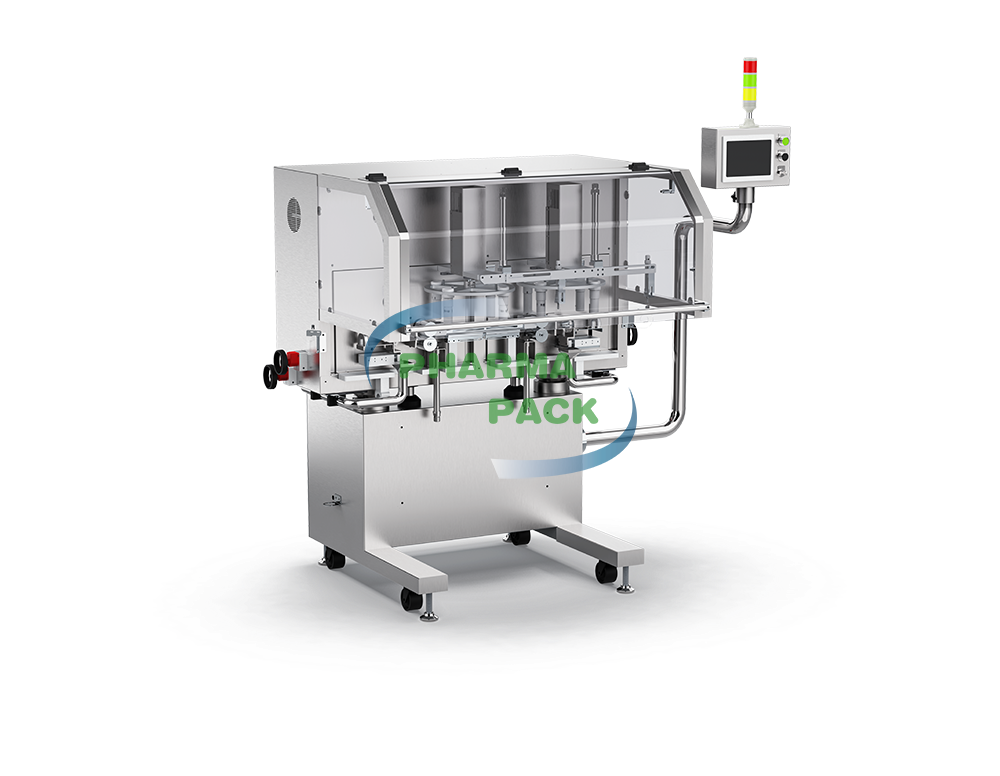
Pharmapack's LFIC-20 High Speed Cotton Inserter is designed to insert cotton into bottles containing tablets, pills, capsules, and other dry medicinal products. According to the product specifications, its maximum production speed is 200 bottles per minute, depending on the product size being processed. It uses a servo motor and LFIC control system for controlled operation.
The machine can also be connected with automatic tablet or capsule counters, cappers, sealing machines, labelers, and cartoners to form a more complete packaging line. This compatibility is important because transportation, installation, and commissioning should be planned around the intended production configuration.
Before ordering, buyers should confirm bottle dimensions, opening diameter, production speed, power requirements, air pressure, and available installation space. These details help ensure that the selected equipment fits both the manufacturing process and the destination facility.
Inspection and Commissioning After Delivery
Even with appropriate packaging, buyers should inspect the equipment after arrival. Checking the external crate for impact marks, deformation, or signs of moisture can help identify possible transportation issues early. Any visible damage should be documented before the packaging is discarded.
After unpacking, the receiving team should compare the delivered equipment and accessories with the shipping documents. A visual inspection can identify loose components, damaged cables, displaced parts, or other abnormalities. Before starting the machine, qualified personnel should follow the manufacturer's installation and commissioning instructions.
A controlled test run is also important. Operators can verify the machine's basic functions, sensor responses, cotton feeding, and insertion performance under suitable operating conditions. If abnormal noise, inconsistent feeding, or unexpected alarms occur, the equipment should be checked before full production begins.
Clear communication between the supplier, logistics provider, and receiving team helps resolve potential issues more efficiently and reduces unnecessary delays.
What to Discuss With Pharma Machinery Suppliers
When comparing pharma machinery suppliers, buyers should look beyond the machine's quoted price and rated speed. Export experience, packaging arrangements, technical documentation, installation guidance, and after sales support can all influence the total cost of ownership.
Ask how the equipment will be secured for international shipment, whether protective measures are adapted to the machine's structure, and what inspection steps are recommended after delivery. It is also useful to clarify the scope of technical support, spare parts availability, and procedures for reporting transportation damage.
Suppliers that communicate these details clearly make it easier for buyers to plan procurement, logistics, and production schedules with fewer uncertainties.
Preparing for a More Reliable International Delivery
A successful equipment export depends on coordination between machine design, packaging, transportation, and commissioning. Although transit vibration cannot always be eliminated, appropriate securing methods, protective packaging, and post delivery inspections can help reduce avoidable risks.
Pharmapack provides cotton insertion equipment for pharmaceutical and related packaging applications, with solutions designed to integrate into broader production lines. By discussing application requirements and export preparation before shipment, buyers can make more informed purchasing decisions and establish a clearer path from delivery to stable production.