Bottle Unscrambler Machine Testing for PET Supplement Bottles: What to Check First
PET bottles are widely used for vitamins, dietary supplements, capsules, and tablets because they are lightweight, durable, and suitable for many packaging applications. However, their performance on an automated packaging line depends on more than their material. Bottle dimensions, wall stiffness, base stability, and feeding conditions can all affect how smoothly containers move through an unscrambling system.
Before investing in a bottle unscrambler machine, manufacturers should test their actual PET supplement bottles under realistic operating conditions. A structured evaluation helps identify potential feeding problems early, reduces unnecessary adjustments, and supports reliable production.
Why PET Supplement Bottles Need Specific Testing
Although PET is a common packaging material, bottles can vary considerably in shape and construction. A short, wide supplement bottle behaves differently from a tall, narrow container. Lightweight bottles may also be more susceptible to tipping, deformation, or friction during high speed feeding.
The first step is to define the intended bottle range. Record the height, diameter, shape, neck structure, and base dimensions of each container. If the production line handles several bottle types, test each representative size rather than assuming that successful operation with one container guarantees compatibility with others.
These measurements help determine whether the proposed unscrambler can accommodate the bottles and whether additional changeover adjustments may be necessary.
What Should You Test First?
1. Bottle Dimensions and Shape Consistency
Start by checking whether the actual bottles match their design specifications. Measure representative samples from different production batches and look for variations in height, diameter, and base geometry.
Round and square PET bottles may require different handling considerations. Irregular dimensions can affect spacing, orientation, and movement through guide rails. If bottles become trapped repeatedly at the same point, dimensional variation should be investigated before changing machine settings.
2. Bottle Stability and Deformation
Next, evaluate how the bottles behave under normal handling pressure. Lightweight PET containers may bend when subjected to excessive contact force or accumulate against one another at feeding points.
Observe whether bottles remain upright, move smoothly, and maintain their shape during unscrambling. Pay particular attention to unstable bases, thin walls, and unusual shoulder designs. Testing with empty production bottles is useful because container behavior can change after filling.
3. Feeding Speed and Bottle Spacing
A bottle unscrambler machine must deliver containers at a rate that matches the requirements of the downstream packaging line. Excessive speed may increase collisions and tipping, while insufficient feeding can limit overall output.
During testing, increase the operating speed gradually and monitor bottle spacing, orientation accuracy, and discharge stability. The goal is not simply to reach the highest stated production rate but to maintain consistent performance at the required line speed.
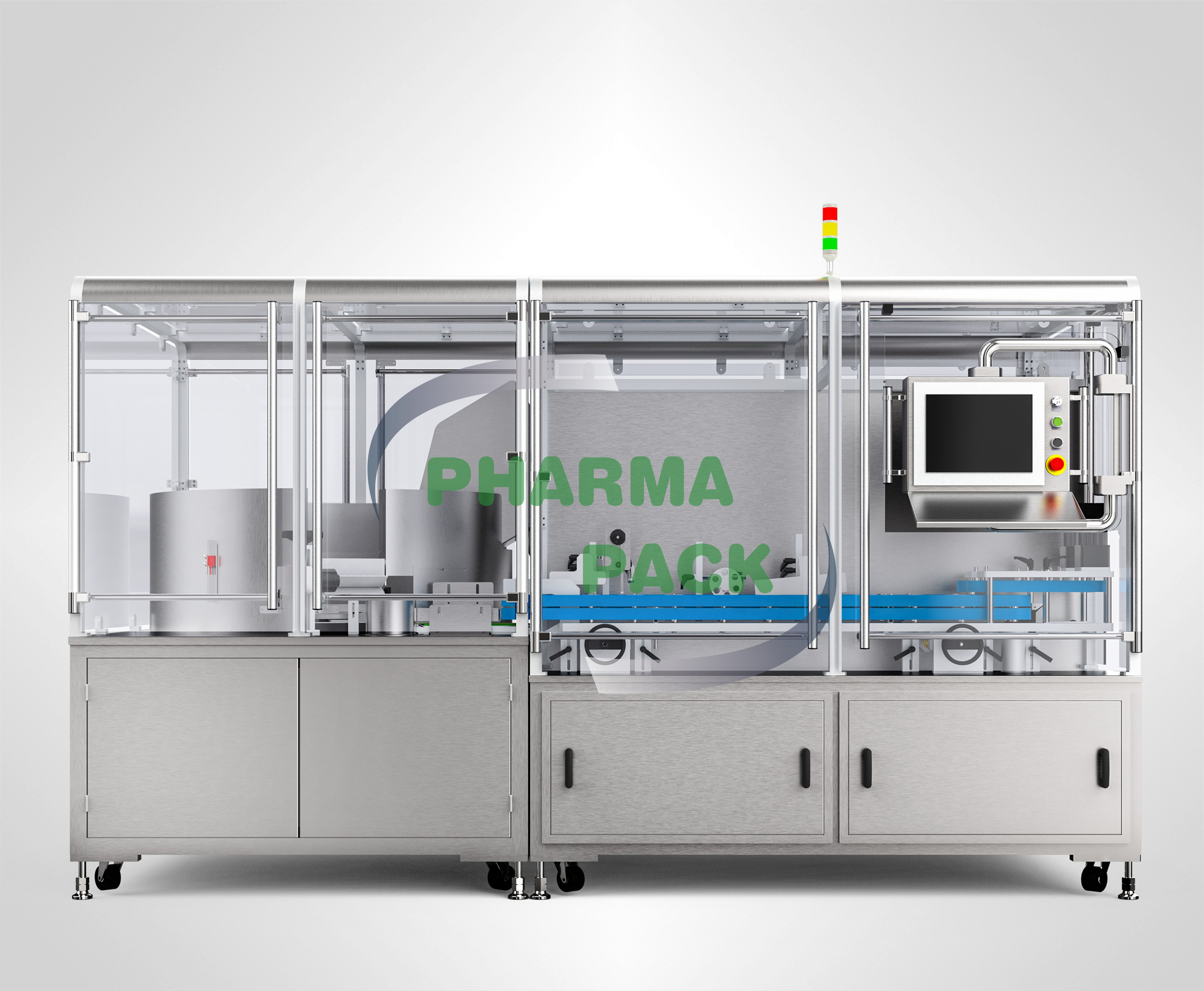
For example, Pharmapack's LFU-25C high speed bottle unscrambler has a stated maximum output of 250 bottles per minute, depending on bottle size. Its published specifications include round bottle diameters of 25 to 98 mm, square bottle sizes of 25 to 98 mm, and bottle heights of 45 to 200 mm. Actual suitability should be confirmed through testing with the intended containers.
4. Orientation Accuracy and Discharge Performance
Successful unscrambling requires bottles to leave the machine in the correct orientation and enter the next conveyor without interruption. Observe whether bottles consistently exit upright and whether they maintain suitable spacing.
Check for repeated reversals, overlapping containers, tipping, and accumulation at the discharge point. If the unscrambler performs well but bottles collect before the filling machine, the problem may involve downstream capacity or conveyor coordination rather than bottle handling alone.
5. Changeover and Cleaning Requirements
Supplement manufacturers may use different bottle sizes for multiple products. Testing should therefore include changeovers between representative bottle types.
Evaluate how easily operators can adjust the machine, replace changeover parts, and restore stable production. Also consider access for cleaning and routine inspection, particularly when the equipment operates in a controlled pharmaceutical or supplement packaging environment.
How to Evaluate Bottle Unscrambler Companies
When comparing bottle unscrambler companies, buyers should request more than a standard speed specification. Ask whether the supplier can test actual PET bottles, explain the applicable size range, and demonstrate stable operation across the intended production conditions.
Other important considerations include changeover time, equipment footprint, maintenance access, utility requirements, and integration with filling and counting machines. A supplier that understands the entire packaging process can help identify potential bottlenecks before installation.
It is also useful to define acceptance criteria before testing. These may include the required output rate, acceptable jam frequency, orientation accuracy, and the duration of continuous operation. Clear criteria make supplier comparisons more objective and help establish realistic production expectations.
Choose a Testing Process That Reflects Real Production
For PET supplement bottles, effective equipment selection begins with the containers themselves. Dimensional checks, stability tests, feeding trials, orientation verification, and changeover evaluations provide a practical basis for judging machine suitability.
At Pharmapack, bottle unscrambling solutions are designed for integration into automated packaging operations. By evaluating bottle specifications alongside production speed and downstream requirements, manufacturers can make better informed equipment decisions and reduce avoidable commissioning problems.
Before selecting a bottle unscrambler machine, test the bottles you intend to run, confirm the required operating conditions, and establish measurable acceptance criteria. This approach helps ensure that the selected equipment supports consistent bottle handling and dependable packaging line performance.