Integrating a Cotton Inserter with Tablet Counters and Cappers for Efficient Bottle Packaging
In pharmaceutical and healthcare packaging, inserting cotton into bottles is an important step in protecting products during storage and transportation. When cotton insertion is performed alongside tablet counting and bottle capping, coordination between machines becomes essential. Poor synchronization can cause bottle congestion, production interruptions, or inconsistent packaging results.
For manufacturers planning an automated packaging line, understanding how a cotton inserter works with counters and cappers can help improve production efficiency and simplify equipment selection. Pharmapack provides cotton insertion equipment designed to integrate with other packaging machines, helping manufacturers develop coordinated production lines for tablets, capsules, and other suitable products.
Why Integrate a Cotton Inserter into an Automated Packaging Line?
A standalone cotton inserter can perform its designated task, but a connected packaging line helps reduce the need for manual bottle handling between operations. In a typical pharmaceutical packaging process, bottles are filled with the required number of tablets or capsules, receive cotton when specified, and then move to capping and subsequent packaging stages.
Integrating these operations allows manufacturers to coordinate bottle movement and production speed across multiple machines. It can also reduce unnecessary handling and make it easier for operators to monitor the overall process.
The main challenge is that each machine has different operating requirements. A tablet counter may release bottles at varying intervals, while a cotton inserter requires sufficient time and space to complete its operation. A capper must then receive bottles at a rate consistent with its own capacity. Successful integration depends on balancing these requirements rather than simply connecting the equipment.
How a Cotton Inserter Works with Tablet Counters
The tablet counter typically operates upstream of the cotton inserting machine. Once the required number of tablets or capsules has been dispensed into a bottle, the bottle moves toward the cotton insertion station.
At this stage, the cotton inserter feeds, cuts, and positions the cotton before inserting it into the bottle. Accurate bottle positioning and consistent cotton feeding are important for maintaining stable operation. The machine must also accommodate the bottle opening and dimensions specified for the application.
When integrating a cotton inserter with an automatic tablet or capsule counter, manufacturers should evaluate conveyor height, bottle spacing, transfer timing, and communication between machine controls. Sensors can help detect bottle presence and coordinate the transfer of products between stations, depending on the selected configuration.
Production speed is another consideration. If the counter releases bottles faster than the cotton inserter can process them, bottles may accumulate between machines. If the cotton inserter operates significantly slower than the counter, overall line output may be reduced. Matching equipment capacity and establishing suitable buffer space can help prevent these problems.
Coordinating Cotton Insertion with Bottle Capping
After cotton insertion, bottles generally proceed to the capping station. The transfer must preserve bottle stability while allowing the capper to receive each container in the correct position.
Several factors affect this process, including bottle height, opening diameter, conveyor speed, and the distance between the cotton inserter and capper. Bottle spacing must also be consistent enough for the downstream equipment to handle containers without collisions or unnecessary stops.
Control system compatibility is equally important. Depending on the line design, machine signals may coordinate start and stop commands, bottle detection, and fault responses. If a capper experiences a blockage, the upstream equipment may need to pause or adjust its operation to prevent bottles from accumulating.
Manufacturers should also consider what happens after a machine stops unexpectedly. Clear fault indications, accessible operating controls, and a defined restart procedure help operators identify the source of a problem and resume production safely.
What to Consider When Selecting a Cotton Inserting Machine Manufacturer in China
Choosing a cotton inserting machine manufacturer in China requires more than comparing equipment prices. Buyers should examine machine compatibility, production capacity, supported bottle specifications, control functions, and technical service.
First, confirm that the equipment can handle the intended bottle opening and height, as well as the type of cotton used in the packaging process. Second, check the expected production speed under actual operating conditions. Published maximum speeds may vary depending on bottle dimensions and product requirements.
It is also important to discuss integration before placing an order. A manufacturer should be able to clarify the interfaces between the cotton inserter, counter, capper, and conveyor system. Buyers should ask about installation requirements, operator training, spare parts, and troubleshooting support.
Factory acceptance testing and line trials can provide additional confidence. Testing the connected machines with representative bottles and packaging materials helps identify timing issues before the equipment enters regular production.
Pharmapack Cotton Inserters for Connected Packaging Lines
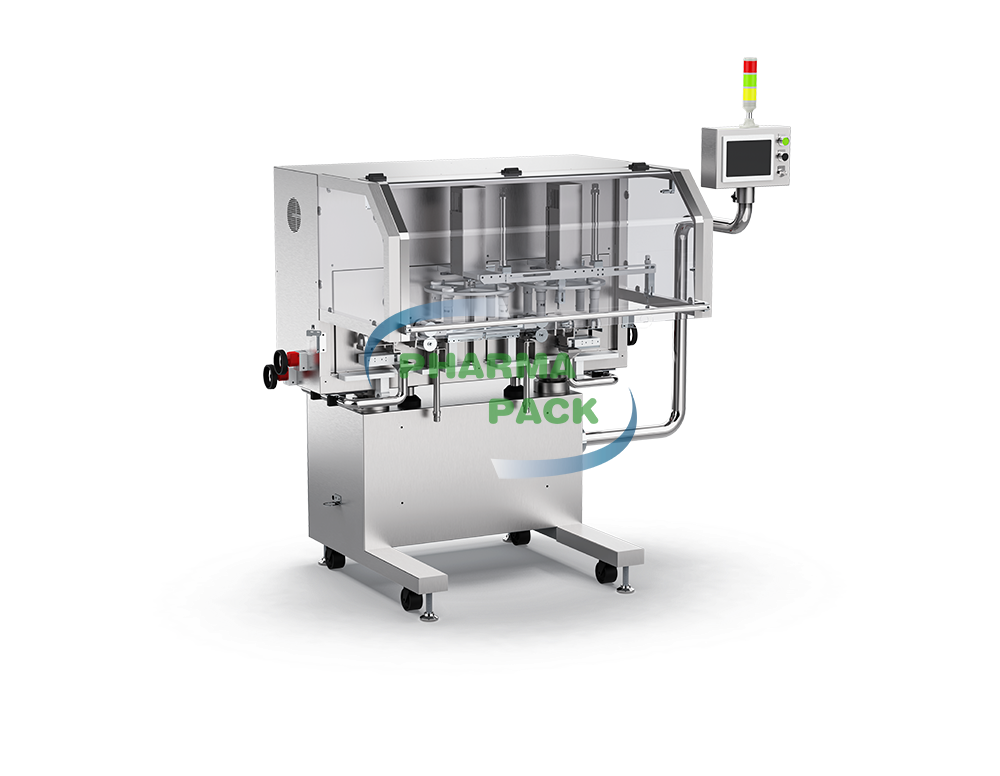
Pharmapack offers the LFIC-20 high speed cotton inserter for applications involving tablets, pills, capsules, and other suitable dry products. The machine uses a servo motor and an LFIC control system to support accurate operation and is designed for integration with automatic tablet or capsule counters, cappers, sealers, labelers, and cartoners.
The LFIC-20 has a stated maximum production speed of 200 bottles per minute, depending on product size and operating conditions. It is specified for bottle openings greater than 20 mm and bottle heights greater than 30 mm. Actual line output depends on the complete system configuration and the performance of connected equipment.
For manufacturers developing a new packaging line or upgrading existing equipment, Pharmapack can help assess application requirements and identify a suitable configuration. Confirming bottle specifications, production targets, and machine interfaces early in the project can reduce integration difficulties and support a more predictable installation process.
Plan a Better Connected Bottle Packaging Process
Integrating a cotton inserter with tablet counters and cappers requires careful coordination of production speed, bottle transfer, machine controls, and packaging specifications. When these elements are considered together, manufacturers can reduce avoidable interruptions and establish a more consistent workflow.
As a cotton inserting machine manufacturer in China, Pharmapack provides equipment designed to work within broader bottle packaging systems. By evaluating the complete production process rather than individual machines alone, manufacturers can select a practical configuration that supports their current requirements and future production plans.